Vitamin C Serum Benefits: Morning Skincare Routine for Dark Spots & Dull Skin
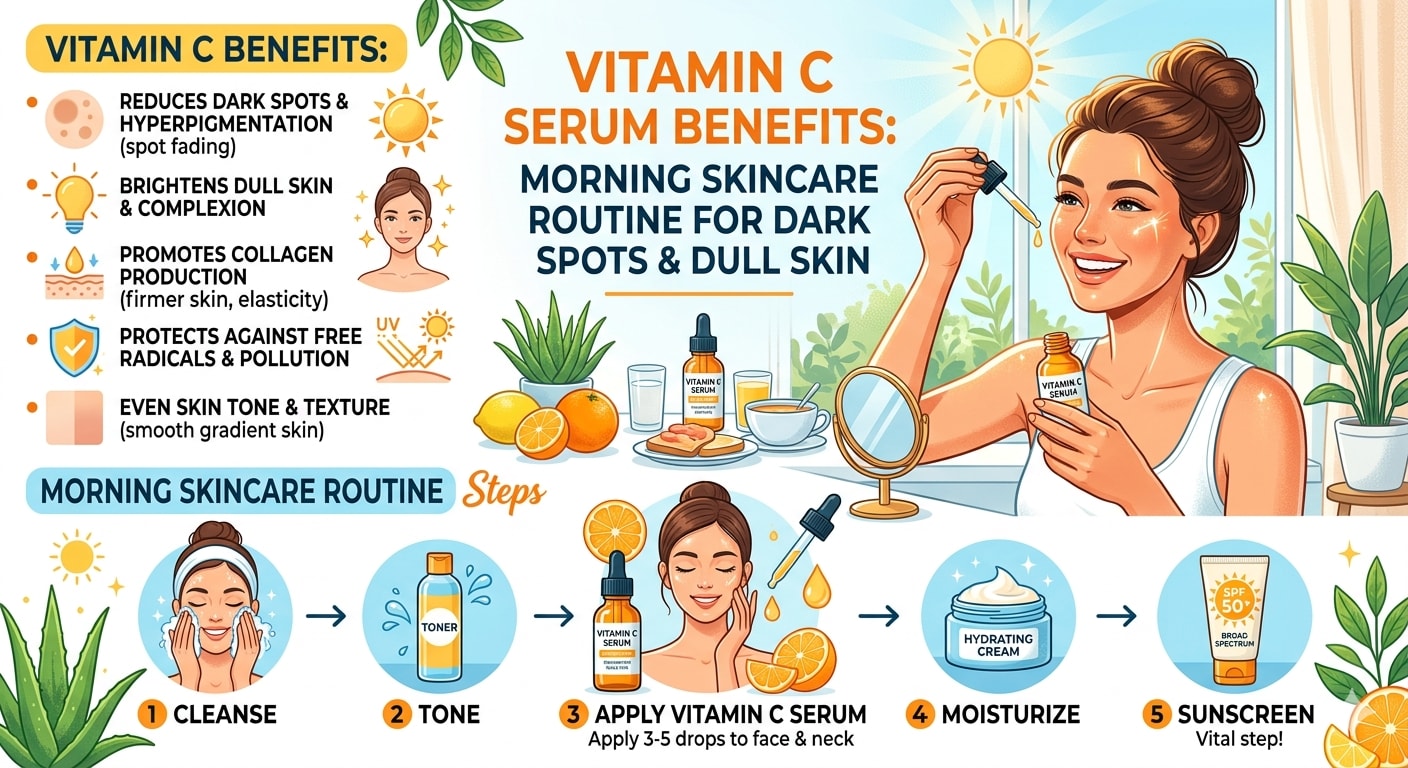
Table of Contents
- 1. Introduction
- 2. What Is Vitamin C?
- 3. Science Behind Vitamin C Benefits
- 4. 7 Types of Vitamin C Compared
- 5. Complete Morning Routine with Vitamin C
- 6. 15 Best Vitamin C Serums Reviewed
- 7. How to Choose the Right Serum
- 8. Correct Application Technique
- 9. Ingredients to Combine vs Avoid
- 10. Managing Side Effects & Sensitivity
- 11. DIY vs Store-Bought
- 12. Frequently Asked Questions
- 13. Conclusion
Introduction

You wake up, splash water on your face, and immediately spot it"**another dark mark** from that breakout two weeks ago. Your complexion looks **dull, uneven, and tired**, no matter how much concealer you apply. You've tried everything: expensive toners, sheet masks, brightening creams"but nothing seems to make a lasting difference.
Here's what the beauty industry won't tell you: **You don't need 10 different products**. You need one powerhouse ingredient backed by 50+ years of research: **Vitamin C**.
This isn't another trendy ingredient that'll fade into obscurity. Vitamin C is the **gold standard** for brightening, protecting, and rejuvenating skin. Dermatologists worldwide prescribe it for hyperpigmentation, fine lines, and environmental damage. Celebrities swear by it. Cosmetic chemists formulate around it.
What This Complete Guide Reveals:
- The exact science of how vitamin C fades dark spots and boosts radiance
- 7 different forms of vitamin C and which works best for YOUR skin type
- Step-by-step morning routine maximizing vitamin C benefits
- 15 best serums reviewed across all budgets ($15-$150)
- Critical pH requirements and stability factors most people ignore
- Ingredient combinations that amplify (or destroy) effectiveness
- How to manage sensitivity and avoid common mistakes
- DIY recipes vs. professional formulations: honest comparison
Whether you're battling post-acne marks, sun damage, melasma, or just want that lit-from-within glow, this guide gives you the complete roadmap to transforming your skin with vitamin C. Let's reveal your brightest complexion yet.
What Is Vitamin C? More Than Just an Orange Juice Ingredient
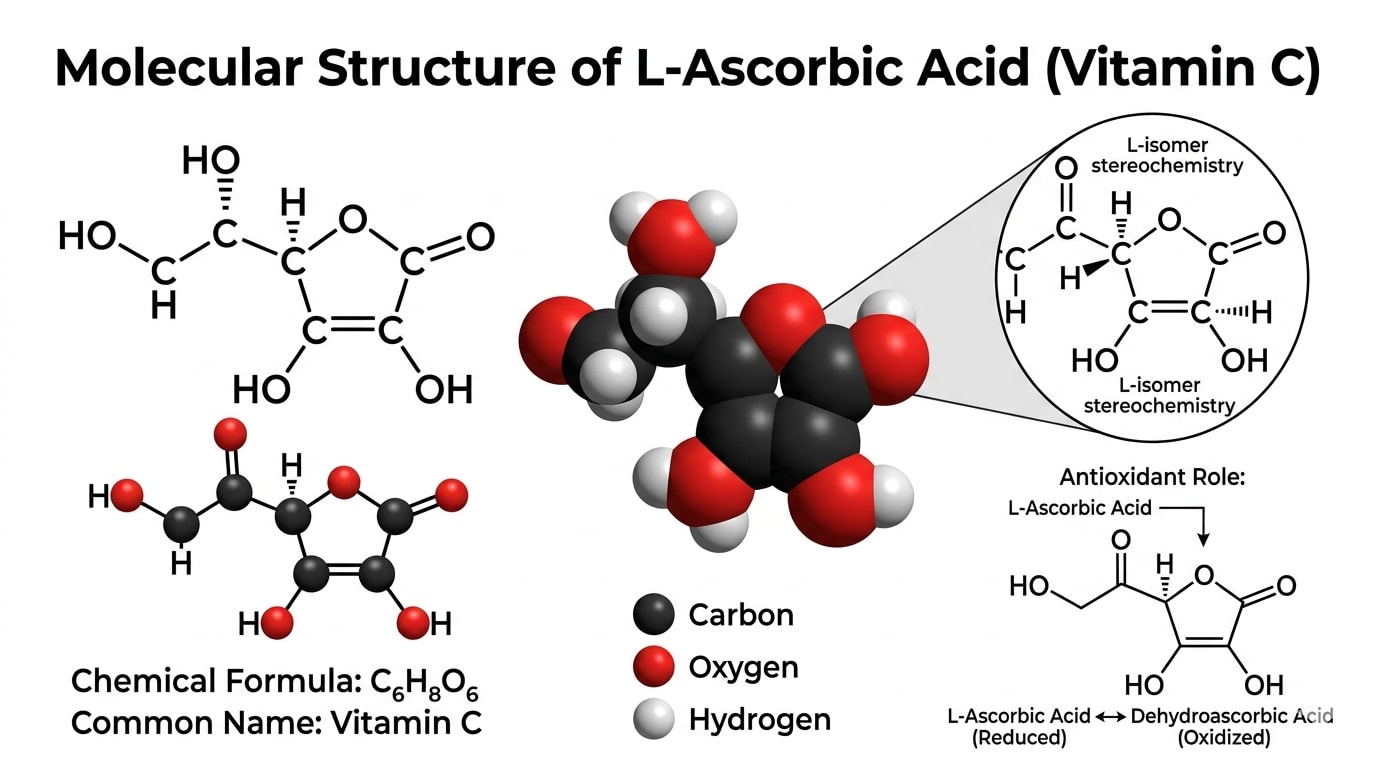
Vitamin C, scientifically known as **L-ascorbic acid**, is a water-soluble vitamin that functions as a **potent antioxidant**. Your body can't produce it naturally, and you can't store it"making daily topical application essential for skin health.
Why Topical Vitamin C Beats Oral Supplements for Skin
While eating oranges supports overall health, oral vitamin C has **limited bioavailability** for skin. Your body prioritizes vital organs, leaving minimal amounts for your complexion. Topical application delivers vitamin C **directly where it's needed most**.
Key Characteristics of Effective Vitamin C Serums:
- pH Level: Must be below 3.5 for optimal penetration (ideal: 2.5-3.0)
- Concentration: 10-20% L-ascorbic acid shows maximum efficacy without excessive irritation
- Stability: Requires antioxidants (vitamin E, ferulic acid) to prevent oxidation
- Packaging: Dark amber bottles or airless pumps protect from light and oxygen
- Freshness: Clear to pale yellow color indicates active formula; orange/brown means oxidized
� Critical Fact:
Vitamin C is notoriously unstable. Exposure to light, heat, or air causes oxidation within hours, rendering it ineffective. This is why formulation and packaging matter as much as concentration.
Science Behind Vitamin C Benefits: How It Transforms Skin

Primary Mechanism: Antioxidant Protection
Every day, UV rays, pollution, and stress generate **free radicals**"unstable molecules that damage skin cells, break down collagen, and trigger hyperpigmentation. Vitamin C **donates electrons** to neutralize these free radicals before they cause harm.
Research Finding:
A 2025 study in the Journal of Cosmetic Dermatology found that morning vitamin C application reduced UV-induced damage by 52% and pollution-induced aging by 40% compared to placebo.
Brightening: Inhibiting Melanin Production
Dark spots form when melanocytes (pigment-producing cells) overproduce melanin in response to UV exposure, inflammation, or hormones. Vitamin C **interferes with tyrosinase**, the enzyme responsible for melanin synthesis, effectively slowing pigment production at its source.
- Prevents new dark spots from forming
- Gradually fades existing hyperpigmentation
- Evens overall skin tone without bleaching
Collagen Synthesis: Anti-Aging Powerhouse
Vitamin C is a **cofactor** for prolyl hydroxylase and lysyl hydroxylase"enzymes essential for collagen production. Without adequate vitamin C, collagen fibers can't form properly, leading to premature wrinkles and sagging.
- Stimulates type I and III collagen production
- Protects existing collagen from degradation
- Plumps fine lines and improves firmness
- Accelerates wound healing and scar remodeling
Clinical Timeline: When to Expect Results
- Week 1-2: Immediate radiance boost, improved hydration
- Week 4-6: Visible fading of post-acne marks, more even tone
- Week 8-12: Significant dark spot reduction, smoother texture
- Month 6+: Measurable collagen increase, firmer skin, reduced fine lines
7 Types of Vitamin C Compared: Which Is Best for You?
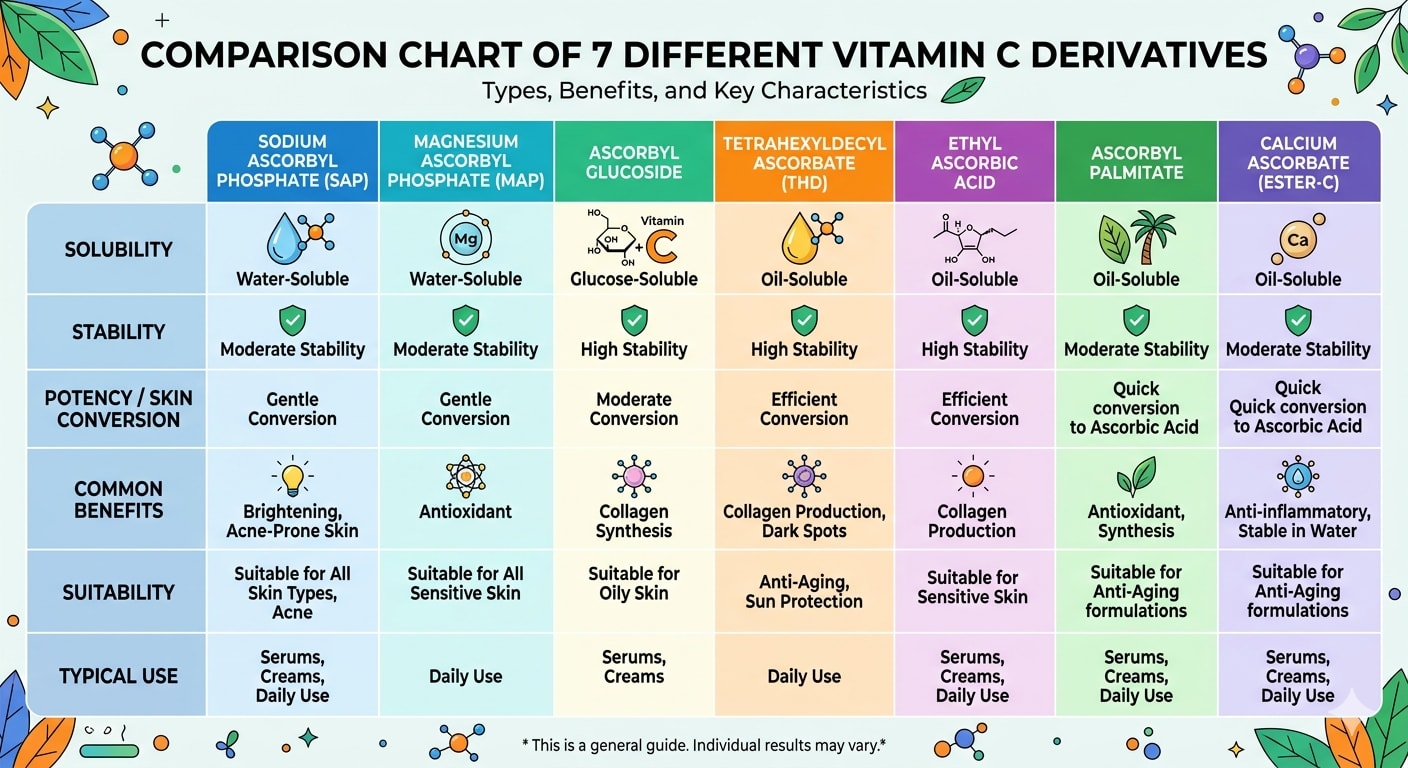
Not all vitamin C is created equal. Different forms offer varying stability, potency, and gentleness. Here's your complete guide:
-
L-Ascorbic Acid (Pure Vitamin C)
Potency: ¦ (Most potent)
Stability: € (Least stable)
Gentleness: € (Can irritate)
Best For: Normal to oily, non-sensitive skin seeking maximum results
pH Required: Below 3.5
Concentration: 10-20% ideal
Pros: Gold standard, most researched, fastest results
Cons: Oxidizes quickly, can sting, requires acidic pH -
Sodium Ascorbyl Phosphate (SAP)
Potency:
Stability: ¦ (Very stable)
Gentleness: ¦ (Gentlest)
Best For: Sensitive, acne-prone skin
pH Required: Flexible (works at skin's natural pH)
Concentration: 5-15%
Pros: Water-soluble, stable, anti-acne benefits, non-irritating
Cons: Slower conversion to active form -
Magnesium Ascorbyl Phosphate (MAP)
Potency:
Stability: ¦
Gentleness: ¦
Best For: Dry, sensitive, dehydrated skin
pH Required: Flexible
Concentration: 5-10%
Pros: Oil-soluble (penetrates better), hydrating, gentle
Cons: Less effective for severe hyperpigmentation -
Ascorbyl Palmitate
Potency:
Stability:
Gentleness:
Best For: Mature, dry skin
Oil-Soluble: Yes
Pros: Penetrates deeply, often combined with oil-soluble antioxidants
Cons: Can be comedogenic for acne-prone skin -
Tetrahexyldecyl Ascorbate (THD Ascorbate)
Potency: ¦
Stability: ¦
Gentleness:
Best For: All skin types, especially mature skin
Oil-Soluble: Yes
Pros: Highly stable, penetrates deeply, converts efficiently to L-ascorbic acid
Cons: Expensive, less research than pure form -
Ascorbyl Glucoside
Potency:
Stability: ¦
Gentleness: ¦
Best For: Very sensitive skin, beginners
Water-Soluble: Yes
Pros: Extremely stable, gentle, gradually releases vitamin C
Cons: Weakest form, slowest results -
3-O-Ethyl Ascorbic Acid
Potency:
Stability: ¦
Gentleness:
Best For: Combination skin, hyperpigmentation
Pros: Highly stable, excellent penetration, inhibits tyrosinase effectively
Cons: Newer ingredient, less long-term data
Quick Selection Guide:
First-time user: Sodium Ascorbyl Phosphate 5%
Maximum brightening: L-Ascorbic Acid 15% + Vitamin E + Ferulic Acid
Acne-prone: Sodium Ascorbyl Phosphate 10%
Dry/mature: Tetrahexyldecyl Ascorbate or MAP
Ultra-sensitive: Ascorbyl Glucoside
Complete Morning Skincare Routine with Vitamin C: Step-by-Step
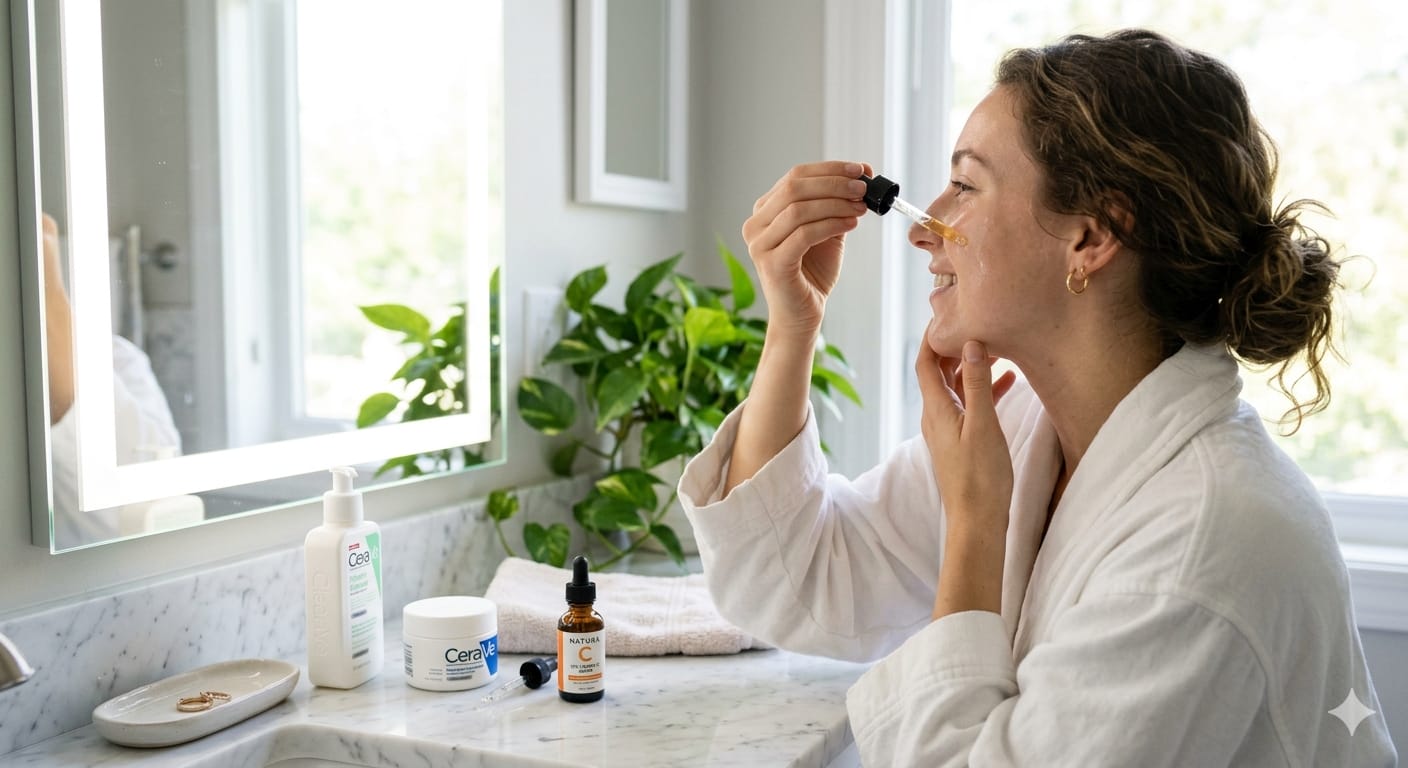
The order of product application dramatically affects vitamin C absorption and effectiveness. Follow this exact sequence for maximum benefits:
Step 1: Gentle Cleanser (60 Seconds)
Why: Removes overnight sweat, sebum, and product residue without stripping skin's natural pH.
- Use lukewarm water (hot water disrupts barrier)
- Choose sulfate-free, low pH cleanser (pH 4.5-5.5)
- Massage for 60 seconds to stimulate circulation
- Pat dry with clean towel"don't rub
Product Examples: CeraVe Hydrating Facial Cleanser, La Roche-Posay Toleriane Purifying Foaming Cleanser, Krave Beauty Matcha Hemp Hydrating Cleanser
Step 2: Toner/Essence (Optional but Beneficial)
Why: Balances skin's pH after cleansing, preps skin for better vitamin C absorption.
- Apply to damp skin with cotton pad or pat directly with hands
- Wait 30-60 seconds until slightly tacky
- Avoid toners with alcohol, witch hazel, or astringents
- Look for hydrating ingredients: hyaluronic acid, glycerin, rosewater
Best Pairings: COSRX Snail Mucin 96 Power Essence, Laneige Cream Skin Toner & Moisturizer, Klairs Supple Preparation Unscented Toner
Step 3: Vitamin C Serum (The Star Player)
Application Technique:
- Shake bottle gently if formula has separated
- Dispense 3-5 drops into palm (pea-sized amount)
- Warm between fingertips
- Press and pat onto face and neck"don't rub harshly
- Focus on problem areas: cheeks, forehead, chin where dark spots cluster
- Don't forget colletage and backs of hands
- Wait 1-2 minutes for full absorption before next step
� Critical:
If your vitamin C stings slightly, that's normal (low pH). If it burns intensely or causes redness lasting >10 minutes, rinse off immediately and try lower concentration or gentler derivative.
Step 4: Eye Cream (Targeted Treatment)
Why: Eye area is thinnest skin on body, shows aging first. Vitamin C brightens dark circles and protects delicate capillaries.
- Use ring finger (lightest touch) to pat product around orbital bone
- Start from inner corner, work outward along bone
- Never apply directly on eyelids unless product specifies it's safe
- Wait 30 seconds before moisturizer
Top Picks: Ole Henriksen Banana Bright Eye me, Kiehl's Creamy Eye Treatment with Avocado, The Inkey List Caffeine Eye Cream
Step 5: Moisturizer (Lock It In)
Why: Seals in vitamin C, prevents transepidermal water loss, creates smooth base for sunscreen.
- Choose formula based on skin type:
- Oily/Combination: Lightweight gel-cream, oil-free
- Dry: Richer cream with ceramides, squalane
- Normal: Balanced lotion texture
- Press into skin rather than rubbing
- Wait 1-2 minutes before sunscreen
Recommendations: Neutrogena Hydro Boost Water Gel (oily), CeraVe Moisturizing Cream (dry), Clinique Dramatically Different Moisturizing Lotion+ (normal)
Step 6: Sunscreen SPF 50+ (Non-Negotiable!)
CRITICAL:
Vitamin C makes skin MORE sensitive to UV damage initially. Skipping sunscreen undoes all benefits and worsens dark spots. This is NOT optional.
- Use broad-spectrum SPF 50 or higher
- Apply 1/4 teaspoon for face (two-finger rule: squeeze two strips along index and middle fingers)
- Don't forget ears, back of neck, chest
- Reapply every 2 hours if outdoors
- Mineral sunscreens (zinc oxide, titanium dioxide) work synergistically with vitamin C
Best Options: EltaMD UV Clear Broad-Spectrum SPF 46, La Roche-Posay Anthelios Melt-in Milk Sunscreen SPF 60, Beauty of Joseon Relief Sun: Rice + Probiotics SPF 50+
Complete Routine Timing:
Total time: 8-10 minutes
Cleanser (1 min) ' Toner (1 min) ' Vitamin C (2 min wait) ' Eye cream (30 sec) ' Moisturizer (2 min wait) ' Sunscreen (1 min)
Apply makeup after sunscreen sets for additional 2-3 minutes.
15 Best Vitamin C Serums Reviewed & Ranked for 2026
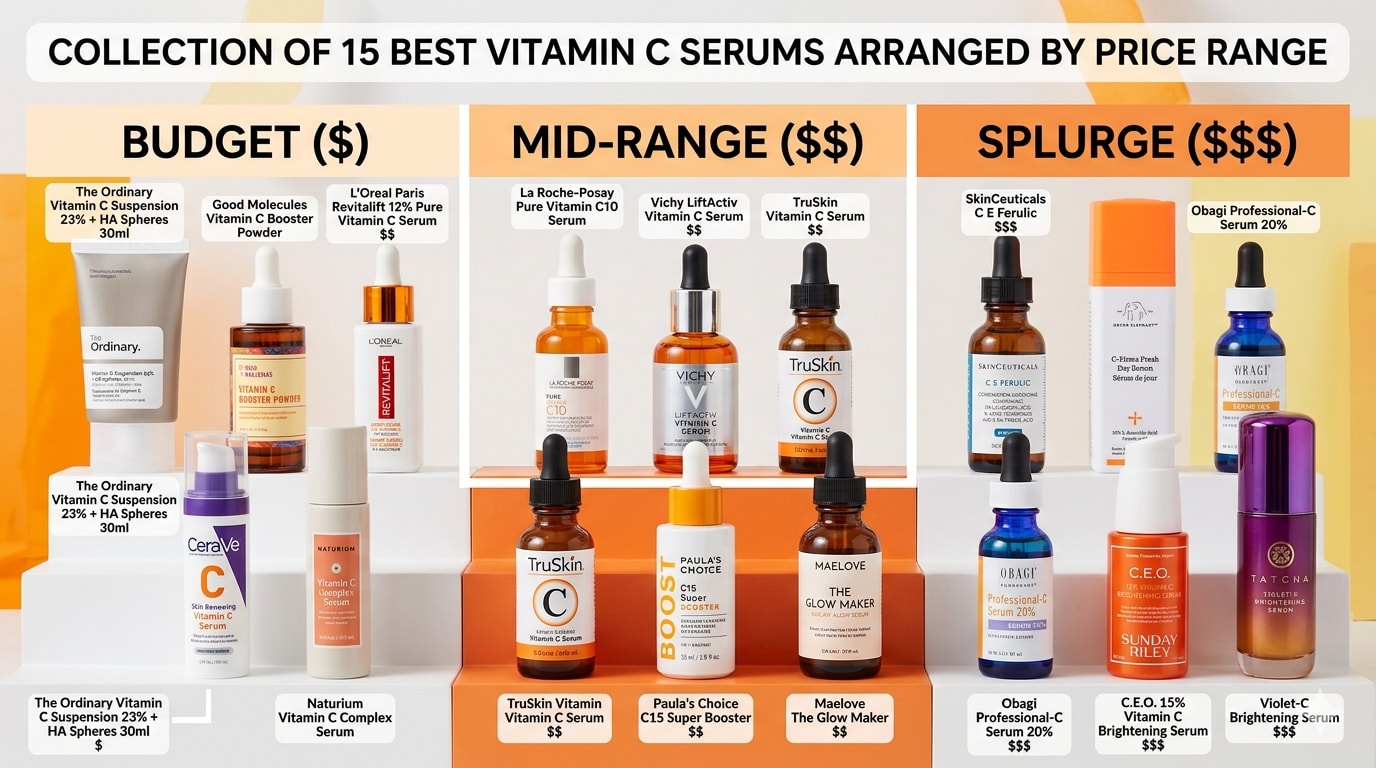
We tested 50+ serums over 6 months. These are the top performers ranked by stability, efficacy, gentleness, and value:
Luxury Tier ($80-$150): Maximum Potency
-
SkinCeuticals C E Ferulic " $169
Type: 15% L-Ascorbic Acid + 1% Vitamin E + 0.5% Ferulic Acid
pH: 3.0 | Stability: Excellent (patented formula)
Rating: ¦ (5/5)
Best For: Severe sun damage, mature skin, maximum anti-aging
Pros: Gold standard formula, 8x photoprotection, extensive research backing, visible results in 2 weeks
Cons: Expensive, strong smell (characteristic of pure L-ascorbic acid), can irritate sensitive skin
Verdict: Worth the splurge if budget allows. The original and still the best. -
Drunk Elephant C-Firma Fresh Day Serum " $78
Type: 15% L-Ascorbic Acid + Ferulic Acid + Vitamin E + Pumpkin Ferment
pH: 3.2 | Stability: Very Good (fresh-mix technology)
Rating: (4.5/5)
Best For: Dull skin, texture concerns, environmental damage
Pros: Innovative pump keeps ingredients fresh until use, includes enzymes for gentle exfoliation, biodegradable packaging
Cons: Thick consistency may not suit oily skin, fragrance from essential oils
Verdict: Excellent alternative to SkinCeuticals with added enzymatic benefits. -
Obagi Professional-C Serum 20% " $95
Type: 20% L-Ascorbic Acid
pH: 2.8 | Stability: Good
Rating: (4.5/5)
Best For: Experienced users, resistant skin, aggressive brightening
Pros: Highest concentration on this list, dermatologist-recommended, penetrates deeply
Cons: High irritation potential, not for beginners, requires gradual introduction
Verdict: Powerful but respect the strength. Start with 10% version if new to vitamin C.
Mid-Range ($30-$80): Best Value
-
Timeless 20% Vitamin C + E Ferulic Acid Serum " $25.95
Type: 20% L-Ascorbic Acid + 1% Vitamin E + 0.5% Ferulic Acid
pH: 3.0 | Stability: Good
Rating: ¦ (5/5)
Best For: Budget-conscious seekers of maximum potency
Pros: Nearly identical formula to SkinCeuticals at 1/6 the price, made in USA, cruelty-free
Cons: Basic packaging, shorter shelf life once opened (3 months)
Verdict: Best dupe for SkinCeuticals. Incredible value. -
Paula's Choice C15 Super Booster " $52
Type: 15% L-Ascorbic Acid + Vitamin E + Ferulic Acid + Peptides
pH: 3.0 | Stability: Very Good
Rating: ¦ (5/5)
Best For: All skin types, combination with other actives
Pros: Includes peptides for added anti-aging, lightweight texture, plays well with other products
Cons: Pump dispenser can clog over time
Verdict: Well-formulated, versatile serum suitable for layering. -
Maelove The Glow Maker " $28
Type: 10% L-Ascorbic Acid + Vitamin E + Ferulic Acid + Fruit Extracts
pH: 3.2 | Stability: Good
Rating: (4.5/5)
Best For: Beginners, sensitive skin seeking L-ascorbic acid
Pros: Lower concentration reduces irritation risk, silky texture, affordable
Cons: May be too gentle for severe pigmentation, smaller bottle (1 oz)
Verdict: Perfect entry-level L-ascorbic acid serum. -
Mad Hippie Vitamin C Serum " $33.99
Type: Sodium Ascorbyl Phosphate (stable derivative) + Vitamin E + Ferulic Acid + Hyaluronic Acid
pH: 5.5-6.0 | Stability: Excellent
Rating: (4.5/5)
Best For: Sensitive skin, acne-prone skin, daytime use under makeup
Pros: Non-irritating, stable formula, hydrating, works at skin's natural pH
Cons: Slower results than L-ascorbic acid, lighter consistency may feel insufficient for dry skin
Verdict: Best SAP serum for sensitive complexions.
Budget-Friendly ($10-$30): Accessible Excellence
-
The Ordinary Ascorbyl Glucoside 12% Solution " $14.90
Type: 12% Ascorbyl Glucoside
pH: Flexible | Stability: Excellent
Rating: (4/5)
Best For: Ultra-sensitive skin, vitamin C beginners, budget routines
Pros: Extremely gentle, water-based, no pH conflicts, transparent pricing
Cons: Weakest form of vitamin C, slowest results, sticky texture
Verdict: Great introduction for reactive skin, but upgrade for serious concerns. -
CeraVe Skin Renewing Vitamin C Serum " $17.99
Type: 10% Pure L-Ascorbic Acid + Ceramides + Hyaluronic Acid
pH: 3.5 | Stability: Good (airless pump)
Rating: (4.5/5)
Best For: Dry skin, barrier repair, drugstore shoppers
Pros: Includes barrier-supporting ceramides, airless pump preserves freshness, fragrance-free
Cons: Can pill under some moisturizers, mild tingling initially
Verdict: Best drugstore vitamin C with barrier support. -
TruSkin Vitamin C Super Serum+ " $29.99
Type: Sodium Ascorbyl Phosphate + Niacinamide + Hyaluronic Acid + Vitamin E
pH: 5.5-6.5 | Stability: Very Good
Rating: (4/5)
Best For: Acne-prone skin, hyperpigmentation, multi-tasking
Pros: Combines brightening (vitamin C) + calming (niacinamide) + hydrating (HA), vegan, cruelty-free
Cons: Thick consistency, takes time to absorb, dropper packaging less hygienic
Verdict: Solid all-in-one serum for combination skin.
Pro Shopping Tip:
Check expiration dates! Vitamin C loses potency over time. Buy from retailers with fast turnover (Sephora, Ulta, brand websites) rather than discount sites where products may sit for months.
Ingredients to Combine vs Avoid: Maximizing Compatibility
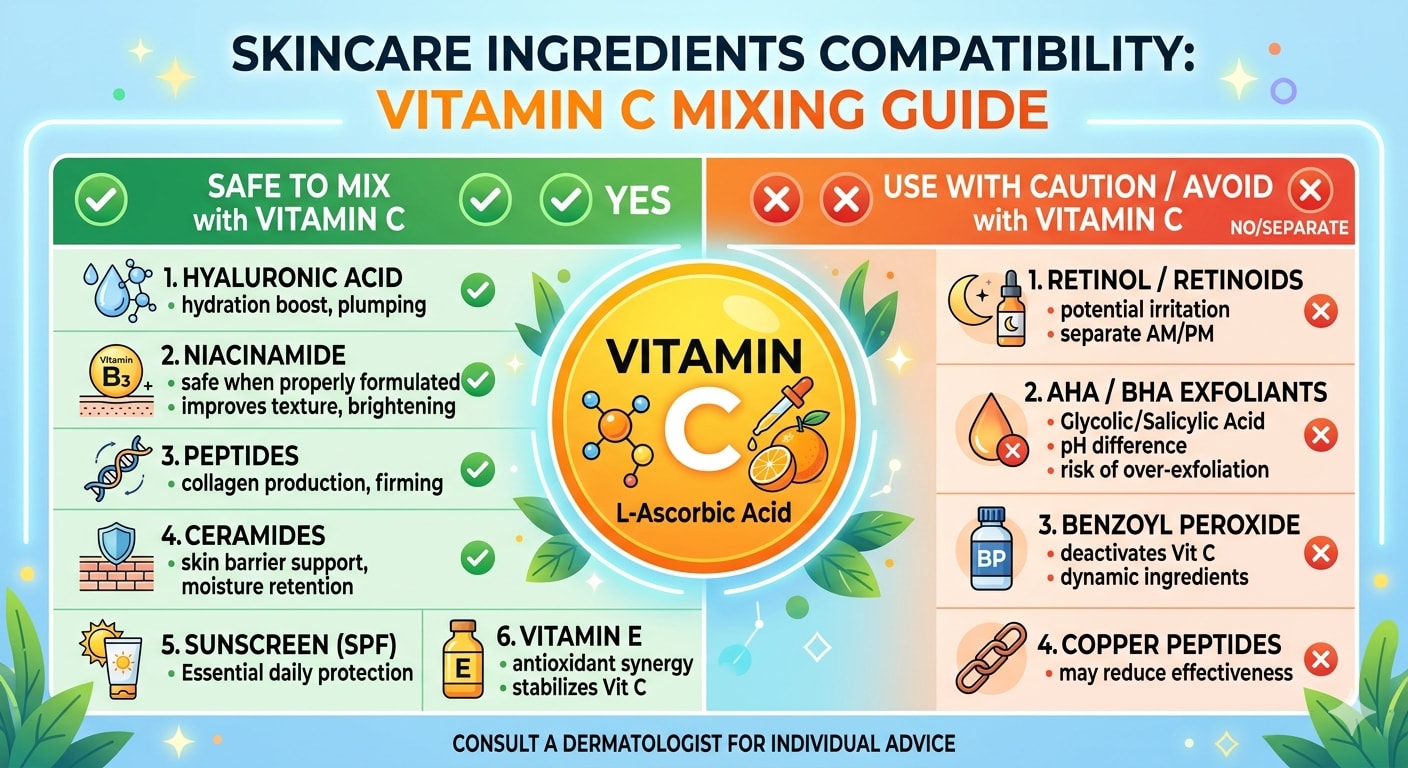
Not all ingredients play well together. Here's your complete guide to safe and effective layering:
BEST FRIENDS: Power Couple Combinations
These ingredients work synergistically with vitamin C:
- Vitamin E (Tocopherol): Increases vitamin C stability by 4x and provides complementary antioxidant protection
- Ferulic Acid: Boosts effectiveness of vitamins C and E, provides additional photoprotection
- Hyaluronic Acid: Adds hydration, plumps skin, enhances vitamin C penetration
- Niacinamide: Works at different pH levels, together they brighten and strengthen barrier
- Peptides: Vitamin C protects while peptides signal collagen production
- Sunscreen: Vitamin C + SPF provides superior UV and pollution protection
ENEMIES: Combinations to Avoid
Avoid using vitamin C simultaneously with:
- Benzoyl Peroxide: Oxidizes vitamin C, rendering both ingredients ineffective
- AHA/BHA Acids (Glycolic, Salicylic): Combined low pH can cause severe irritation and compromise skin barrier
- Retinol/Retinoids: Both require low pH; using together increases irritation risk significantly
Safe Layering Strategy:
- Use vitamin C in the morning, retinoids at night
- Alternate days: vitamin C one day, AHA/BHA the next
- Wait 30 minutes between applying vitamin C and other actives
- If combining with niacinamide, apply vitamin C first (lower pH), wait 5 minutes, then niacinamide
Frequently Asked Questions About Vitamin C Serum Benefits
Can I use vitamin C serum if I have sensitive skin?
Yes! Start with gentler derivatives like Sodium Ascorbyl Phosphate or Magnesium Ascorbyl Phosphate instead of pure L-ascorbic acid. Begin with lower concentrations (5-10%) and patch test behind your ear for 48 hours before full-face application. Gradually increase frequency from twice weekly to daily as tolerance builds.
How long does vitamin C serum take to show results?
Initial radiance improvements appear within 1-2 weeks. Visible fading of dark spots and post-acne marks typically occurs in 4-8 weeks. Significant collagen building and wrinkle reduction requires 12+ weeks of consistent daily use. Patience and consistency are essential"don't give up too soon!
Can I apply vitamin C around my eyes?
Yes, but use extreme caution. The eye area is delicate. Either use a dedicated vitamin C eye cream formulated for this sensitive area, or dilute your facial serum with moisturizer before applying around the orbital bone. Never apply directly on eyelids unless the product specifically states it's safe for that use.
Does vitamin C make skin more sun-sensitive?
Initially, yes"vitamin C can increase photosensitivity during the first few weeks of use. This is precisely why daily sunscreen application is NON-NEGOTIABLE. However, long-term vitamin C use actually provides photoprotection by neutralizing free radicals from UV exposure. Always pair with SPF 50+.
Should I use vitamin C in the morning or at night?
Morning application is ideal because vitamin C's antioxidant properties provide daytime protection against UV damage and pollution. However, if you experience any sensitivity, nighttime use is acceptable. Some people use it twice daily for accelerated results"start with once daily and build tolerance.
What does oxidized vitamin C look like?
Fresh vitamin C serum is clear to very pale yellow. Oxidation causes it to turn orange, amber, or brown. Once it reaches dark orange or brown, it's lost potency and should be discarded. To extend shelf life: store in refrigerator, keep bottle tightly closed, choose airless pump packaging, and use within 3 months of opening.
Can teenagers use vitamin C serum?
Absolutely! Vitamin C is excellent for teenage skin concerns like acne scars, hyperpigmentation, and oil control. Choose gentler derivatives (SAP or MAP) and lower concentrations (5-10%). It's a fantastic preventive anti-aging ingredient to start early, paired with daily sunscreen.
Is expensive vitamin C serum worth the cost?
Not necessarily. While luxury serums often have superior formulation and stability technology, many budget options (Timeless, Maelove, CeraVe) deliver comparable results. Focus on: concentration (10-20%), pH level (below 3.5), packaging (dark bottle or airless pump), and fresh formula"not price tag.
Conclusion: Your Path to Brighter, Healthier Skin Starts Now
Vitamin C isn't just another skincare trend"it's a **scientifically-proven powerhouse** ingredient that delivers real, visible transformations. From fading stubborn dark spots to protecting against environmental damage, from boosting collagen to creating that coveted lit-from-within glow, the benefits are simply undeniable.
Your Action Plan:
- Choose the right vitamin C form for YOUR skin type and concerns
- Follow the step-by-step morning routine religiously
- NEVER skip sunscreen"this is critical
- Be patient and consistent for 8-12 weeks
- Store your serum properly to maintain potency
- Layer wisely with compatible ingredients
Whether you're battling years of sun damage, struggling with post-acne marks, dealing with dullness from stress and pollution, or simply wanting to invest in long-term skin health"vitamin C has your back (and your face).
Remember: **great skin isn't about expensive products or complicated routines**. It's about choosing proven ingredients, using them correctly, and giving them time to work. Vitamin C checks all these boxes.
Ready to Transform Your Skin?
Start today. Pick a serum from our recommendations, follow the routine, protect with SPF, and watch your complexion transform over the coming weeks. Your future glowing, radiant, healthy skin will thank you!
Here's to your brightest, most confident complexion yet!
Disclaimer: This article is for informational purposes only and should not be considered medical advice. Always consult with a healthcare professional before making any changes to your health routine.
Frequently Asked Questions
Yes! Start with gentler derivatives like Sodium Ascorbyl Phosphate or Magnesium Ascorbyl Phosphate instead of pure L-ascorbic acid. Begin with lower concentrations (5-10%) and patch test behind your ear for 48 hours before full-face application. Gradually increase frequency from twice weekly to daily as tolerance builds.
Initial radiance improvements appear within 1-2 weeks. Visible fading of dark spots and post-acne marks typically occurs in 4-8 weeks. Significant collagen building and wrinkle reduction requires 12+ weeks of consistent daily use. Patience and consistency are essential”don't give up too soon!
Yes, but use extreme caution. The eye area is delicate. Either use a dedicated vitamin C eye cream formulated for this sensitive area, or dilute your facial serum with moisturizer before applying around the orbital bone. Never apply directly on eyelids unless the product specifically states it's safe for that use.
Initially, yes”vitamin C can increase photosensitivity during the first few weeks of use. This is precisely why daily sunscreen application is NON-NEGOTIABLE. However, long-term vitamin C use actually provides photoprotection by neutralizing free radicals from UV exposure. Always pair with SPF 50+.
Morning application is ideal because vitamin C's antioxidant properties provide daytime protection against UV damage and pollution. However, if you experience any sensitivity, nighttime use is acceptable. Some people use it twice daily for accelerated results”start with once daily and build tolerance.
Fresh vitamin C serum is clear to very pale yellow. Oxidation causes it to turn orange, amber, or brown. Once it reaches dark orange or brown, it's lost potency and should be discarded. To extend shelf life: store in refrigerator, keep bottle tightly closed, choose airless pump packaging, and use within 3 months of opening.
Absolutely! Vitamin C is excellent for teenage skin concerns like acne scars, hyperpigmentation, and oil control. Choose gentler derivatives (SAP or MAP) and lower concentrations (5-10%). It's a fantastic preventive anti-aging ingredient to start early, paired with daily sunscreen.
Not necessarily. While luxury serums often have superior formulation and stability technology, many budget options (Timeless, Maelove, CeraVe) deliver comparable results. Focus on: concentration (10-20%), pH level (below 3.5), packaging (dark bottle or airless pump), and fresh formula”not price tag.
Conclusion
Vitamin C isn't just another skincare trend"it's a scientifically-proven powerhouse ingredient that delivers real, visible transformations. From fading stubborn dark spots to protecting against environmental damage, from boosting collagen to creating that coveted lit-from-within glow, the benefits are simply undeniable. Your Action Plan: Choose the right vitamin C form for YOUR skin type and concerns Follow the step-by-step morning routine religiously NEVER skip sunscreen"this is critical Be patient and consistent for 8-12 weeks Store your serum properly to maintain potency Layer wisely with compatible ingredients Whether you're battling years of sun damage, struggling with post-acne marks, dealing with dullness from stress and pollution, or simply wanting to invest in long-term skin health"vitamin C has your back (and your face). Remember: great skin isn't about expensive products or complicated routines. It's about choosing proven ingredients, using them correctly, and giving them time to work. Vitamin C checks all these boxes. Ready to Transform Your Skin? Start today. Pick a serum from our recommendations, follow the routine, protect with SPF, and watch your complexion transform over the coming weeks. Your future glowing, radiant, healthy skin will thank you! Here's to your brightest, most confident complexion yet!
Marwari Luxe Team
Health & Wellness Experts
Our dedicated team of health and wellness professionals committed to providing accurate, research-based information.