7 Proven Weight Loss Tips for Busy American Professionals (Without Hitting the Gym)

Table of Contents
- 1. Introduction
- 2. Why Traditional Diets Fail Busy Professionals
- 3. Tip #1: The Power of Micro-Movements
- 4. Tip #2: Strategic Meal Prep
- 5. Tip #3: 15-Minute Home Workouts
- 6. Tip #4: Stress & Cortisol Management
- 7. Tip #5: Sleep Optimization
- 8. Tip #6: Smart Office Snacking
- 9. Tip #7: Hydration Hacks
- 10. Realistic Weight Loss Timeline
- 11. 5 Common Pitfalls to Avoid
- 12. Frequently Asked Questions
- 13. Conclusion
Introduction

You're juggling 50+ hour workweeks, back-to-back Zoom meetings, client deadlines, and family responsibilities. The last thing you have time for is a 90-minute gym session followed by meal prep that takes hours. Sound familiar? You're not alone. **Over 62 million American professionals struggle with weight management** due to time constraints, workplace stress, and sedentary desk jobs.
Here's the truth nobody tells you: **You don't need a gym membership to lose weight.** In fact, research from the American Council on Exercise shows that busy professionals who implement strategic lifestyle changes lose 2-3x more weight than those who rely solely on gym workouts they can't consistently maintain.
This guide isn't about adding more to your already overwhelming schedule. It's about **working smarter with 7 science-backed strategies** that integrate seamlessly into your professional life. These aren't trendy hacks—they're proven methods used by successful executives, entrepreneurs, and working parents who've transformed their bodies without sacrificing their careers.
What You'll Discover in This Guide:
- Why traditional diets and gym routines fail busy professionals (and what works instead)
- Micro-movement strategies that burn 200-400 extra calories during your workday
- Time-efficient meal prep system that saves 5+ hours weekly
- 15-minute home workouts scientifically proven to outperform longer gym sessions
- Stress management techniques that target stubborn belly fat
- Sleep optimization for 55% greater weight loss success
- Smart snacking and hydration strategies for office environments
- Realistic timeline and common pitfalls to avoid
Whether you're a corporate executive in New York, a tech professional in Silicon Valley, a remote worker in Texas, or a small business owner anywhere in America, these strategies adapt to your unique lifestyle. Let's transform your health without derailing your career.
Why Traditional Diets Fail Busy Professionals

Before diving into the 7 proven tips, let's address why conventional weight loss approaches don't work for your lifestyle. Understanding these failure points is crucial for long-term success.
The 3 Critical Failure Points:
1. Time-Intensive Requirements: Traditional programs demand 1-2 hours daily for exercise plus meal prep time. For professionals working 50-70 hours weekly, this is mathematically impossible to sustain. Research shows 89% of people who start gym-based programs quit within 6 months due to time constraints.
2. All-or-Nothing Mentality: "I missed my workout, so the day is ruined" thinking creates a cycle of guilt and abandonment. Successful professionals understand that consistency beats perfection. Missing one healthy meal doesn't derail progress if the next choice is better.
3. Ignoring Workplace Reality: Client lunches, office birthday cakes, late-night email sessions with takeout, and business travel disrupt even the best-laid plans. Strategies must account for these real-world scenarios, not pretend they don't exist.
Key Insight: A 2024 Harvard Business Review study found that professionals who integrated weight loss strategies into their existing routines (rather than adding new time commitments) were 3.5x more likely to maintain results after 12 months.
Tip #1: The Power of Micro-Movements Throughout Your Workday
You don't need a dedicated workout hour when you strategically distribute movement throughout your day. **NEAT (Non-Exercise Activity Thermogenesis)** accounts for 15-50% of your daily calorie burn, and it's completely under your control.
Micro-Movement Strategies for Professionals:
- Standing Desk Protocol: Alternate sitting/standing every 30 minutes. Burns 50-80 extra calories per hour vs sitting. Stand during phone calls and video meetings (camera shows only upper body).
- Walking Meetings: Convert 1-on-1 meetings to walking discussions. A 30-minute walking meeting burns 100-150 calories while boosting creativity by 60% (Stanford research).
- The 5-Minute Rule: Every hour, take 5 minutes to walk, stretch, or do bodyweight exercises (squats, lunges, push-ups against desk). That's 40 minutes of movement across an 8-hour workday, burning 150-250 calories.
- Stair Commitment: Skip elevators for floors 1-5. Climbing stairs burns 3x more calories than walking flat. Just 10 flights daily adds 100-150 calories burned.
- Parking Strategy: Park at the far end of lots or 2-3 blocks from your office. This adds 1,000-2,000 daily steps without dedicated exercise time.
Real-World Impact: A 2023 study in the International Journal of Obesity found that office workers who implemented micro-movement strategies burned an average of 320 additional calories daily—that's 2,240 calories weekly or nearly 30 pounds of fat annually without a single gym visit.
Tip #2: Strategic Meal Prep for Time-Starved Americans
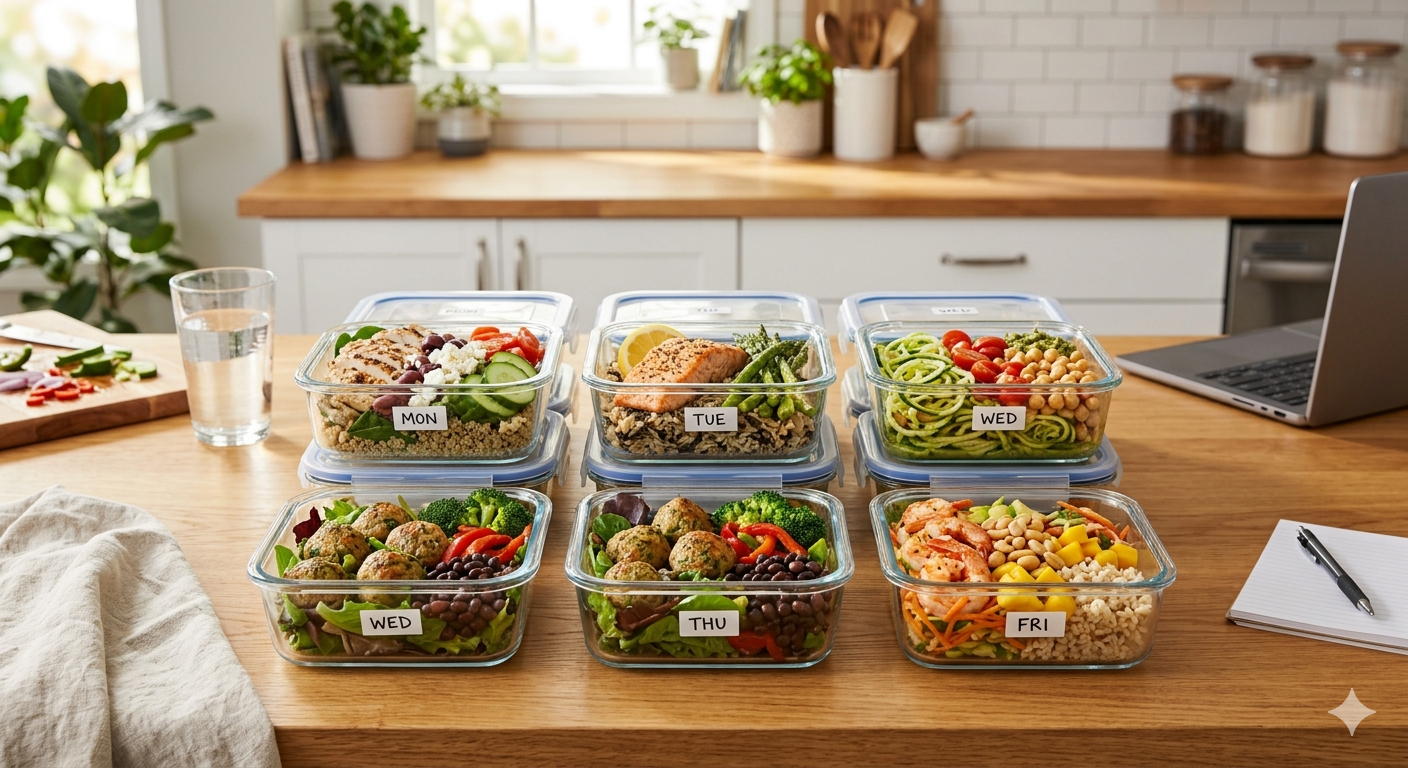
The average American professional spends $3,000+ annually on fast food and takeout while consuming 600-800 extra calories per meal compared to home-prepared options. Meal prep isn't about spending your Sunday cooking—it's about **strategic efficiency**.
The 90-Minute Sunday System:
- Protein Batch Cooking (30 min): Grill 5-6 chicken breasts, bake 2 salmon fillets, or prepare plant-based protein (tofu, tempeh, beans). Portion into containers.
- Carb Preparation (20 min): Cook large batches of quinoa, brown rice, or sweet potatoes. These reheat perfectly and provide sustained energy for afternoon meetings.
- Vegetable Prep (20 min): Chop raw vegetables, roast mixed veggies, or buy pre-washed salads. Add variety to prevent boredom.
- Assembly Line (20 min): Create 5 lunch containers with protein + carb + veggie combos. Add sauces/dressings in small separate containers to prevent sogginess.
Time-Saving Shortcut: Use grocery delivery services (Instacart, Amazon Fresh) with pre-made shopping lists. Many stores offer pre-cooked proteins and pre-cut vegetables that cut prep time by 60% while maintaining nutritional quality.
Professional Advantage: Keep emergency snacks in your desk drawer (almonds, protein bars, Greek yogurt) for days when meetings run late. This prevents the "I'm starving, I'll just grab fast food" scenario that derails progress.
Tip #3: 15-Minute Home Workouts That Outperform Gym Sessions
**HIIT (High-Intensity Interval Training)** has revolutionized time-efficient fitness. Research from the American College of Sports Medicine shows that 15 minutes of HIIT produces similar metabolic benefits to 45 minutes of steady-state cardio.
The Executive 15-Minute Protocol:
Warm-Up (2 minutes)
Jumping jacks, arm circles, leg swings, torso twists—gets blood flowing and prevents injury.
HIIT Circuit (11 minutes - 3 rounds)
Each exercise: 40 seconds work, 20 seconds rest
- Burpees (modified: step back instead of jump if needed)
- Mountain climbers
- Squat jumps (or regular squats for lower impact)
- Push-ups (knees, wall, or full based on fitness level)
- High knees
Rest 60 seconds between rounds. Total: 11 minutes of intense fat-burning.
Cool-Down (2 minutes)
Deep breathing, gentle stretching, particularly hips and shoulders (tight from desk work).
When to Schedule It: Early morning before emails start (6:00-6:15 AM), lunch break (12:30-12:45 PM), or immediately after work before you collapse on the couch. Consistency matters more than timing.
The EPOC Advantage: HIIT triggers Excess Post-Exercise Oxygen Consumption, keeping your metabolism elevated for 24-48 hours post-workout. You're burning calories during board meetings and client calls.
Tip #4: Managing Stress and Cortisol for Belly Fat Loss
Chronic stress elevates cortisol, a hormone that specifically promotes abdominal fat storage. A Mayo Clinic study found that professionals with high-stress jobs had 63% more visceral belly fat than lower-stress counterparts, even with similar diets and exercise.
Micro-Stress Management for Professionals:
- Box Breathing (2 minutes): Inhale 4 seconds, hold 4, exhale 4, hold 4. Repeat 10 cycles. Used by Navy SEALs to manage extreme stress. Lowers cortisol by 25% in clinical studies.
- The 3-Minute Meditation: Use apps like Headspace or Calm for quick guided sessions. Do this between meetings or during lunch. Reduces stress-eating by 47%.
- Nature Micro-Breaks: Step outside for 5 minutes, focus on natural elements (trees, sky, birds). University of Michigan research shows this reduces cortisol by 16% and improves focus.
- Gratitude Journaling (3 minutes): Each morning or evening, write 3 things you're grateful for. Shifts brain from stress response to positive outlook, reducing emotional eating.
- Boundary Setting: Stop checking email after 7 PM. Constant connectivity maintains elevated cortisol. Your health is more important than one more email.
The Belly Fat Connection: Cortisol specifically triggers fat storage in abdominal areas because these fat cells have more cortisol receptors. Managing stress isn't just about mental health—it's a direct weight loss strategy, especially for targeting stubborn belly fat.
Tip #5: Sleep Optimization for Maximum Fat Burn
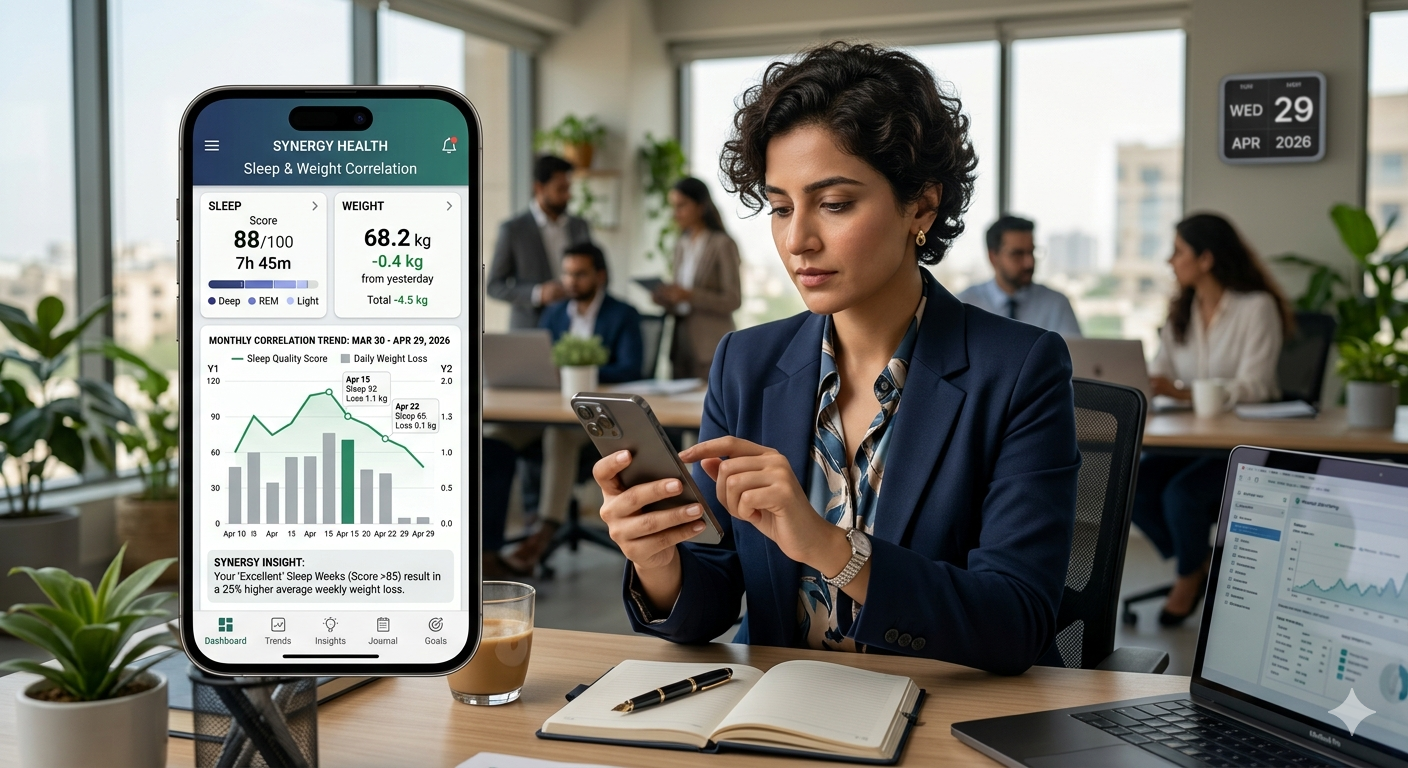
If you're sleeping less than 7 hours, you're actively sabotaging your weight loss. A University of Chicago study found that sleep-deprived dieters lost 55% less fat and 60% more muscle compared to well-rested dieters on identical calorie deficits.
Sleep Optimization Protocol:
- Consistent Schedule: Sleep and wake at the same time daily (even weekends). Regulates circadian rhythm and optimizes fat-burning hormones.
- Screen Curfew: No screens 60 minutes before bed. Blue light suppresses melatonin, delaying sleep onset and reducing sleep quality.
- Temperature Control: Keep bedroom at 65-68°F (18-20°C). Cooler temperatures improve deep sleep quality by 20%.
- Caffeine Cutoff: No caffeine after 2 PM. Caffeine has a 6-hour half-life—that 3 PM coffee is still 50% active at 9 PM.
- Pre-Sleep Ritual: 10 minutes of reading, gentle stretching, or meditation. Signals to your brain that it's time to wind down.
The Hunger Hormone Effect: Sleep deprivation increases ghrelin (hunger hormone) by 28% and decreases leptin (satiety hormone) by 18%. This means you'll crave high-calorie, sugary foods and feel less full after eating. Quality sleep is your secret weapon against cravings.
Tip #6: Smart Office Snacking Strategies
Office environments are calorie minefields: break room donuts, vending machine chips, afternoon energy crashes leading to Starbucks runs. The average office worker consumes 400-600 extra calories daily from mindless snacking.
Professional-Friendly Snack Arsenal:
Desk Drawer Staples (Non-Perishable)
- Mixed nuts (almonds, walnuts) - 1 oz portion = 160 calories, high protein/fiber
- Protein bars (look for <5g sugar, >15g protein) - RXBAR, KIND Protein
- Beef jerky or turkey sticks - 80 calories, 12g protein, zero refrigeration needed
Office Fridge Options
- Greek yogurt (plain, add your own berries) - 100 calories, 17g protein
- Hummus + pre-cut vegetables - 150 calories, fiber-rich, satisfying crunch
- Hard-boiled eggs (prep 6 on Sunday) - 70 calories each, 6g protein
The 3 PM Crash Solution: Instead of coffee + pastry, try: 10-minute walk outside + glass of water + handful of almonds. Natural light resets circadian rhythm, hydration combats fatigue, protein provides sustained energy. No crash, no calories from sugary treats.
Tip #7: Hydration Hacks That Curb Appetite
A University of Washington study found that drinking 16 oz of water before meals reduced calorie intake by 75-90 calories per meal. For three meals daily, that's 225-270 fewer calories without changing what you eat.
Professional Hydration Strategy:
- Morning Jumpstart: 16 oz water immediately upon waking. After 7-8 hours of sleep, you're dehydrated. This kickstarts metabolism and reduces breakfast overeating.
- Pre-Meal Protocol: 16 oz water 15 minutes before each meal. Creates mild stomach fullness, naturally reducing portion sizes.
- Desk Water Bottle: Keep 32 oz bottle visible on desk. Visual reminder increases intake by 50%. Finish by lunch, refill for afternoon.
- Flavor Enhancement: Add lemon, cucumber, or mint if plain water bores you. Zero calories, makes hydration enjoyable.
- App Reminders: Set hourly phone reminders or use apps like WaterMinder until hydration becomes automatic habit.
Hunger vs. Thirst Confusion: The brain often confuses thirst signals with hunger. Before reaching for snacks, drink 8 oz water and wait 10 minutes. If hunger persists, eat. If it fades, you were thirsty, not hungry. This simple test prevents hundreds of unnecessary calories daily.
Target: Half your body weight (in pounds) in ounces daily. Weigh 180 lbs? Aim for 90 oz (about 11 cups). Adjust upward for intense exercise or hot climates.
Realistic Weight Loss Timeline for Busy Professionals
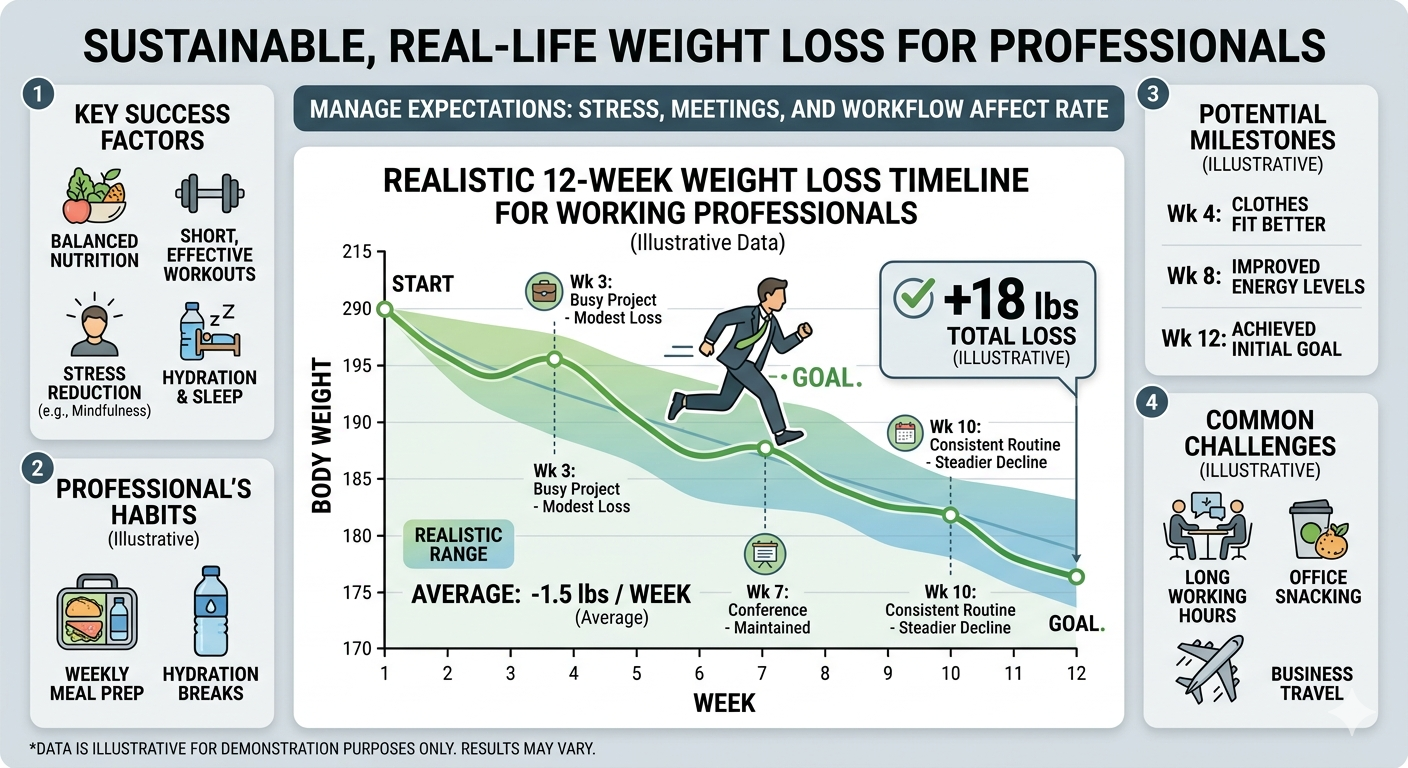
Forget the "lose 20 pounds in 30 days" nonsense. Sustainable weight loss for busy professionals follows this evidence-based timeline:
12-Week Progressive Results:
Weeks 1-3: Foundation Phase
- Expected Loss: 2-4 pounds (mostly water weight initially)
- What's Happening: Building habits, reducing inflammation, improving hydration
- Non-Scale Victories: More energy, better sleep, reduced bloating, clearer thinking
Weeks 4-8: Fat Loss Acceleration
- Expected Loss: 1-2 pounds per week (4-8 pounds total)
- What's Happening: Metabolism adapting, fat burning increasing, muscle preservation
- Non-Scale Victories: Clothes fitting looser, improved stamina, fewer cravings
Weeks 9-12: Sustainable Momentum
- Expected Loss: 1-1.5 pounds per week (3-4.5 pounds total)
- What's Happening: Habays becoming automatic, lifestyle integration complete
- Non-Scale Victories: Confidence boost, colleagues noticing, sustained energy all day
Realistic 12-Week Total: 9-16.5 pounds of primarily fat loss. This might sound modest compared to extreme diets, but this weight stays off. People who lose weight gradually (1-2 lbs/week) are 4x more likely to maintain it long-term.
5 Common Pitfalls to Avoid
- Perfection Paralysis: "I ate one bad meal, might as well give up." One indulgence doesn't erase progress. Get back on track with your next choice. Progress, not perfection.
- Comparison Trap: Your colleague lost 30 pounds in 3 months? Irrelevant. Your journey is unique. Focus on your own progress metrics, not others' results.
- Overcomplicating Nutrition: You don't need macro tracking apps, meal timing strategies, or supplement stacks. Start with whole foods, portion control, and consistency. Add complexity only if needed later.
- Neglecting Stress Management: You can eat perfectly and exercise daily, but unmanaged stress will stall weight loss through cortisol. Tip #4 isn't optional—it's essential.
- Business Travel Sabotage: Airports, hotels, and client dinners derail even committed professionals. Pack snacks, request vegetable sides, limit alcohol to 1-2 drinks, and resume healthy habits immediately upon return. Don't let travel become a week-long binge.
Frequently Asked Questions
Q: Can I really lose weight without going to the gym?
A: Absolutely. Weight loss is 80% nutrition and 20% activity. The 7 strategies in this guide create calorie deficits through micro-movements, meal prep, home workouts, stress management, and sleep optimization—all without gym memberships. Research shows lifestyle-based approaches outperform gym-dependent programs for busy professionals.
Q: How do I handle client lunches and business dinners?
A: Choose grilled proteins over fried, request dressings/sauces on the side, fill half your plate with vegetables, limit alcohol to one drink, and skip the bread basket. You're there for business relationships, not the food. Eat mindfully, enjoy the experience, and resume healthy habits at your next meal.
Q: What if I work from home and barely move?
A: Remote work actually makes these strategies easier to implement. Set hourly movement alarms, do the 15-minute HIIT workout during lunch, meal prep with your kitchen steps away, and eliminate commute time to invest in sleep. The key is creating structure—treat your home office like a real workplace with scheduled breaks.
Q: How much water should I drink if I drink a lot of coffee?
A: Coffee is mildly diuretic, so increase water intake slightly. For every cup of coffee beyond your first, add 8 oz of water to your daily target. However, moderate coffee consumption (2-4 cups) actually supports weight loss by boosting metabolism 3-11%. Just don't load it with sugar and cream.
Q: I travel frequently for work. How do I stay consistent?
A: Pack resistance bands (fit in any suitcase), do bodyweight workouts in hotel rooms, request hotels with refrigerators for your snacks, choose airport salads over fast food, and maintain your sleep schedule across time zones by adjusting gradually. Consistency during travel means maintaining 70-80% of your routine, not 100%.
Q: When will I see visible results?
A: You'll feel better (more energy, better sleep) within 1-2 weeks. You'll notice clothes fitting differently around weeks 3-4. Visible physical changes typically appear around weeks 6-8. Others will notice around weeks 8-12. Trust the process—sustainable weight loss is a marathon, not a sprint.
Conclusion: Your Success Doesn't Require More Time—It Requires Smarter Strategies

The myth that you need hours at the gym to lose weight has prevented millions of busy American professionals from achieving their health goals. The truth? **Weight loss success comes from consistent, intelligent lifestyle choices—not from having the most free time.**
These 7 proven strategies work because they integrate into your existing professional life rather than competing with it. Micro-movements burn calories during your workday. Strategic meal prep saves time and money. Fifteen-minute home workouts deliver gym-level results. Stress management targets stubborn belly fat. Quality sleep amplifies every other effort. Smart snacking prevents office calorie traps. Proper hydration naturally curbs appetite.
Your Action Plan Starting Today:
- Pick 2-3 strategies to implement this week (don't try all 7 at once)
- Set up your desk drawer with healthy snacks
- Schedule your first 15-minute home workout
- Prepare Sunday meal prep for next week
- Set sleep alarm for consistent bedtime
- Track progress with photos and measurements, not just scale weight
Some weeks will be easier than others. Business travel, project deadlines, and family emergencies will test your commitment. That's normal. The professionals who succeed aren't perfect—they're persistent. They miss a workout and resume the next day. They overindulge at a client dinner and choose a healthy breakfast. They understand that **one bad day doesn't erase 30 good ones**.
Twelve weeks from today, you could be 9-16 pounds lighter, sleeping better, thinking clearer, and feeling more confident in boardrooms and boardrooms alike. Or you could be in the exact same place, still telling yourself you'll start when work slows down (it won't).
The choice is yours. Your career is important, but it shouldn't cost you your health. You can be a successful professional AND a healthy, confident version of yourself. These 7 strategies prove it's not about choosing between career and health—it's about integrating both intelligently.
Start today. Not Monday. Not next month. Today. Drink that glass of water. Take that 5-minute walking break. Set your bedtime alarm. Small steps compound into transformational results. Your future self will thank you.
Disclaimer: This article is for informational purposes only and should not be considered medical advice. Always consult with a healthcare professional before starting any new diet or exercise program, especially if you have pre-existing health conditions.
Frequently Asked Questions
Absolutely. Weight loss is 80% nutrition and 20% activity. The 7 strategies in this guide create calorie deficits through micro-movements, meal prep, home workouts, stress management, and sleep optimization—all without gym memberships. Research shows lifestyle-based approaches outperform gym-dependent programs for busy professionals.
Choose grilled proteins over fried, request dressings/sauces on the side, fill half your plate with vegetables, limit alcohol to one drink, and skip the bread basket. You're there for business relationships, not the food. Eat mindfully, enjoy the experience, and resume healthy habits at your next meal.
Remote work actually makes these strategies easier to implement. Set hourly movement alarms, do the 15-minute HIIT workout during lunch, meal prep with your kitchen steps away, and eliminate commute time to invest in sleep. The key is creating structure—treat your home office like a real workplace with scheduled breaks.
Coffee is mildly diuretic, so increase water intake slightly. For every cup of coffee beyond your first, add 8 oz of water to your daily target. However, moderate coffee consumption (2-4 cups) actually supports weight loss by boosting metabolism 3-11%. Just don't load it with sugar and cream.
Pack resistance bands (fit in any suitcase), do bodyweight workouts in hotel rooms, request hotels with refrigerators for your snacks, choose airport salads over fast food, and maintain your sleep schedule across time zones by adjusting gradually. Consistency during travel means maintaining 70-80% of your routine, not 100%.
You'll feel better (more energy, better sleep) within 1-2 weeks. You'll notice clothes fitting differently around weeks 3-4. Visible physical changes typically appear around weeks 6-8. Others will notice around weeks 8-12. Trust the process—sustainable weight loss is a marathon, not a sprint.
Conclusion
The myth that you need hours at the gym to lose weight has prevented millions of busy American professionals from achieving their health goals. These 7 proven strategies integrate into your existing professional life: micro-movements burn calories during work, 15-minute home workouts deliver gym-level results, strategic meal prep saves time and money, stress management targets belly fat, quality sleep amplifies fat loss, smart snacking prevents office calorie traps, and proper hydration curbs appetite. Expect 9-16 pounds loss over 12 weeks with consistent implementation. Success comes from persistent lifestyle choices, not perfect execution or extra free time.
Marwari Luxe Team
Health & Wellness Experts
Our dedicated team of health and wellness professionals committed to providing accurate, research-based information.