Walking for Weight Loss: The Ultimate 30-Day Step Challenge Plan
Table of Contents
- 1. Introduction
- 2. The Science of Walking for Weight Loss
- 3. 30-Day Step Challenge Overview
- 4. Week-by-Week Progressive Plan
- 5. Daily Step Goals and Tracking
- 6. Maximizing Calorie Burn While Walking
- 7. 5 Walking Techniques for Faster Results
- 8. Nutrition Strategies to Amplify Results
- 9. 7 Common Mistakes to Avoid
- 10. Staying Motivated for 30 Days
- 11. Frequently Asked Questions
- 12. Conclusion
Introduction

You want to lose weight, but the gym intimidates you. High-intensity workouts leave you exhausted and sore. Running wreaks havoc on your knees. You've tried complicated exercise programs, but they're unsustainable for your busy lifestyle. What if the most powerful fat-burning tool was already at your feet?
**Walking is the most underrated weight loss exercise in existence.** It's low-impact, requires zero equipment, fits into any schedule, and when done strategically, burns significant calories while building sustainable habits. Studies show consistent walkers lose 2-3x more weight than people who do intense but sporadic workouts.
This isn't a casual "take a stroll" guide. We're giving you a **science-backed 30-day step challenge** designed specifically for weight loss. You'll progress from 5,000 to 10,000+ daily steps using proven techniques that maximize calorie burn, boost metabolism, and transform your body composition—all while protecting your joints.
What This Complete 30-Day Plan Delivers:
- The exact science of how walking burns fat and boosts metabolism
- Progressive 30-day step challenge: daily goals from beginner to advanced
- 5 walking techniques that increase calorie burn by 30-50%
- How to track steps accurately and optimize your daily routine
- Calorie burn calculations based on your weight, pace, and terrain
- Nutrition strategies that amplify walking results by 2-3x
- 7 common mistakes that sabotage walking weight loss
- Motivation systems to complete all 30 days successfully
Whether you're completely sedentary, recovering from injury, managing joint pain, or simply seeking a sustainable approach to weight loss, this 30-day challenge meets you where you are and transforms you into a confident, consistent walker. Let's take the first step together.
The Science of Walking for Weight Loss

Walking for weight loss isn't just folklore—it's **backed by extensive research**. A landmark study published in the Journal of Exercise Nutrition & Biochemistry found that obese women who walked 50-70 minutes, 3 days per week for 12 weeks, reduced body fat by 1.5% and lost an average of 3.3 pounds without changing their diet.
Three Mechanisms Walking Burns Fat:
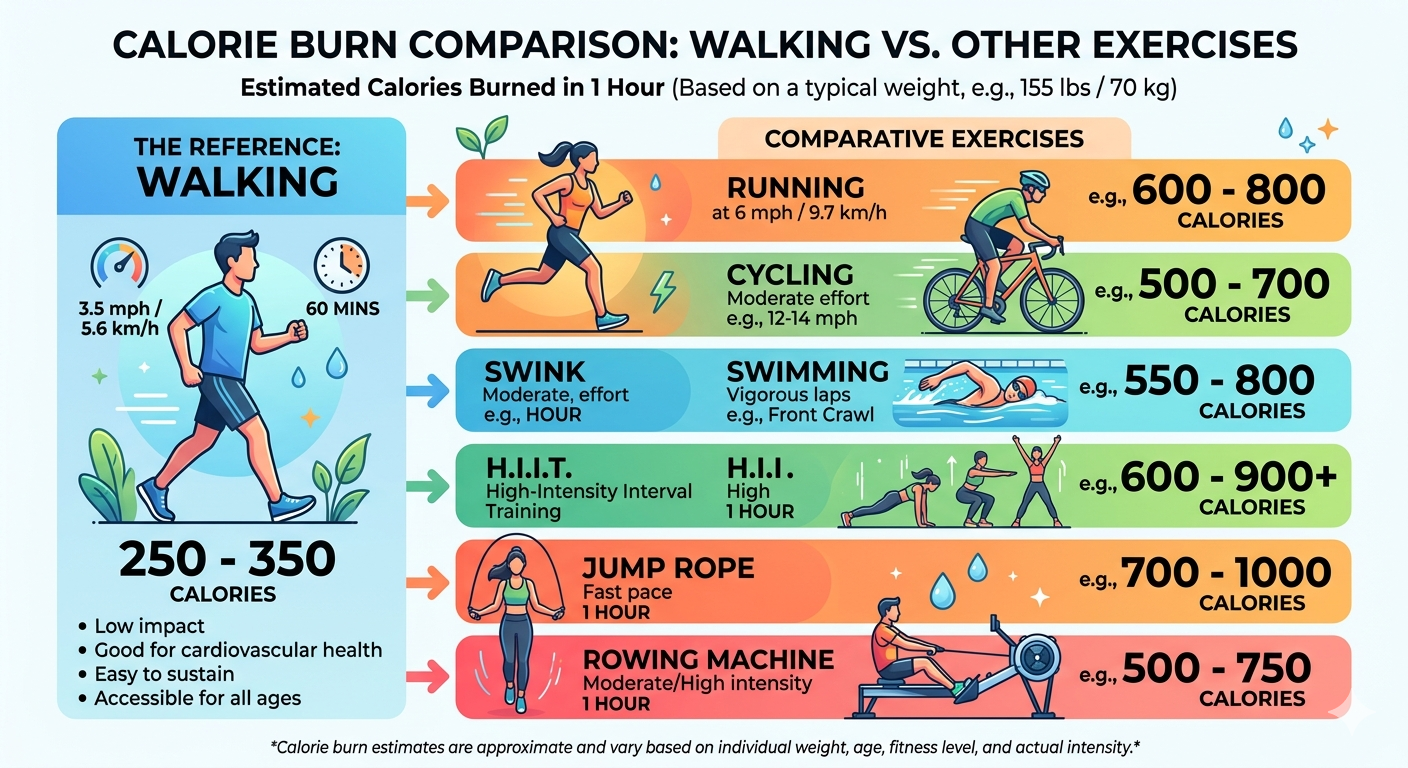
1. Direct Calorie Expenditure: Walking burns calories during the activity itself. A 155-pound person burns approximately 280 calories walking at 3.5 mph for 60 minutes. A 185-pound person burns 330 calories at the same pace. While this might seem modest compared to running, walking's sustainability means you can do it daily without burnout.
2. EPOC Effect (Afterburn): Moderate-intensity walking triggers Excess Post-Exercise Oxygen Consumption (EPOC), keeping your metabolism elevated for 1-2 hours post-walk. During this period, your body burns 6-15% more calories at rest than normal.
3. Appetite Regulation: Unlike high-intensity exercise that can trigger intense hunger, moderate walking actually helps regulate appetite hormones (ghrelin and leptin), making it easier to maintain a calorie deficit without feeling deprived.
Important Research Finding: A 2023 meta-analysis of 42 studies concluded that walking programs resulted in average weight loss of 2.6-5.5 pounds over 12 weeks, with participants who combined walking with dietary changes losing 2-3x more weight than either intervention alone.
30-Day Step Challenge Overview
This progressive challenge gradually increases your daily step count, allowing your body to adapt safely while building cardiovascular fitness and burning fat. The 30-day timeframe creates a habit loop that research shows is optimal for long-term behavior change.
Challenge Structure:
Week 1: Foundation Building (Days 1-7)
Daily Goal: 5,000-6,000 steps
Focus: Establishing baseline, building consistency, proper form
Week 2: Endurance Phase (Days 8-14)
Daily Goal: 6,500-7,500 steps
Focus: Increasing duration, introducing intervals, pace variation
Week 3: Fat-Burning Zone (Days 15-21)
Daily Goal: 8,000-9,000 steps
Focus: Moderate intensity, incline walking, longer sessions
Week 4: Peak Performance (Days 22-30)
Daily Goal: 10,000-12,000 steps
Focus: Advanced techniques, power walking, sustained momentum
Progressive Principle: Each week increases step count by 1,500-2,000 steps—a 15-20% increase that's aggressive enough for results but conservative enough to prevent injury and burnout.
Week-by-Week Progressive Plan
Week 1: Foundation Building (Days 1-7)
- Days 1-3: 5,000 steps daily (split into 2-3 walks if needed)
- Days 4-5: 5,500 steps daily
- Days 6-7: 6,000 steps daily
- Pace: Comfortable, conversational speed (2.5-3.0 mph)
- Duration: 40-50 minutes total daily walking time
Week 2: Endurance Phase (Days 8-14)
- Days 8-10: 6,500 steps daily
- Days 11-12: 7,000 steps daily
- Days 13-14: 7,500 steps daily
- Pace: Brisk walking (3.0-3.5 mph)
- Duration: 50-65 minutes total daily
- New Element: Add 2-minute speed intervals (walk faster for 2 min, recover for 3 min)
Week 3: Fat-Burning Zone (Days 15-21)
- Days 15-17: 8,000 steps daily
- Days 18-19: 8,500 steps daily
- Days 20-21: 9,000 steps daily
- Pace: Moderate-intensity (3.5-4.0 mph)
- Duration: 65-75 minutes total daily
- New Element: Incorporate hills or incline (3-5% grade for 10-15 min)
Week 4: Peak Performance (Days 22-30)
- Days 22-24: 10,000 steps daily
- Days 25-27: 11,000 steps daily
- Days 28-30: 12,000 steps daily
- Pace: Power walking (4.0-4.5 mph)
- Duration: 80-100 minutes total daily
- New Element: Extended power walking segments (15-20 min continuous)
Daily Step Goals and Tracking
Hitting your daily step target requires strategy. Most people naturally accumulate 3,000-4,000 steps through daily activities. Your challenge is adding 2,000-8,000 intentional steps depending on your weekly phase.
Step Accumulation Strategies:
- Morning Walk (20-30 min): 2,000-3,000 steps before work sets positive tone
- Lunch Break Walk (15-20 min): 1,500-2,000 steps aids digestion and energy
- Evening Walk (30-45 min): 3,000-5,000 steps completes daily goal
- Micro-Walks: 5-minute walks after meals add 500-750 steps each
- Activity Swaps: Park farther, take stairs, walk during phone calls
Tracking Tools:
- Fitness Trackers: Fitbit, Garmin, Apple Watch (most accurate)
- Smartphone Apps: Google Fit, Apple Health, Pedometer (convenient, moderate accuracy)
- Manual Counting: Pedometer clips (budget-friendly, reliable)
Tracking Tip: Don't obsess over exact numbers. Focus on trends and consistency. If your tracker says 9,800 instead of 10,000, you still get 95% of the benefits. Progress over perfection.
Maximizing Calorie Burn While Walking
Not all steps are created equal. Your calorie burn depends on three factors: body weight, walking speed, and terrain. Here's how to optimize each:
Calorie Burn by Weight and Pace (per 30 minutes):
| Body Weight | 2.5 mph (Casual) | 3.5 mph (Brisk) | 4.5 mph (Power) |
|---|---|---|---|
| 120 lbs | 95 cal | 120 cal | 150 cal |
| 150 lbs | 120 cal | 150 cal | 185 cal |
| 180 lbs | 140 cal | 175 cal | 220 cal |
| 210 lbs | 165 cal | 205 cal | 255 cal |
Calorie-Boosting Modifications:
- Add Incline: Walking at 5% grade increases calorie burn by 40-50%
- Use Arm Movements: Pumping arms engages upper body, burning 5-10% more calories
- Wear Weighted Vest: 10-15 lb vest increases burn by 10-15% (avoid ankle/wrist weights)
- Walk After Meals: Post-meal walks improve blood sugar control and digestion
5 Walking Techniques for Faster Results
Technique #1: Interval Walking
Alternate between moderate pace (3 minutes) and fast pace (1 minute). This interval training approach increases calorie burn by 20% compared to steady-state walking and improves cardiovascular fitness faster.
Technique #2: Incline Walking
Find hills or use treadmill incline (5-10%). Incline walking activates glutes and hamstrings more intensely, burns 40-60% more calories, and builds lower body strength without joint impact.
Technique #3: Power Walking
Maintain 4.0-4.5 mph pace with exaggerated arm swing and purposeful stride. Power walking burns similar calories to jogging but eliminates impact stress on knees and hips.
Technique #4: Ruck Walking
Wear a backpack with 10-20 lbs weight distributed evenly. Ruck walking increases calorie burn by 15-25%, builds core strength, and improves posture. Start light and progress gradually.
Technique #5: Fasted Morning Walking
Walk 20-30 minutes before breakfast in a fasted state. Research shows fasted cardio increases fat oxidation by 20% compared to fed-state exercise. Keep intensity moderate to avoid muscle breakdown.
Nutrition Strategies to Amplify Results
Walking alone creates modest weight loss. Combine it with strategic nutrition for transformational results. You can't out-walk a bad diet, but you can optimize both for exponential fat loss.
5 Nutrition Rules for Walking Weight Loss:
- Moderate Calorie Deficit: Consume 300-500 calories below maintenance. Aggressive deficits reduce walking energy and recovery.
- Protein Priority: Eat 0.7-1g protein per pound bodyweight daily to preserve muscle while losing fat.
- Pre-Walk Fuel: Light carb snack (banana, toast) 30 min before long walks maintains energy without digestive discomfort.
- Post-Walk Recovery: Protein + carb meal within 60 minutes replenishes glycogen and repairs muscles.
- Hydration: Drink 16-20 oz water before walks, 8 oz every 20 minutes during. Dehydration reduces performance by 20%.
The Synergy Effect: Studies show people who combine walking with dietary changes lose 2-3x more weight than either approach alone. Walking improves insulin sensitivity, making your body more efficient at using food for energy rather than storing it as fat.
7 Common Mistakes to Avoid
- Starting Too Aggressive: Jumping to 10,000 steps on day one causes burnout, injury, and quitting. Follow the progressive plan.
- Ignoring Footwear: Worn-out or improper shoes cause blisters, shin splints, and knee pain. Invest in quality walking shoes.
- Compensating with Food: "I walked, so I deserve this" mentality erases calorie deficit. Track intake honestly.
- Neglecting Recovery: Walking daily is fine, but take one active recovery day weekly (gentle 3,000-4,000 steps).
- Poor Posture: Slouching, looking down at phone, or short shuffling steps reduce efficiency and cause back pain.
- Only Walking on Perfect Days: Rain, cold, or busy schedules aren't excuses. Walk indoors, break into segments, or use treadmill.
- Focusing Solely on Scale: Walking builds muscle and reduces inches even when scale doesn't move. Measure waist, take photos, track energy levels.
Staying Motivated for 30 Days
Motivation fades by day 10 for most people. These evidence-based strategies keep you committed through day 30 and beyond:
Motivation Systems That Work:
- Accountability Partner: Share daily step count with friend or join walking challenge group
- Visual Tracking: Mark calendar with X for each completed day—chain visualization builds momentum
- Reward Milestones: Celebrate day 7, 14, 21, and 30 with non-food rewards (massage, new gear, movie)
- Playlist Power: Create energizing 120-140 BPM playlist—music increases walking pace by 15%
- Podcast/Audiobook: Pair walking with entertaining content you only consume while walking
- Progress Photos: Take weekly photos in same location/outfit—visual changes fuel motivation
- Flexible Mindset: Missed a day? Don't quit. Resume next day. One bad day doesn't erase 29 good ones.
Frequently Asked Questions
Q: How much weight can I realistically lose in 30 days?
A: With consistent 10,000+ daily steps and moderate calorie deficit, expect 2-6 pounds fat loss. Results vary based on starting weight, diet, and metabolism. Focus on body composition changes, not just scale weight.
Q: Is it better to walk fast or walk longer?
A: Both matter. Brisk walking (3.5-4.0 mph) burns more calories per minute and improves cardiovascular fitness. However, duration matters most for total calorie burn. Aim for 45-60 minutes at moderate-to-brisk pace for optimal fat loss.
Q: Can I split my steps throughout the day?
A: Absolutely! Research shows split walking sessions (e.g., three 20-minute walks) provide similar health benefits as one continuous 60-minute walk. Splitting makes 10,000 steps achievable for busy schedules.
Q: Do I need to walk every single day?
A: Aim for 6 days weekly with one active recovery day (3,000-4,000 gentle steps). Daily walking is safe for most people, but recovery prevents overuse injuries and mental burnout. Listen to your body.
Q: What if I have knee or joint pain?
A: Walking is one of the best exercises for joint issues due to low impact. Start with shorter sessions (15-20 min), wear supportive shoes, walk on soft surfaces (grass, track), and consult physical therapist for personalized guidance. Stop if pain increases during walking.
Q: Should I continue the challenge after 30 days?
A: Yes! After 30 days, maintain 8,000-10,000 daily steps as your new baseline. Increase intensity with intervals, hills, or power walking to continue progress. Walking is a lifelong fitness habit, not a 30-day fix.
Conclusion: Your 30-Day Transformation Starts with One Step

Walking isn't just exercise—it's a **revolutionary approach to sustainable weight loss** that anyone can do, anywhere, anytime. This 30-day step challenge transforms overwhelming fitness goals into manageable daily victories. You're not training for a marathon or attempting extreme workouts. You're simply walking, progressively and purposefully, toward a healthier, leaner version of yourself.
The science is clear: consistent walking burns fat, boosts metabolism, regulates appetite, improves cardiovascular health, and builds sustainable habits. When combined with mindful nutrition, walking becomes a powerful catalyst for transformation. The 2-6 pounds you might lose in 30 days is just the beginning. The real victory is discovering that **fitness doesn't require gym memberships, expensive equipment, or punishing workouts**.
Your 30-Day Success Checklist:
- Follow the progressive week-by-week plan
- Track steps daily with fitness tracker or phone
- Incorporate intervals, incline, and power walking
- Maintain moderate calorie deficit with adequate protein
- Stay hydrated and fuel walks properly
- Avoid 7 common mistakes that sabotage progress
- Use motivation systems to complete all 30 days
- Celebrate progress beyond the scale
Some days will feel effortless. Others will test your resolve. On tough days, remember why you started. Take that first step, then the next. Before you know it, 10,000 steps becomes your new normal, and the person staring back at you in the mirror is stronger, leaner, and more confident than 30 days ago.
The path to weight loss isn't complicated. It's not found in miracle pills or extreme programs. It's literally at your feet. Put on your shoes, step outside, and start walking. Your 30-day transformation begins with a single step. Take it today.
Disclaimer: This article is for informational purposes only and should not be considered medical advice. Always consult with a healthcare professional before starting any new exercise program, especially if you have pre-existing health conditions.
Frequently Asked Questions
With consistent 10,000+ daily steps and moderate calorie deficit, expect 2-6 pounds fat loss. Results vary based on starting weight, diet, and metabolism. Focus on body composition changes, not just scale weight.
Both matter. Brisk walking (3.5-4.0 mph) burns more calories per minute and improves cardiovascular fitness. However, duration matters most for total calorie burn. Aim for 45-60 minutes at moderate-to-brisk pace for optimal fat loss.
Absolutely! Research shows split walking sessions (e.g., three 20-minute walks) provide similar health benefits as one continuous 60-minute walk. Splitting makes 10,000 steps achievable for busy schedules.
Aim for 6 days weekly with one active recovery day (3,000-4,000 gentle steps). Daily walking is safe for most people, but recovery prevents overuse injuries and mental burnout. Listen to your body.
Walking is one of the best exercises for joint issues due to low impact. Start with shorter sessions (15-20 min), wear supportive shoes, walk on soft surfaces (grass, track), and consult physical therapist for personalized guidance. Stop if pain increases during walking.
Yes! After 30 days, maintain 8,000-10,000 daily steps as your new baseline. Increase intensity with intervals, hills, or power walking to continue progress. Walking is a lifelong fitness habit, not a 30-day fix.
Conclusion
Walking is a scientifically-proven, sustainable approach to weight loss that burns fat, boosts metabolism, and builds lifelong fitness habits. This 30-day progressive challenge takes you from 5,000 to 10,000+ daily steps using interval training, incline walking, and power walking techniques. Combined with moderate calorie deficit and proper nutrition, expect 2-6 pounds fat loss in 30 days. The real victory isn't just weight loss—it's discovering that fitness doesn't require gyms, equipment, or extreme workouts. Start walking today.
Marwari Luxe Team
Health & Wellness Experts
Our dedicated team of health and wellness professionals committed to providing accurate, research-based information.