Sleep Better Tonight: 10-Minute Bedtime Routine to Fix Insomnia Naturally

Table of Contents
- 1. Introduction
- 2. Why Quality Sleep Is Non-Negotiable
- 3. The Science: How Your Body Prepares for Sleep
- 4. Your 10-Minute Bedtime Routine (Step-by-Step)
- 5. Step 1: Digital Sunset (Minute 0-2)
- 6. Step 2: Prepare a Relaxation Drink (Minute 2-4)
- 7. Step 3: Gentle Stretching (Minute 4-7)
- 8. Step 4: Breathing or Meditation (Minute 7-10)
- 9. Additional Sleep Optimization Tips
- 10. Frequently Asked Questions
- 11. Conclusion
Introduction

It's 11 PM. You're exhausted. But as soon as your head hits the pillow, your brain decides it's party time. Thoughts race. Worries multiply. You check the clock"midnight, 1 AM, 2 AM. By the time you finally drift off, it's almost morning, and you wake up feeling like you've been hit by a truck. Sound familiar?
If you're struggling with insomnia or poor sleep quality, you're not alone. **45% of adults** report difficulty falling or staying asleep at least a few nights per week. The consequences go far beyond feeling groggy"chronic sleep deprivation increases your risk of obesity, heart disease, diabetes, depression, and weakens your immune system.
But here's the good news: **You can fix your insomnia naturally**"without prescription medications, expensive gadgets, or drastic lifestyle changes. The secret lies in creating a consistent **10-minute bedtime routine** that signals to your body and brain that it's time to wind down and prepare for restorative sleep.
In this comprehensive 2026 guide, you'll discover a science-backed evening routine used by sleep specialists and thousands of reformed insomniacs. This isn't vague advice like "just relax more." It's a precise, minute-by-minute protocol that takes just 10 minutes but delivers life-changing results. Most people notice improvements within the first week, with dramatic transformations in sleep quality within 30 days.
What You'll Learn in This Sleep Transformation Guide:
- The neuroscience behind why bedtime routines work
- Exact 10-minute routine broken down step-by-step
- Natural sleep aids that actually have scientific backing
- Bedroom optimization tips for maximum sleep quality
- How to fix common sleep disruptors without medication
Why Quality Sleep Is Non-Negotiable for Health
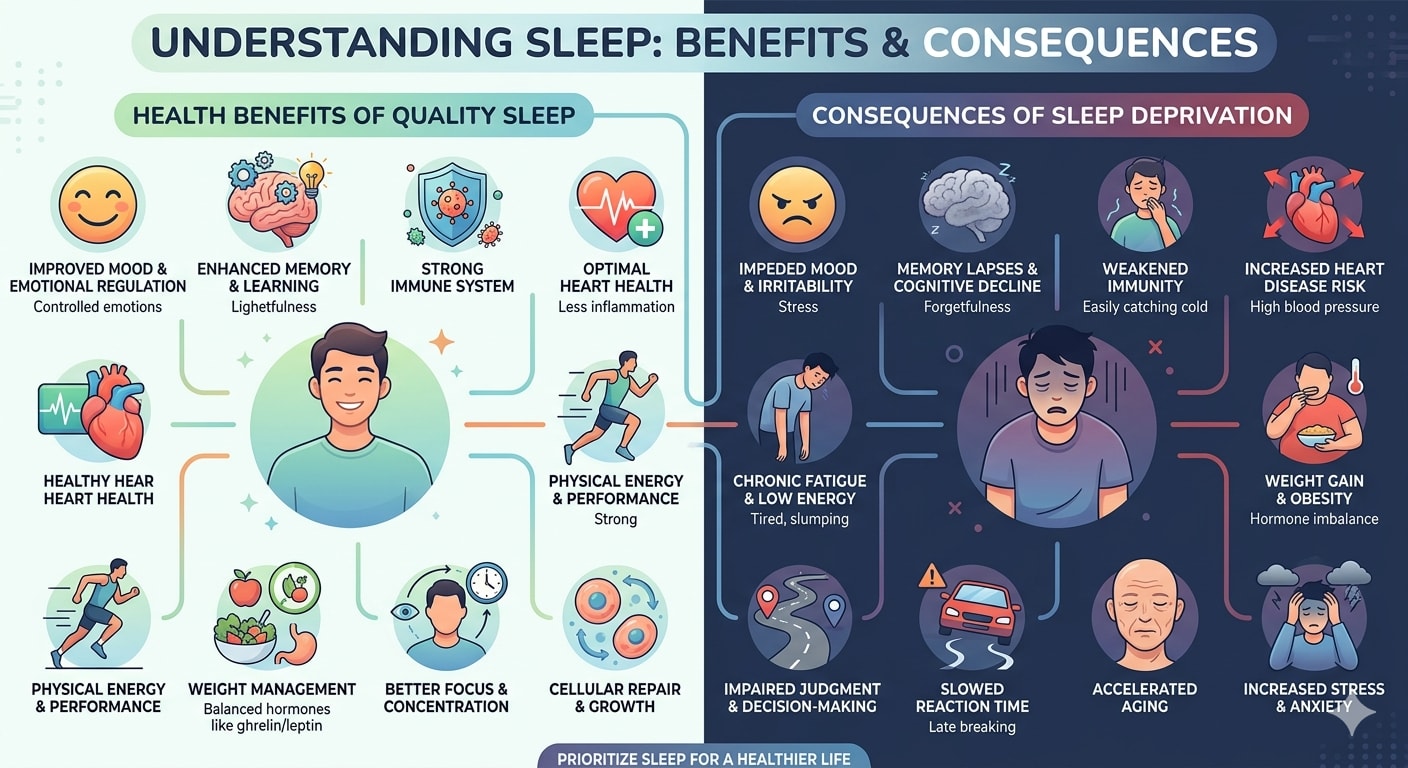
Sleep isn't just "downtime""it's when your body performs critical maintenance and repair functions. During deep sleep stages, your brain consolidates memories, clears metabolic waste, regulates hormones, and repairs tissues. Skimp on sleep, and every system in your body suffers.
What Happens During Quality Sleep
- Brain Detoxification: Your glymphatic system activates, flushing out beta-amyloid proteins linked to Alzheimer's disease.
- Memory Consolidation: Short-term memories transfer to long-term storage, enhancing learning and retention.
- Hormone Regulation: Growth hormone releases for tissue repair; leptin and ghrelin balance to regulate appetite.
- Immune System Strengthening: Cytokines production increases to fight infection and inflammation.
- Emotional Processing: REM sleep helps process emotions and reduces next-day anxiety.
Consequences of Chronic Sleep Deprivation
- Weight Gain: Just one week of poor sleep increases insulin resistance and cravings for high-carb foods.
- Weakened Immunity: People who sleep less than 6 hours are 4x more likely to catch colds.
- Mental Health Decline: Chronic insomnia increases depression risk by 5x and anxiety by 3x.
- Cognitive Impairment: 24 hours without sleep impairs driving ability equivalent to 0.10% blood alcohol content.
- Cardiovascular Risk: Consistently sleeping less than 6 hours increases heart disease risk by 48%.
Reality Check: Adults need 7-9 hours of quality sleep nightly. Yet 35% of Americans average less than 6 hours. This isn't sustainable"it's a health crisis disguised as productivity culture.
The Science: How Your Body Naturally Prepares for Sleep
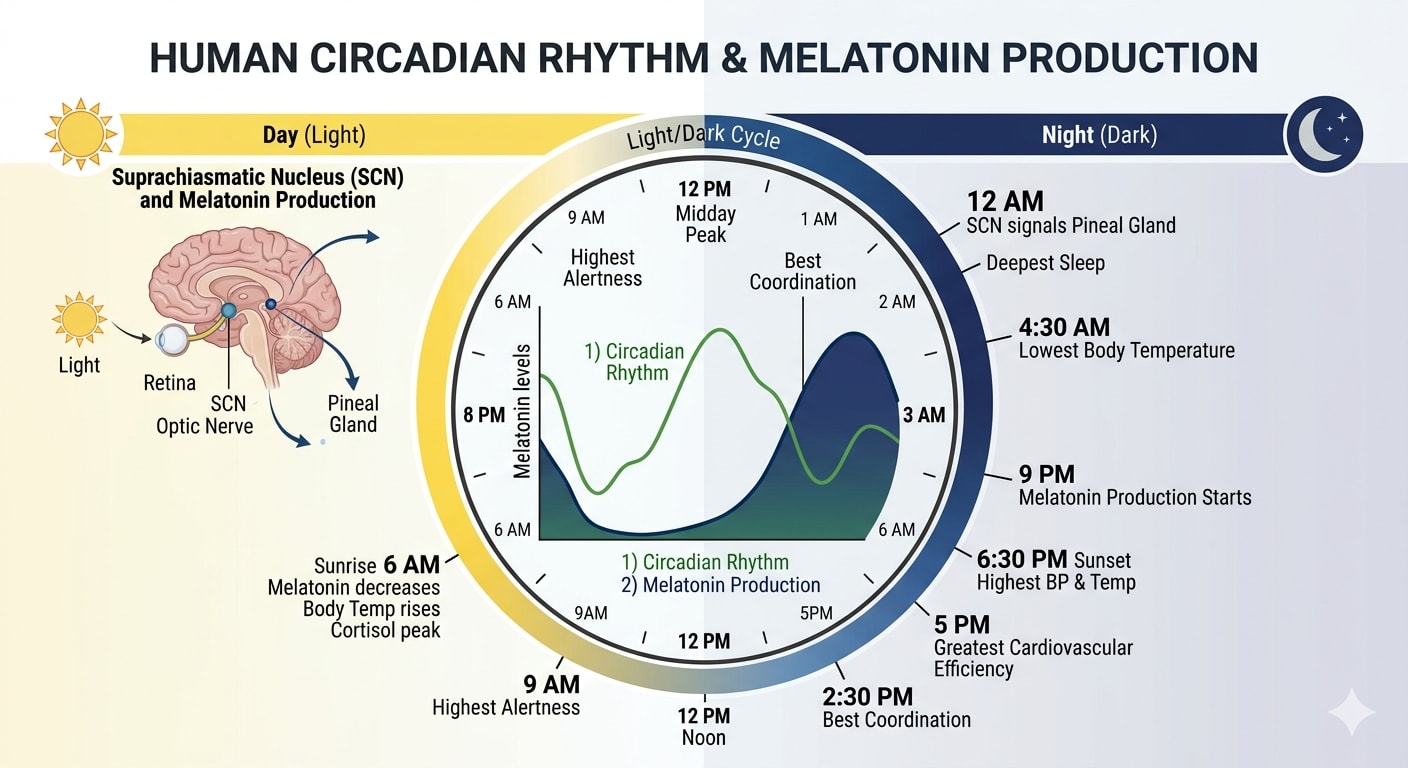
Your body operates on a 24-hour internal clock called the circadian rhythm. This biological timer regulates when you feel alert and when you feel sleepy, primarily through the release of hormones"especially melatonin, the "sleep hormone."
The Melatonin Cascade
As natural light fades in the evening, your brain's pineal gland begins producing melatonin. This hormone doesn't make you "sleep" directly"it signals that it's nighttime and triggers physiological changes: body temperature drops, heart rate slows, and alertness decreases. About 2 hours after melatonin onset, you experience the "sleep gate""your optimal window for falling asleep easily.
What Disrupts This Natural Process?
Modern life constantly interferes with your circadian rhythm:
' Blue light from screens (phones, laptops, TVs) tricks your brain into thinking it's daytime, suppressing melatonin for up to 3 hours
' Irregular sleep schedules confuse your internal clock
' Caffeine consumption after 2 PM blocks adenosine receptors that signal sleep pressure
' Stress and anxiety elevate cortisol, which opposes melatonin
' Heavy meals late at night divert energy to digestion instead of rest
' Inconsistent bedroom environment (too warm, too bright, too noisy)
How Bedtime Routines Restore Natural Sleep
A consistent pre-sleep routine acts as a "bridge" between your busy day and restful night. It:
Signals safety to your nervous system (activating parasympathetic mode)
Creates psychological association between routine activities and sleep
Gradually lowers core body temperature
Reduces cortisol and mental arousal
Allows natural melatonin production to occur unimpeded
Trains your brain to recognize bedtime patterns
Research Finding: Studies show that people who follow a consistent bedtime routine fall asleep 40% faster, experience fewer nighttime awakenings, and report higher sleep satisfaction compared to those with irregular pre-sleep habits.
Your Complete 10-Minute Bedtime Routine
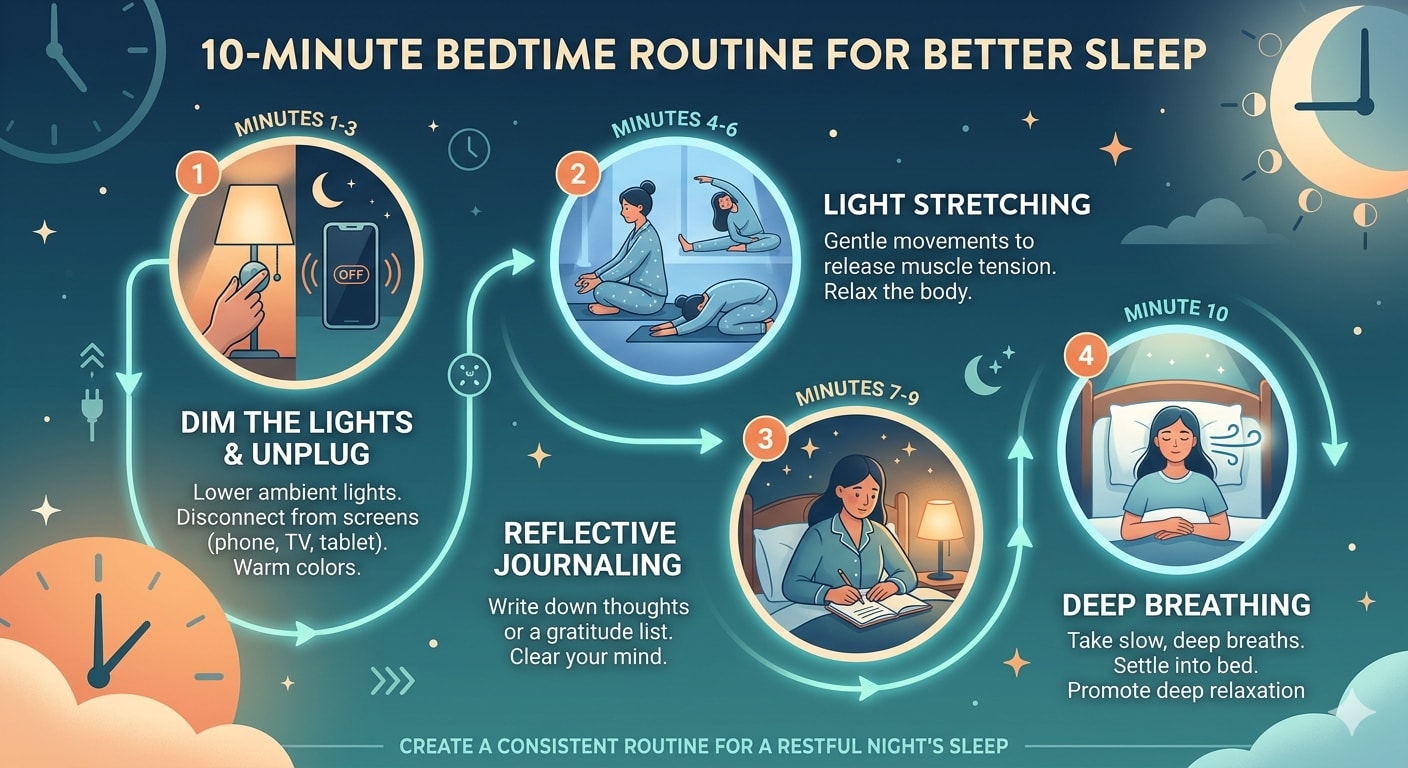
This routine is designed to be simple, sustainable, and scientifically optimized. Each step builds on the previous one, creating a cumulative relaxation effect that prepares your entire system for deep, restorative sleep.
The 4-Step Protocol
Minute 0-2: Digital Sunset & Environment Setup
Minute 2-4: Prepare & Sip a Relaxation Drink
Minute 4-7: Gentle Stretching or Yoga
Minute 7-10: Breathing Exercise or Mini-Meditation
Important: Perform these steps in the same order every night. Consistency is more important than perfection"even if you only have 5 minutes, do a shortened version rather than skipping entirely.
Step 1: Digital Sunset & Environment Setup (Minutes 0-2)

The first 2 minutes are about removing sleep disruptors and optimizing your environment. This sets the foundation for everything else.
Action Steps:
- Power Down Devices: Turn off your phone, tablet, laptop, and TV. If you must use your phone (as an alarm, for example), enable Night Shift mode and keep it on airplane mode across the room.
- Dim the Lights: Lower overhead lights and switch to warm-toned lamps (yellow/orange spectrum). Bright light suppresses melatonin; dim light encourages it.
- Set Room Temperature: Adjust thermostat to 60-67 °F (15-19 °C). Your core body temperature needs to drop 2-3 °F to initiate sleep.
- Check Noise Levels: Close windows to block outside noise. Use earplugs, white noise machine, or fan if needed for consistent sound environment.
- Gather Tomorrow's Essentials: Lay out clothes, pack bag, prep coffee maker. This prevents tomorrow-morning decision fatigue and tonight's worry-forgetting loop.
Pro Tip: Install blue light blocking apps on all devices (f.lux for computers, Night Shift for iPhones). Better yet, wear blue light blocking glasses 2 hours before bed if you must use screens. Amber or red-tinted lenses are most effective.
Step 2: Prepare & Sip a Relaxation Drink (Minutes 2-4)

Warm, non-caffeinated beverages have both physiological and psychological sleep-inducing effects. The warmth raises your core temperature slightly, triggering compensatory cooling that mimics natural sleep onset.
Best Natural Sleep Drinks
- Chamomile Tea: Contains apigenin, an antioxidant that binds to GABA receptors (same as anti-anxiety medications). Studies show 27% improvement in sleep quality with daily consumption.
- Tart Cherry Juice: Natural source of melatonin and tryptophan. Research shows drinking 8 oz twice daily increases sleep time by 84 minutes and improves sleep efficiency.
- Warm Milk with Honey: Milk contains tryptophan; honey helps it cross the blood-brain barrier more effectively. The ritual itself is psychologically soothing.
- Magnesium Powder Drink: Mix 200-400mg magnesium glycinate in warm water. Magnesium relaxes muscles and calms the nervous system.
- Valerian Root Tea: Increases GABA levels in the brain. Clinical trials show it reduces time to fall asleep by an average of 15 minutes.
Preparation Instructions:
- Prepare your chosen drink (takes 1-2 minutes).
- Find a comfortable seated position in dim lighting.
- Sip slowly and mindfully"don't chug. Focus on the warmth, taste, and sensation.
- As you drink, mentally scan your body from head to toe, consciously relaxing each muscle group.
� Important: Finish your drink 30-60 minutes before lying down to avoid nighttime bathroom trips. This 2-minute preparation is part of your 10-minute routine, but consume it earlier in your evening if possible.
Step 3: Gentle Stretching or Restorative Yoga (Minutes 4-7)
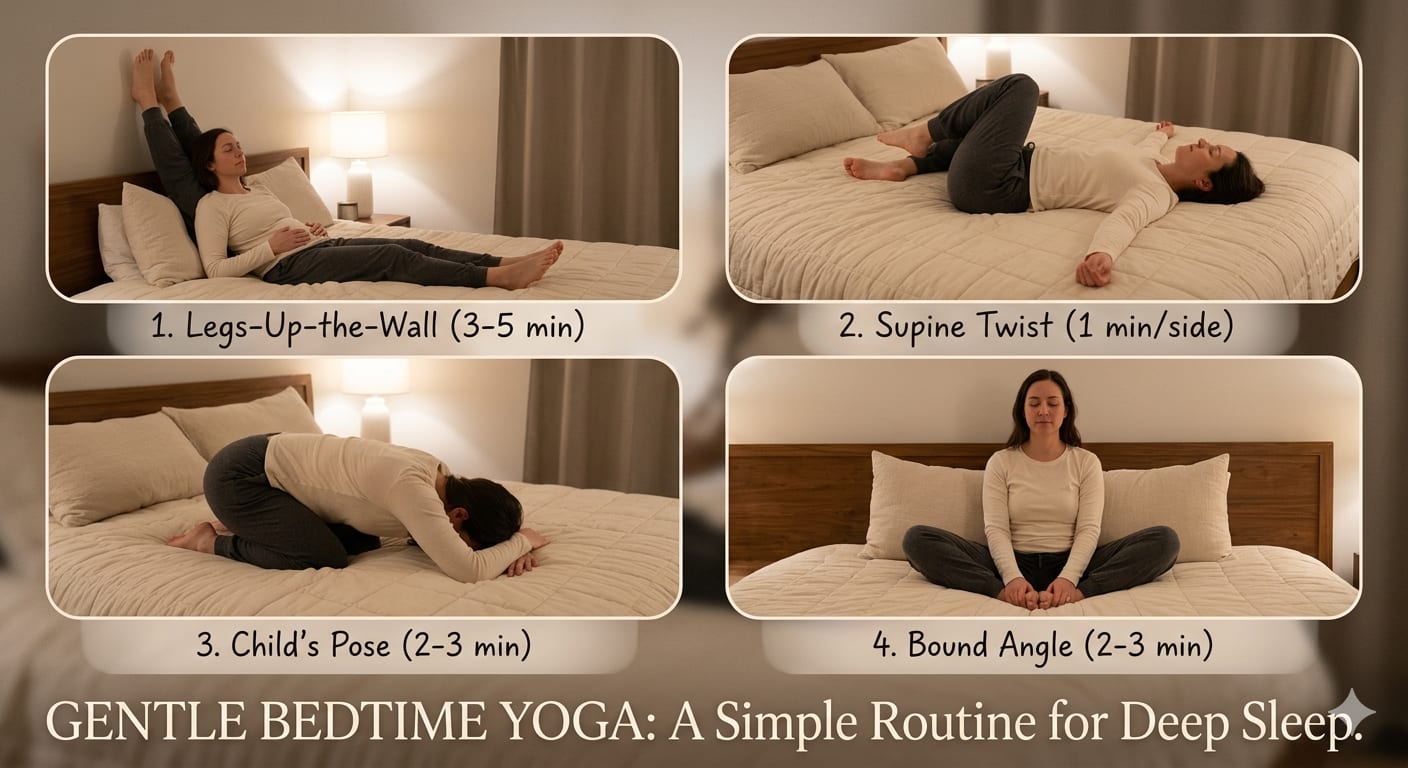
Light stretching releases physical tension accumulated throughout the day and shifts your focus from mental chatter to bodily sensations. This 3-minute movement practice signals transition from doing mode to being mode.
Three Essential Bedtime Stretches
Hold each position for 60 seconds, breathing deeply:
1. Child's Pose (Balasana)
Kneel on floor, sit back on heels, fold forward with arms extended. Rest forehead on mat. This pose activates the parasympathetic nervous system and relieves lower back tension.
2. Legs-Up-The-Wall (Viparita Karani)
Lie on your back with legs extended up against a wall. Arms rest at sides. This inversion calms the nervous system, reduces leg swelling, and reverses blood flow for relaxation.
3. Supine Spinal Twist
Lie on back, hug right knee to chest, then guide it across your body to the left. Extend right arm out, look over right shoulder. Hold for 60 seconds, then switch sides. Releases spinal tension and aids digestion.
Key Points:
Move slowly"this isn't exercise, it's relaxation
Never stretch to pain; gentle tension only
Coordinate breath with movement
If you can't get on the floor, do seated versions on your bed
Focus on areas where you hold tension (jaw, shoulders, hips, lower back)
Step 4: Breathing Exercise or Mini-Meditation (Minutes 7-10)

The final 3 minutes quiet your mind and complete the transition into sleep-ready mode. This is when you shift from physical relaxation to mental stillness.
Option A: 4-7-8 Breathing Technique
Developed by Dr. Andrew Weil, this technique is specifically designed to induce sleep:
- Lie comfortably in bed, tongue tip touching roof of mouth behind front teeth.
- Exhale completely through mouth with whoosh sound.
- Inhale quietly through nose for count of 4.
- Hold breath for count of 7.
- Exhale forcefully through mouth for count of 8 (whoosh sound).
- Repeat for 4 cycles total.
Option B: Body Scan Meditation
This progressive relaxation technique systematically releases tension:
- Lie on your back, arms at sides, legs slightly apart.
- Bring attention to your toes. Notice any sensation (tingling, warmth, tension).
- On exhale, imagine releasing all tension from toes.
- Slowly move attention upward: feet, ankles, calves, knees, thighs, hips, abdomen, chest, hands, arms, shoulders, neck, face, crown of head.
- At each body part, breathe into it, then release on exhale.
- If mind wanders, gently return to wherever you left off.
Option C: Gratitude Reflection
Ending your day with gratitude shifts your mental state from lack to abundance:
- Think of 3 specific things from today you're grateful for.
- They can be tiny (good cup of coffee) or significant (supportive partner).
- For each, spend 20 seconds truly feeling the appreciation in your body.
- Notice how gratitude feels physically (warmth, expansion, softness).
- Allow this positive emotion to be the last conscious thought before sleep.
Success Strategy: Rotate between these three options based on what your mind/body needs most each night. Physical tension? Choose body scan. Racing thoughts? Try 4-7-8 breathing. Feeling emotionally drained? Practice gratitude.
Bonus: 10 Additional Tips to Sleep Better Tonight
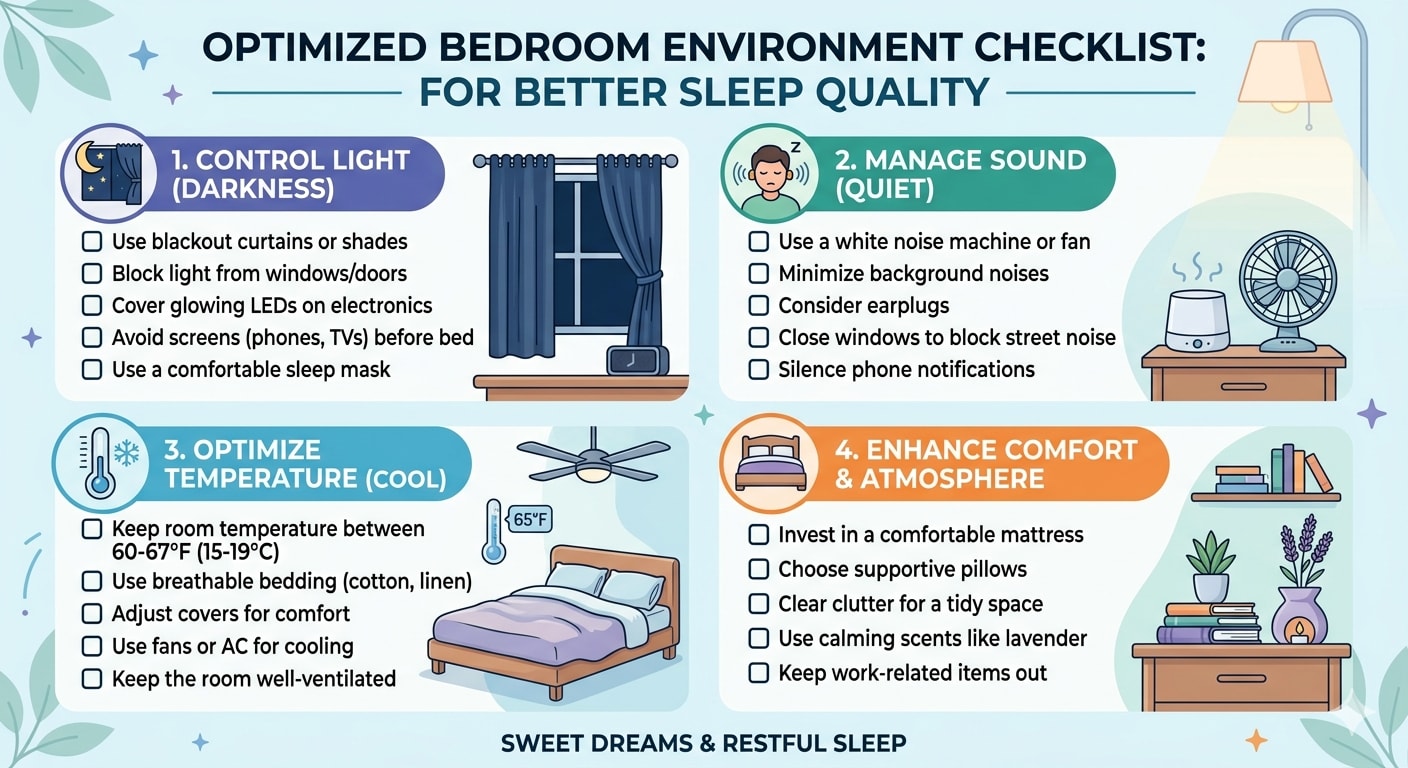
Beyond the 10-minute routine, these evidence-based strategies amplify your sleep quality:
- Maintain Consistent Sleep Schedule: Wake up and go to bed at the same time daily"even weekends. This regulates your circadian rhythm.
- Get Morning Sunlight: 15-30 minutes of natural light within 1 hour of waking sets your internal clock and improves nighttime melatonin timing.
- Exercise Regularly: 30 minutes of moderate exercise improves sleep quality, but finish workouts 3 hours before bed.
- Limit Caffeine After 2 PM: Caffeine's half-life is 5-6 hours. That afternoon coffee is still 50% active at bedtime.
- Avoid Heavy Meals 3 Hours Before Bed: Digestion interferes with sleep. If hungry, have a light snack (banana, small handful of almonds).
- Create a Sleep Sanctuary: Invest in a comfortable mattress, blackout curtains, and remove electronics from the bedroom.
- Use Your Bed Only for Sleep and Intimacy: Don't work, eat, or watch TV in bed. Train your brain to associate bed with sleep.
- Try White Noise or Pink Noise: Consistent sound masks disruptions and can deepen sleep stages.
- Consider Weighted Blankets: Studies show they reduce anxiety and improve sleep quality through deep pressure stimulation.
- If You Can't Sleep, Get Up: Lying awake reinforces anxiety about sleep. Get up, do something boring in dim light, return to bed when sleepy.
Expected Timeline:
Night 1-3: May feel awkward, noticing slight ease in falling asleep
Week 1: Routine becomes familiar, falling asleep 15-20 minutes faster
Week 2-3: Waking up fewer times, feeling more refreshed
Week 4+: Dramatic improvement in sleep quality, energy, and mood
Frequently Asked Questions About Fixing Insomnia Naturally
Q1: How long will it take to see results from this bedtime routine?
Most people notice falling asleep easier within 3-5 nights. Significant improvements in sleep quality typically occur within 2 weeks. Full transformation"where you consistently sleep 7-8 hours and wake refreshed"usually happens within 4-6 weeks of consistent practice.
Q2: What if I miss a night or travel?
Don't stress"one missed night won't undo your progress. The goal is consistency over perfection. When traveling, adapt the routine to your environment (do breathing exercises even if you can't do stretches). Resume your full routine as soon as you return home.
Q3: Can I take sleep supplements with this routine?
Yes, natural supplements like melatonin (0.5-3mg), magnesium glycinate (200-400mg), or L-theanine (100-200mg) complement this routine well. However, focus on behavioral changes first"supplements should support, not replace, good sleep hygiene.
Q4: Should I exercise before bed?
Intense exercise within 3 hours of bedtime can interfere with sleep due to elevated adrenaline and body temperature. However, gentle yoga, stretching, or walking in the evening can promote relaxation and improve sleep quality.
Q5: What if my partner has different sleep schedules?
Communicate the importance of your sleep health. Compromise solutions include: using eye masks and earplugs, establishing "quiet hours," or temporarily sleeping separately if schedules are drastically different. Your sleep matters.
Q6: Is it bad to use my phone as an alarm in the bedroom?
Ideally, charge your phone outside the bedroom. The temptation to scroll is real, and notifications can disrupt sleep. Use a traditional alarm clock instead. If you must use your phone, enable Do Not Disturb mode and place it face-down across the room.
Q7: How much does alcohol affect sleep?
Significantly. While alcohol may help you fall asleep initially, it fragments sleep architecture, suppresses REM sleep, and causes nighttime awakenings as it metabolizes. Avoid alcohol within 3-4 hours of bedtime for optimal sleep quality.
Q8: When should I see a doctor about my insomnia?
Consult a healthcare provider if: insomnia persists despite 4+ weeks of consistent sleep hygiene practices, you snore loudly or gasp for air (possible sleep apnea), you experience restless legs, or daytime impairment severely affects your functioning.
Conclusion: Your Best Sleep Starts Tonight

You now have everything you need to **transform your sleep starting tonight**. This 10-minute bedtime routine isn't complicated, expensive, or time-consuming"but it is profoundly effective when practiced consistently.
Remember: insomnia didn't develop overnight, and it won't disappear overnight either. But with each night you commit to this routine, you're rewiring your brain's association with bedtime. You're teaching your nervous system that evening means safety, rest, and restoration"not stress and stimulation.
The science is clear, the protocol is proven, and thousands of former insomniacs have walked this path successfully. Now it's your turn.
Your Commitment Challenge:
- Commit to this 10-minute routine for 30 consecutive nights
- Track your sleep quality each morning (use a journal or app)
- Notice changes in energy, mood, and cognitive function
- Be patient with yourself"progress isn't always linear
- Share this guide with someone struggling with sleep
- Celebrate small wins along the way
Sweet dreams aren't just luck"they're a skill you can develop. Start tonight. Your well-rested, energized, vibrant future self is waiting.
Medical Disclaimer: This article provides educational information about sleep hygiene and natural insomnia management and should not replace professional medical advice. Always consult with your healthcare provider before starting any new wellness routine, especially if you have pre-existing sleep disorders, chronic health conditions, or take medications. Persistent insomnia may indicate underlying medical issues requiring professional evaluation. This information is based on current research but should not substitute for personalized medical guidance from qualified healthcare professionals.
Frequently Asked Questions
Most people notice falling asleep easier within 3-5 nights. Significant improvements in sleep quality typically occur within 2 weeks. Full transformation usually happens within 4-6 weeks of consistent practice.
Don't stress”one missed night won't undo your progress. The goal is consistency over perfection. When traveling, adapt the routine to your environment. Resume your full routine as soon as you return home.
Yes, natural supplements like melatonin (0.5-3mg), magnesium glycinate (200-400mg), or L-theanine (100-200mg) complement this routine well. Focus on behavioral changes first”supplements should support, not replace, good sleep hygiene.
Intense exercise within 3 hours of bedtime can interfere with sleep. However, gentle yoga, stretching, or walking in the evening can promote relaxation and improve sleep quality.
Communicate the importance of your sleep health. Compromise solutions include using eye masks and earplugs, establishing 'quiet hours,' or temporarily sleeping separately if schedules are drastically different.
Ideally, charge your phone outside the bedroom. Use a traditional alarm clock instead. If you must use your phone, enable Do Not Disturb mode and place it face-down across the room.
Significantly. Alcohol fragments sleep architecture, suppresses REM sleep, and causes nighttime awakenings. Avoid alcohol within 3-4 hours of bedtime for optimal sleep quality.
Consult a healthcare provider if insomnia persists despite 4+ weeks of consistent sleep hygiene, you snore loudly or gasp for air (possible sleep apnea), or daytime impairment severely affects your functioning.
Conclusion
Quality sleep is the foundation of physical health, mental clarity, and emotional well-being”and it's achievable naturally with the right approach. This 10-minute bedtime routine combines science-backed strategies to signal safety to your nervous system, optimize your sleep environment, and quiet the mental chatter that keeps you awake. The four steps”digital sunset, relaxation drink, gentle stretching, and breathing meditation”work synergistically to prepare your entire system for deep, restorative sleep. Commit to practicing this routine consistently for 30 nights, track your progress, and be patient with yourself as you build this life-enhancing habit. Remember, sleep is not a luxury”it's a biological necessity. Prioritize it starting tonight. Share this guide with someone who needs better sleep, and let's normalize the importance of rest in our 24/7 culture. Sweet dreams!
Marwari Luxe Team
Health & Wellness Experts
Our dedicated team of health and wellness professionals committed to providing accurate, research-based information.