Portion Control Hacks: How to Eat More While Losing Weight

📋 Table of Contents
- 1. Introduction
- 2. The Portion Distortion Epidemic
- 3. Plate Psychology: Visual Tricks That Work
- 4. Mindful Eating: The Satisfaction Secret
- 5. Restaurant Survival Guide
- 6. Volume Eating: More Food, Fewer Calories
- 7. Pre-Portioning Strategies
- 8. Understanding Hunger vs Fullness Cues
- 9. 7 Portion Control Mistakes
- 10. Essential Tools & Resources
- 11. Frequently Asked Questions
- 12. Conclusion
Introduction
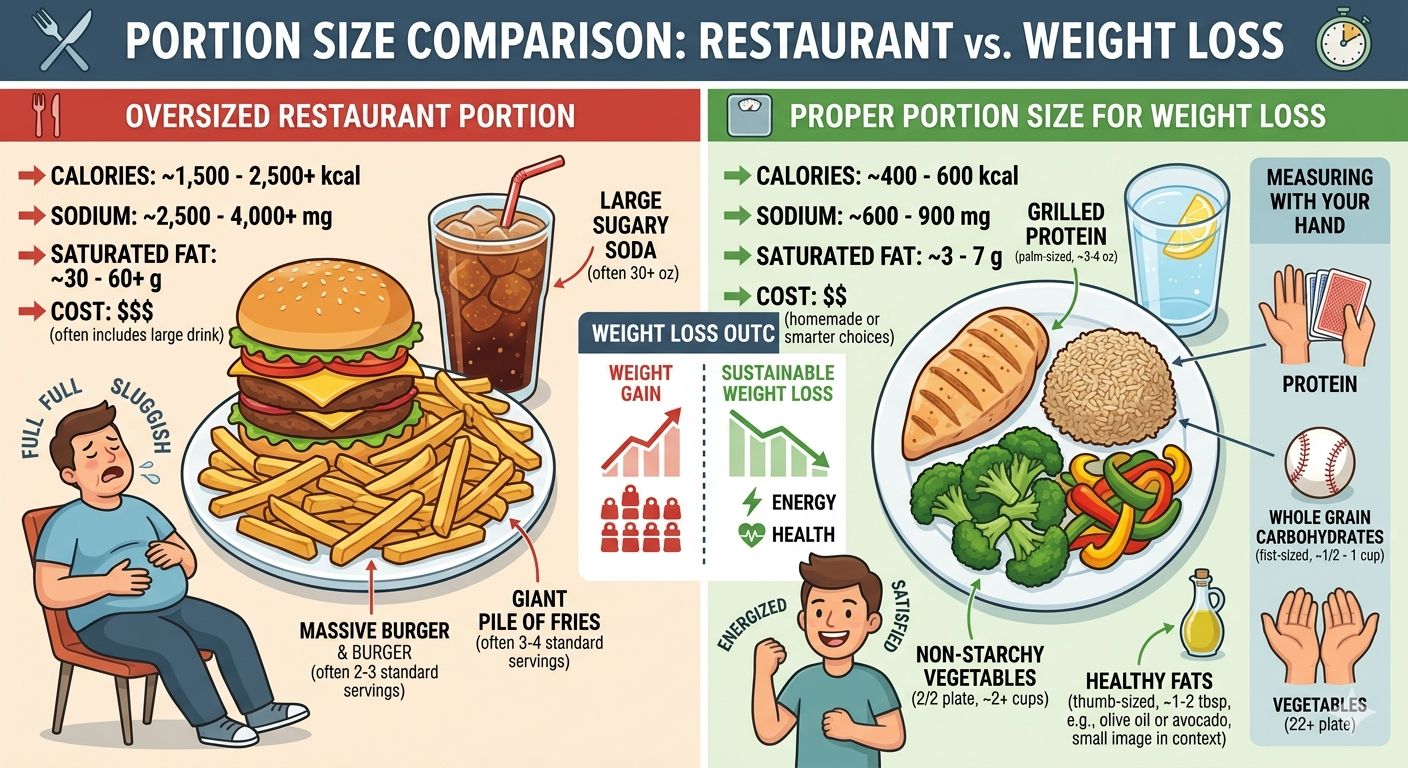
You're not hungry, but you're still cleaning your plate. You ordered the "regular" size, but it looks more like a feast. You finished eating 10 minutes ago, but there's still food on your plate—so you keep eating. Sound familiar? Here's the uncomfortable truth: **portion sizes have ballooned so dramatically that what looks "normal" today would have been considered excessive just 30 years ago.**
But here's the good news: **portion control doesn't mean eating less food—it means eating smarter.** This isn't about deprivation, starvation, or obsessively measuring every bite. This is about learning the psychological tricks, visual hacks, and science-backed strategies that let you eat satisfying, delicious meals while naturally creating the calorie deficit needed for weight loss.
✨ What This Complete Guide Reveals:
- The portion distortion epidemic: How servings grew 2-4x in 30 years
- Plate psychology: Why smaller plates automatically reduce intake by 20-30%
- Mindful eating techniques proven to reduce calories while increasing satisfaction
- Restaurant survival strategies: How to navigate oversized portions without waste
- Volume eating secrets: Eat bigger meals with fewer calories
- Pre-portioning systems that eliminate decision fatigue
- How to read your body's true hunger and fullness signals
- 7 common portion control mistakes and how to fix them
- Essential tools, apps, and resources for effortless portion management
Whether you're tired of restrictive diets that leave you hungry, struggling with restaurant portions that derail your progress, wanting to enjoy food without guilt, or simply ready to build a sustainable relationship with eating—this guide gives you the complete roadmap to portion control mastery. No calorie counting obsession. No food scales at every meal. Just practical, science-backed strategies that work in real life. Let's transform how you think about portions forever.
The Portion Distortion Epidemic
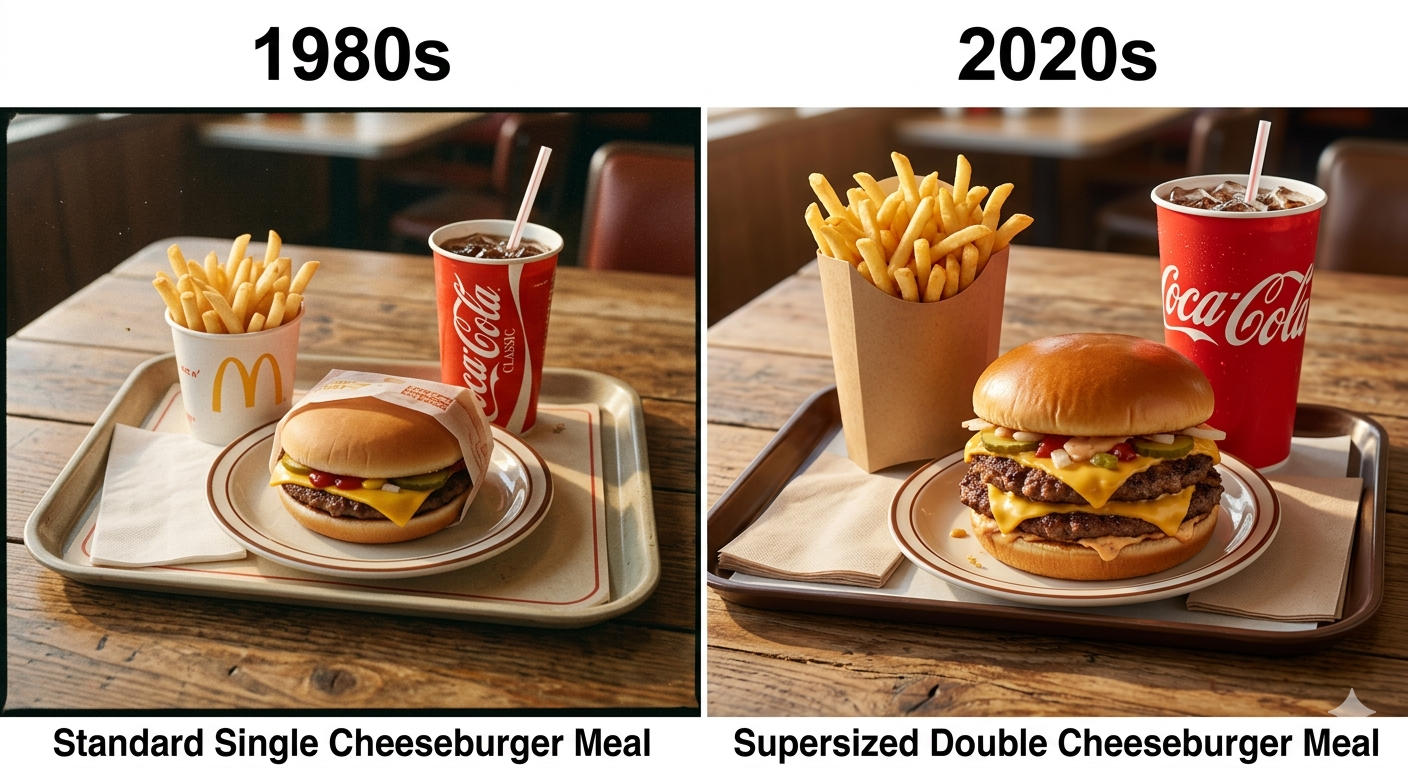
In 1980, a typical restaurant bagel was 3 inches in diameter and contained 140 calories. Today? That same bagel is 6 inches across, packed with 350 calories before you add cream cheese. This isn't an isolated example—**it's a systematic expansion of what we consider "normal" portions**, and it's happening everywhere.
How Portions Grew Out of Control
The Numbers Don't Lie:
- Restaurant entrées: Increased from 8-10 oz (1980s) to 16-20 oz (today)—a 100-130% increase
- Soft drinks: Grew from 6.5 oz bottles to 20 oz bottles as standard—triple the original size
- Fast food burgers: Expanded from 3.5 oz to 8-12 oz—2-3x larger
- Pasta servings: Went from 2 oz dry (200 calories) to 6-8 oz dry (600-800 calories)
- Movie theater popcorn: Small is now 8 cups; large is 20 cups—that's 1,200+ calories
Why This Matters for Weight Loss
Research from the American Journal of Clinical Nutrition shows that **people eat 92% of what's served to them**, regardless of whether they're hungry. This means when portions double, your intake nearly doubles too—but your body's actual caloric needs haven't changed. The result? A surplus of 500-1,000 calories per meal, which translates to 1-2 pounds of weight gain per week if this pattern continues.
⚠️ Reality Check: The USDA recommends 2,000 calories daily for average adults, but the typical American now consumes 3,600+ calories per day. Portion distortion is responsible for approximately 40% of this excess—a massive contributor to the obesity epidemic.
Plate Psychology: Visual Tricks That Work
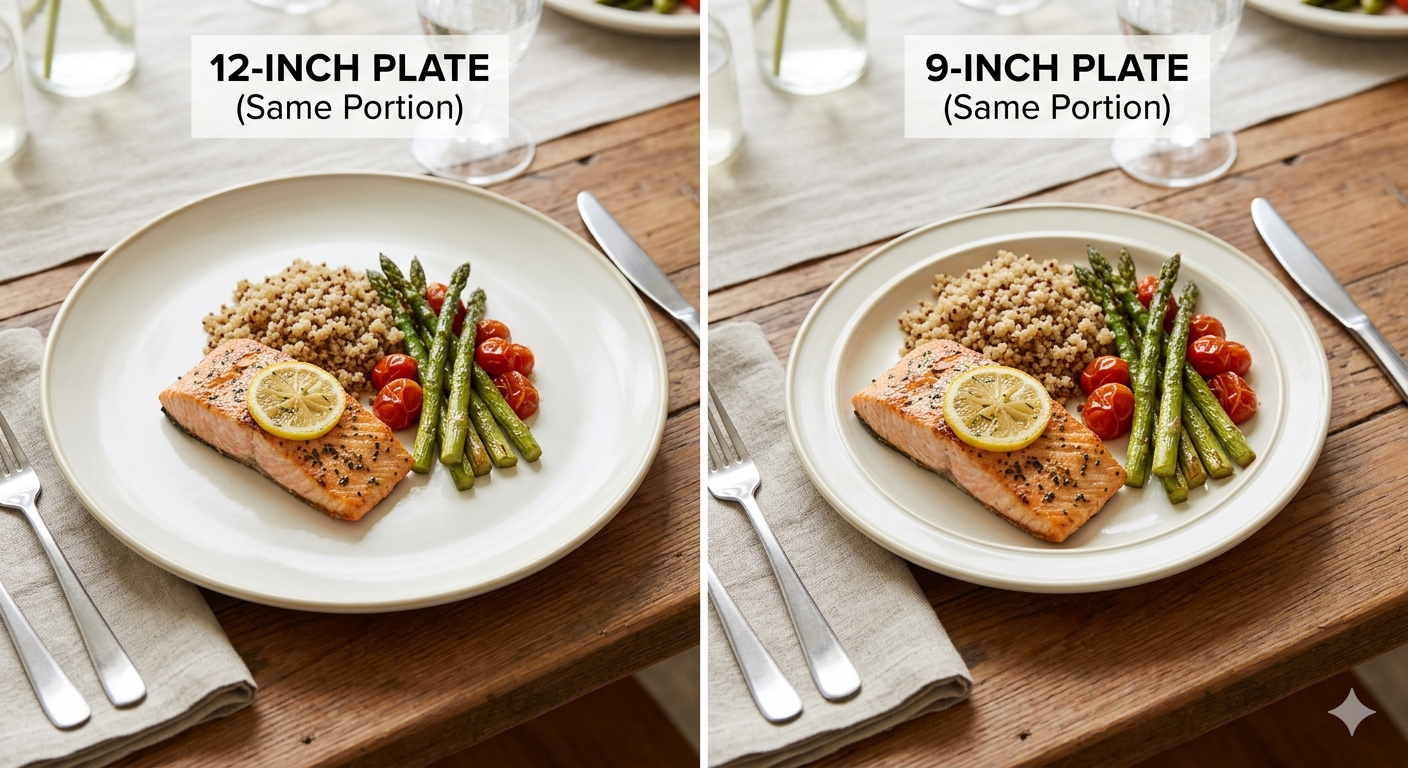
Your brain doesn't measure food in calories or grams—it measures in **visual fullness**. This is why the same portion looks tiny on a 12-inch dinner plate but generous on a 9-inch salad plate. Understanding this psychological quirk is your secret weapon for effortless portion control.
The Delboeuf Illusion: Science Behind Plate Size
Named after French psychologist Joseph Delboeuf, this optical illusion demonstrates that **identical circles appear different sizes depending on the ring surrounding them**. Applied to food: identical portions look smaller on larger plates and larger on smaller plates. Cornell University research found that people served themselves 22% more food when using 12-inch plates versus 10-inch plates—and they didn't realize it.
The Plate Size Hack:
- Switch to 9-10 inch plates: Automatically reduces portions by 20-30% without feeling deprived
- Use smaller bowls: People eat 16% less from smaller bowls even when they can refill
- Color contrast matters: When plate color contrasts with food color, people serve 22% less
- Avoid oversized platters: Serving from large dishes increases intake by 35%
The Plate Method: Visual Portion Guide
Forget measuring cups—this visual method from the American Diabetes Association makes portion control foolproof:
For a 9-inch plate:
- 50% Non-starchy vegetables: Leafy greens, broccoli, peppers, zucchini, cauliflower
- 25% Lean protein: Chicken, fish, tofu, eggs, Greek yogurt
- 25% Complex carbohydrates: Brown rice, sweet potato, quinoa, whole grains
- Add 1 thumb-sized fat: Olive oil, avocado, nuts
Mindful Eating: The Satisfaction Secret

Here's a mind-blowing fact: **it takes 20 minutes for your stomach to tell your brain it's full**. If you inhale your meal in 5 minutes, you'll eat past fullness before the signal arrives. Mindful eating isn't woo-woo wellness—it's a scientifically-proven technique that reduces calorie intake by 25-30% while actually INCREASING meal satisfaction.
The 5-Step Mindful Eating Protocol
Step 1: Pause Before Eating (30 seconds)
Before your first bite, take three deep breaths. Look at your food. Acknowledge that you're about to nourish your body.
Step 2: Eliminate Distractions
Turn off the TV. Put away your phone. Close your laptop. Studies show that distracted eating increases consumption by 25%.
Step 3: Chew Thoroughly (20-30 times per bite)
This slows your eating pace, improves digestion, and gives fullness hormones time to activate.
Step 4: Put Your Utensils Down Between Bites
This simple action prevents the conveyor-belt eating pattern.
Step 5: Check In at Halfway
When half your food is gone, pause for 60 seconds. Rate your hunger on a scale of 1-10. If you're at 6-7 (comfortably satisfied), stop eating.
Restaurant Survival Guide

Restaurants are portion control minefields. The average restaurant meal contains 1,100-1,500 calories—often more than half your daily needs in a single sitting. But dining out doesn't have to derail your progress.
The To-Go Box Strategy (Your Secret Weapon)
When your meal arrives, **immediately ask for a to-go box and portion out half before you eat**. This prevents the "clean plate club" mentality and guarantees you'll have lunch tomorrow.
📦 The Half-Before-You-Start Method:
- Box half the meal before taking your first bite
- Eat the remaining half at a relaxed pace
- When finished, put the box away (out of sight)
- Result: Satisfying meal + tomorrow's lunch + automatic calorie control
Menu Navigation Tactics
- Order from appetizers or sides: Two appetizers often equal a normal portion
- Ask for modifications: "Can I get the dressing on the side?" "Could you serve this on a smaller plate?"
- Share entrées: Split one main dish with a dining companion and add a side salad
- Watch for portion landmines: Pasta dishes (600-1,200 calories), fried foods (500-900 calories)
Volume Eating: More Food, Fewer Calories
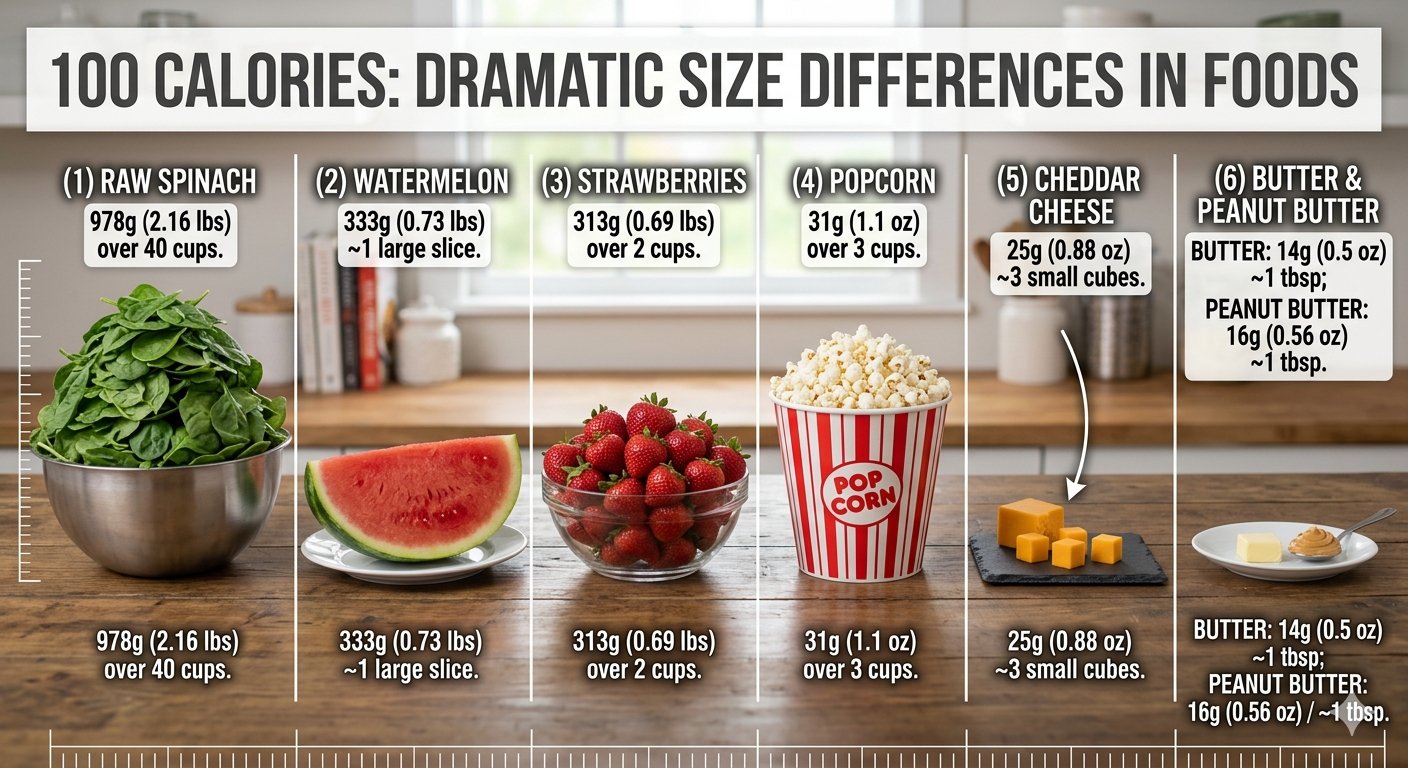
Here's the most empowering portion control secret: **100 calories of broccoli fills your plate; 100 calories of olive oil barely covers a teaspoon**. Volume eating leverages this principle by choosing foods that take up more space in your stomach for fewer calories.
Volume Eating Champions (Eat Generously):
- Leafy greens: 10 calories per cup—eat 4-5 cups for just 40-50 calories
- Cucumber: 16 calories per cup—add crunch and volume virtually free
- Watermelon: 46 calories per cup—sweet, filling, hydrating
- Broth-based soups: 50-100 calories per bowl—water content triggers stomach stretch receptors
- Cauliflower rice: 25 calories per cup vs. 200 calories for regular rice
- Zucchini noodles: 20 calories per cup vs. 220 calories for pasta
Pre-Portioning Strategies That Prevent Overeating

Decision fatigue is real: by 7 PM, after a long day, your willpower is depleted. This is why people overeat at dinner but rarely at breakfast. **Pre-portioning removes the need for in-the-moment decisions**, making appropriate portions the default choice.
The Snack Pack Strategy
Never eat straight from the bag. When you buy chips, nuts, or crackers, immediately divide them into single-serving portions using small containers or bags. Studies show that people eat 50% more when eating directly from large packages versus pre-portioned servings.
The Sunday Prep Ritual
Spend 90 minutes every Sunday:
- Portion out 5 days of snacks into individual containers
- Pre-serve proteins into 4-6 oz portions
- Divide complex carbs into 1/2 to 1 cup servings
- Wash and chop vegetables for easy access
- Result: Grab-and-go meals that are already portion-controlled
Understanding Hunger vs Fullness Cues
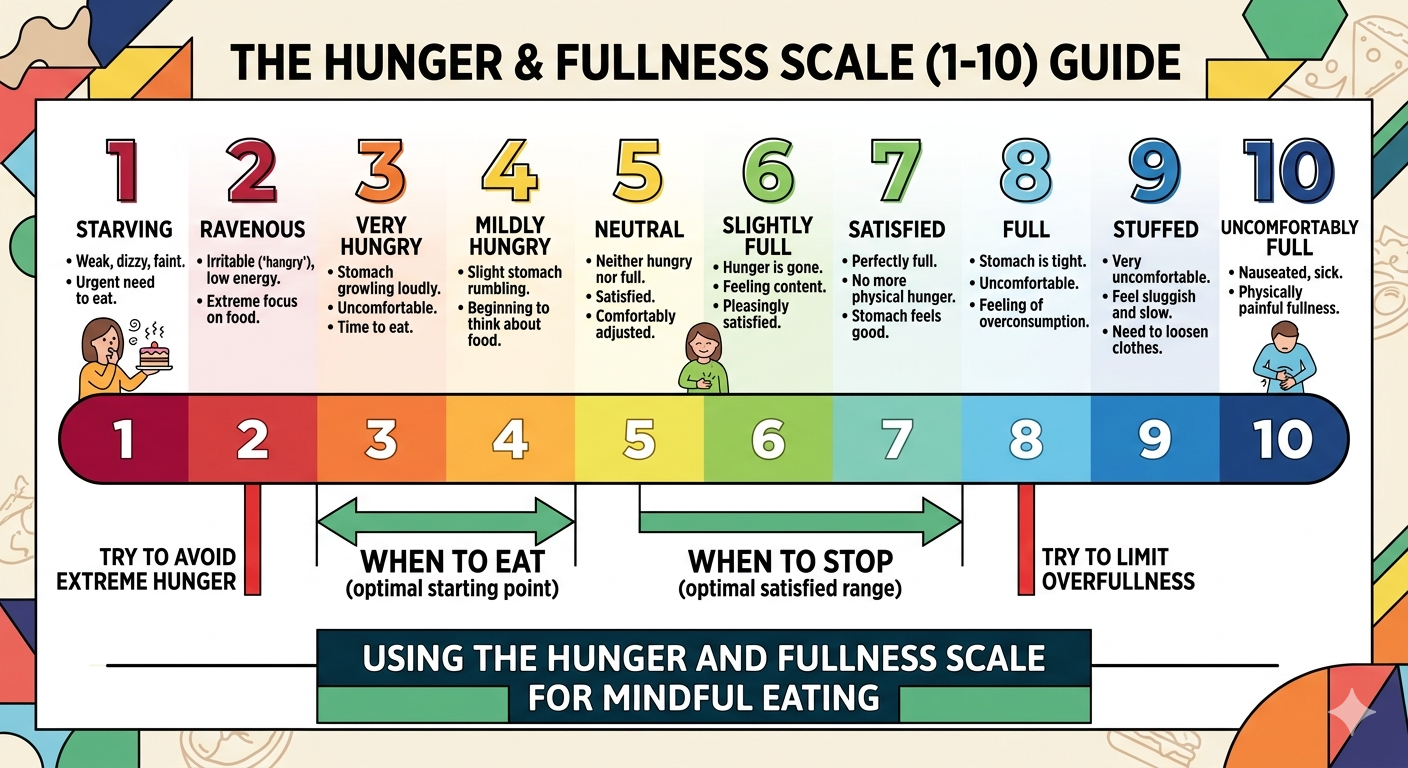
Your body has a built-in portion control system: hunger and fullness signals. The problem? Years of ignoring these cues have dulled your ability to hear them. Reconnecting with your body's wisdom is the ultimate portion control hack.
The Hunger-Fullness Scale
- 1-2: Starving - Dizzy, weak, irritable. You'll overeat if you wait this long.
- 3-4: Hungry - Stomach growling, thinking about food. **Ideal time to start eating.**
- 5-6: Satisfied - Comfortable, not hungry anymore. **Ideal time to stop eating.**
- 7-8: Full - Stomach feels heavy, slightly uncomfortable. You've eaten too much.
- 9-10: Stuffed - Painfully full, nauseous. Significant discomfort.
**Your goal: Start eating at 3-4, stop eating at 5-6.** This keeps you comfortably energized without overeating.
7 Portion Control Mistakes Sabotaging Your Progress
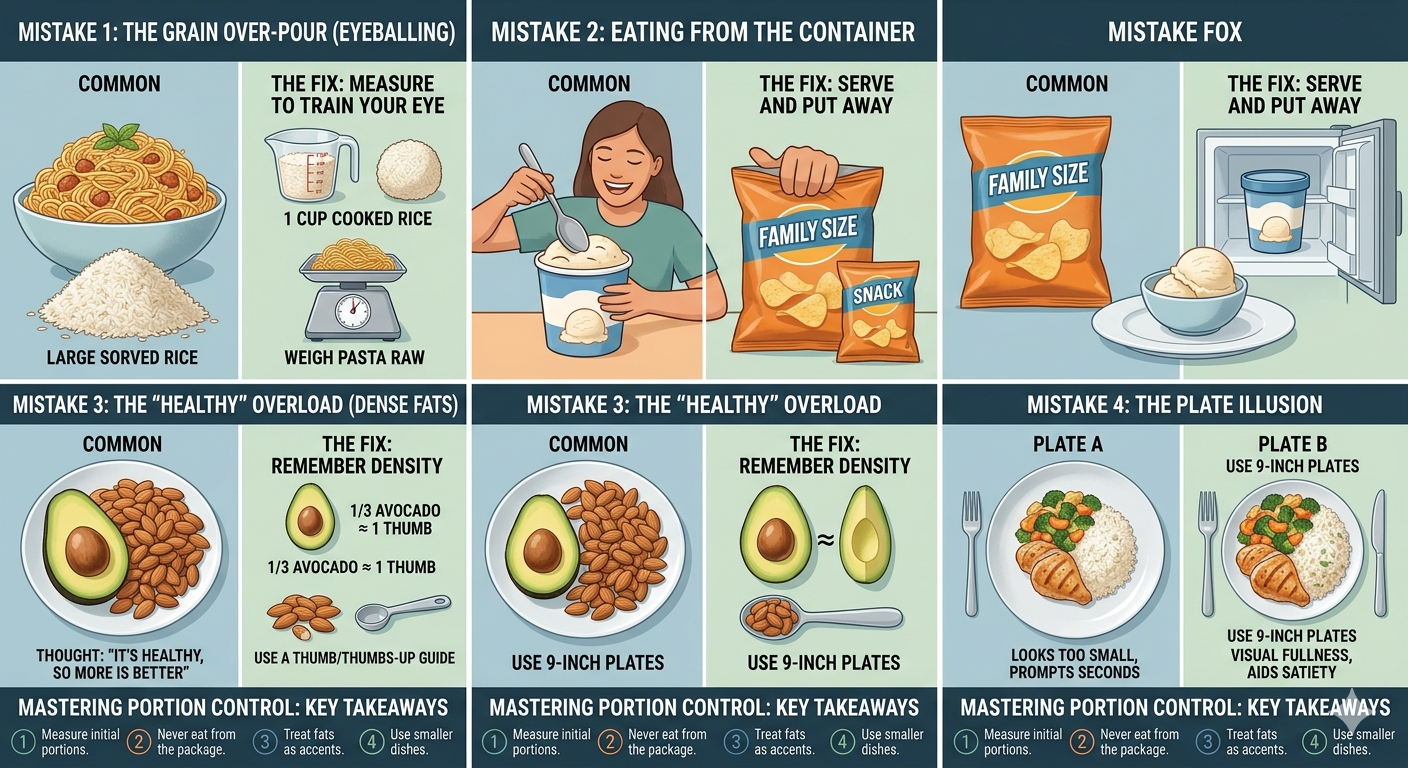
Mistake #1: Eating from packages
Solution: Always portion into bowls or plates before eating.
Mistake #2: Skipping meals then overeating
Solution: Eat every 3-4 hours to prevent extreme hunger.
Mistake #3: Drinking your calories
Solution: Stick to water, black coffee, or unsweetened tea.
Mistake #4: Ignoring serving sizes on labels
Solution: Check if the package contains 1 serving or multiple servings.
Mistake #5: Eating too fast
Solution: Practice mindful eating, chew thoroughly, pause between bites.
Mistake #6: Not enough protein or fiber
Solution: Include protein and vegetables at every meal for natural satiety.
Mistake #7: All-or-nothing thinking
Solution: One oversized meal doesn't ruin progress. Get back on track at the next meal.
Essential Tools & Resources
Physical Tools:
- 9-10 inch dinner plates: $20-30 for a set of 4
- Portion control containers: $15-25 for meal prep sets
- Small snack bags: $10 for reusable silicone bags
- Kitchen scale (optional): $15-25 for initial calibration
Helpful Apps:
- MyFitnessPal: Track portions and learn serving sizes
- Lose It!: Visual portion guide and barcode scanner
- Portion Pal: Visual comparisons for common foods
Frequently Asked Questions
Q: Do I need to measure every portion forever?
A: No! Measure for 2-3 weeks to train your eyes, then transition to visual cues. Most people naturally estimate accurately after this period.
Q: What if I'm still hungry after proper portions?
A: Add more non-starchy vegetables or drink a glass of water and wait 15 minutes. If still hungry, eat a small protein-rich snack.
Q: How do I handle family members who eat larger portions?
A: Serve yourself appropriate portions first, then let others add more if desired. You control your plate, not theirs.
Q: Is it okay to have larger portions on weekends?
A: Occasional larger portions are fine if you're mindful. The key is returning to normal portions at your next meal.
Q: Can portion control work without exercise?
A: Yes! Weight loss is primarily driven by calorie intake. Portion control creates the deficit needed. Exercise accelerates results and improves health, but isn't required for weight loss.
Conclusion
Portion control isn't about deprivation—it's about optimization. By understanding plate psychology, practicing mindful eating, using volume eating strategies, and pre-portioning your food, you can eat satisfying, delicious meals while naturally creating the calorie deficit needed for weight loss.
🎯 Your Action Plan:
- Switch to 9-10 inch plates this week
- Practice the 50-25-25 plate method at every meal
- Implement the to-go box strategy at restaurants
- Pre-portion snacks every Sunday
- Eat mindfully: pause, chew, check in at halfway
- Use the hunger-fullness scale to guide when to start and stop eating
Remember: sustainable weight loss isn't about eating less food—it's about eating smarter. Master these portion control hacks, and you'll never feel deprived on your weight loss journey again. Your future self will thank you!
Disclaimer: This article is for informational purposes only and should not be considered medical advice. Always consult with a healthcare professional before making any changes to your diet or exercise routine.
Frequently Asked Questions
No! Measure for 2-3 weeks to train your eyes, then transition to visual cues. Most people naturally estimate accurately after this period.
Add more non-starchy vegetables or drink a glass of water and wait 15 minutes. If still hungry, eat a small protein-rich snack.
Serve yourself appropriate portions first, then let others add more if desired. You control your plate, not theirs.
Occasional larger portions are fine if you're mindful. The key is returning to normal portions at your next meal.
Yes! Weight loss is primarily driven by calorie intake. Portion control creates the deficit needed for weight loss.
Pause at the halfway point, rate your fullness on a 1-10 scale. If you're at 6-7 (comfortably satisfied), stop eating. You can always eat more in 20 minutes if needed.
Switch to smaller plates (9-10 inches). This one change automatically reduces portions by 20-30% without any effort or feeling deprived.
Conclusion
Portion control isn't about deprivation—it's about optimization. By understanding plate psychology, practicing mindful eating, using volume eating strategies, and pre-portioning your food, you can eat satisfying, delicious meals while naturally creating the calorie deficit needed for weight loss. Your Action Plan: - Switch to 9-10 inch plates this week - Practice the 50-25-25 plate method at every meal - Implement the to-go box strategy at restaurants - Pre-portion snacks every Sunday - Eat mindfully: pause, chew, check in at halfway - Use the hunger-fullness scale to guide when to start and stop eating Remember: sustainable weight loss isn't about eating less food—it's about eating smarter. Master these portion control hacks, and you'll never feel deprived on your weight loss journey again. Your future self will thank you!
Marwari Luxe Team
Health & Wellness Experts
Our dedicated team of health and wellness professionals committed to providing accurate, research-based information.