PHA vs AHA: Gentle Exfoliation Guide for Sensitive Skin Types
Table of Contents
Introduction
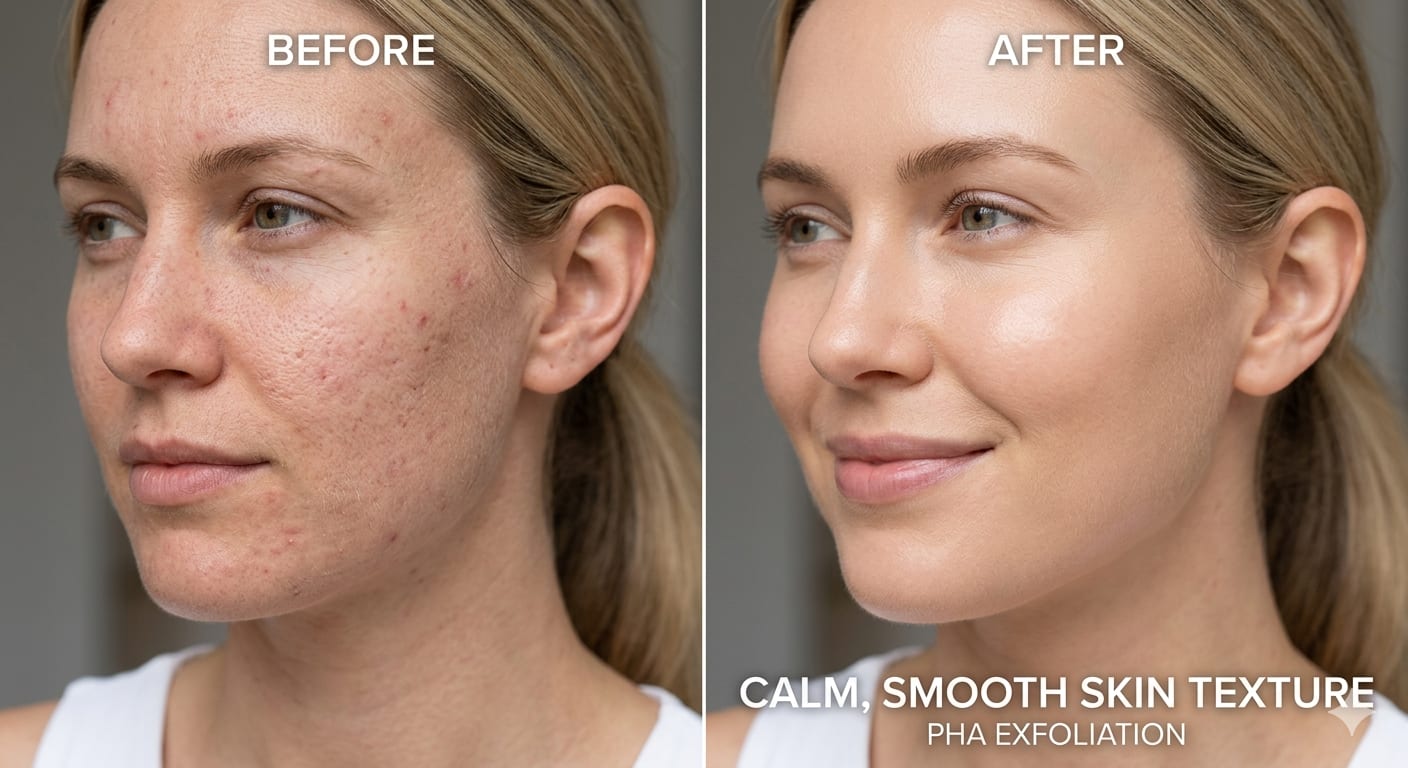
You want the **glow, smoothness, and radiance** that chemical exfoliants promise, but every time you try an AHA or BHA product, your skin erupts in **redness, stinging, and irritation**. You've heard about glycolic acid's transformative powers, tried popular lactic acid serums, or experimented with mandelic acid-but nothing seems to work for your sensitive, reactive skin. Sound familiar?
Here's what the skincare industry doesn't emphasize enough: **not all acids are created equal**, and if you have sensitive skin, rosacea, eczema, or a compromised moisture barrier, traditional alpha hydroxy acids (AHAs) might be doing more harm than good. But that doesn't mean you have to give up on chemical exfoliation entirely. Enter **polyhydroxy acids (PHAs)**-the gentle cousins of AHAs that deliver comparable results without the drama.
PHAs have been around since the 1990s, developed specifically for people who couldn't tolerate traditional AHAs. Despite being equally effective at exfoliation, they remain underappreciated and misunderstood. Why? Because "gentle" gets mislabeled as "weak"-and that's where we need to set the record straight. PHAs aren't weaker; they're **smarter**. Their larger molecular structure means slower penetration, sustained benefits, and zero irritation.
This isn't another "PHA vs AHA" showdown declaring one the winner. Instead, we're diving deep into the **science, benefits, ideal use cases, and real-world application** of PHAs. You'll discover exactly how these gentle exfoliants work, who benefits most from them, how to incorporate them into your routine, and the best products across all price ranges. Whether you're managing extreme sensitivity, dealing with chronic redness, seeking pregnancy-safe exfoliation, or simply wanting smoother skin without the burn-this guide shows you how to achieve it.
What This Complete Guide Covers:
- The science: molecular size differences between PHAs, AHAs, and BHAs
- What makes PHAs uniquely suitable for sensitive skin
- Types of PHAs explained: gluconolactone, lactobionic acid, galactose
- Side-by-side comparison: PHA benefits vs AHA benefits
- Who should use PHAs (rosacea, eczema, pregnancy, beginners)
- Step-by-step application techniques and layering tips
- 10 best PHA products reviewed ($16-$82)
- Expert answers to 7 frequently asked questions
Ready to discover the gentle exfoliant that actually works for YOUR skin? Let's get started.
What Are PHAs? The Science Behind Polyhydroxy Acids
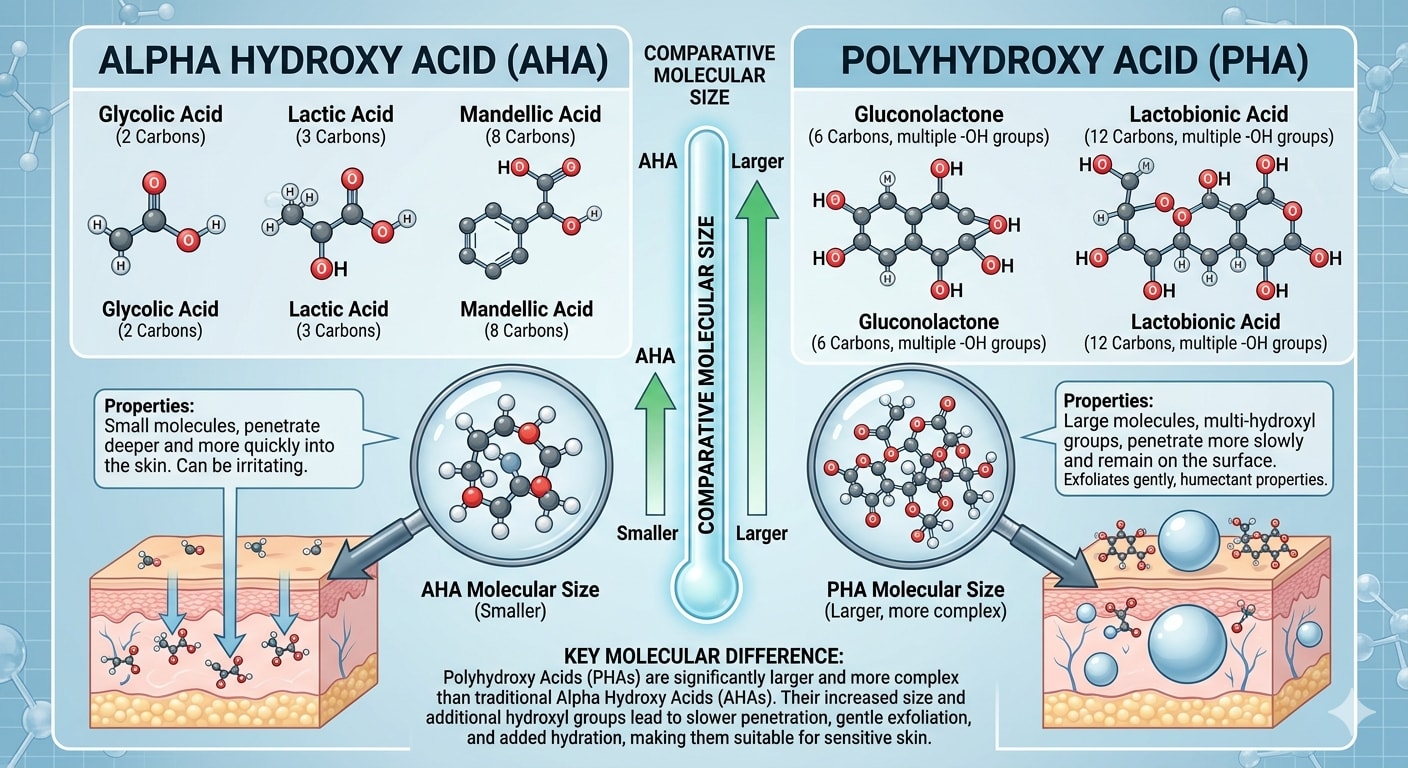
Polyhydroxy acids (PHAs) belong to the same chemical family as alpha hydroxy acids (AHAs)-both are carboxylic acids derived from natural sources like fruits, milk sugars, and plants. However, PHAs have a **critical structural difference**: they contain multiple hydroxyl groups (-OH) attached to their carbon chain, whereas AHAs have only one.
Molecular Size Matters
The additional hydroxyl groups make PHA molecules **significantly larger** than AHA molecules. To put this in perspective:
- Glycolic Acid (AHA): Smallest molecule (76 g/mol)-penetrates fastest and deepest
- Lactic Acid (AHA): Medium molecule (90 g/mol)-moderate penetration
- Gluconolactone (PHA): Large molecule (178 g/mol)-slow, controlled penetration
- Lactobionic Acid (PHA): Very large molecule (358 g/mol)-minimal penetration, maximum gentleness
Why Size Matters: Larger molecules take longer to penetrate the stratum corneum (skin's outermost layer). This slower absorption rate means PHAs work gradually, providing sustained exfoliation without overwhelming skin or triggering inflammatory responses. Think of it as the difference between taking a shot of espresso versus sipping tea throughout the morning-both deliver caffeine, but one causes jitters while the other provides steady energy.
Historical Development
PHAs were first developed and patented by dermatologists Dr. Eugene Van Scott and Dr. Ruey Yu in the 1990s-the same researchers who pioneered AHA research. They recognized the need for effective exfoliants suitable for patients with sensitive skin conditions like rosacea, eczema, and photoaged skin that couldn't tolerate glycolic or lactic acid. Their research demonstrated that PHAs provided comparable anti-aging benefits to AHAs but with significantly reduced irritation potential.
Natural Sources
- Gluconolactone: Derived from gluconic acid, found in fruits and honey
- Lactobionic Acid: Derived from lactose (milk sugar), oxidized form of lactose
- Galactose: Sugar molecule found in dairy products and certain plants
Important Distinction: PHAs are NOT the same as PHB (polyhydroxybutyrate) or PHP (polyhydroxyphenols). When shopping, look specifically for "polyhydroxy acid," "gluconolactone," or "lactobionic acid" on ingredient lists.
PHA vs AHA: Side-by-Side Comparison
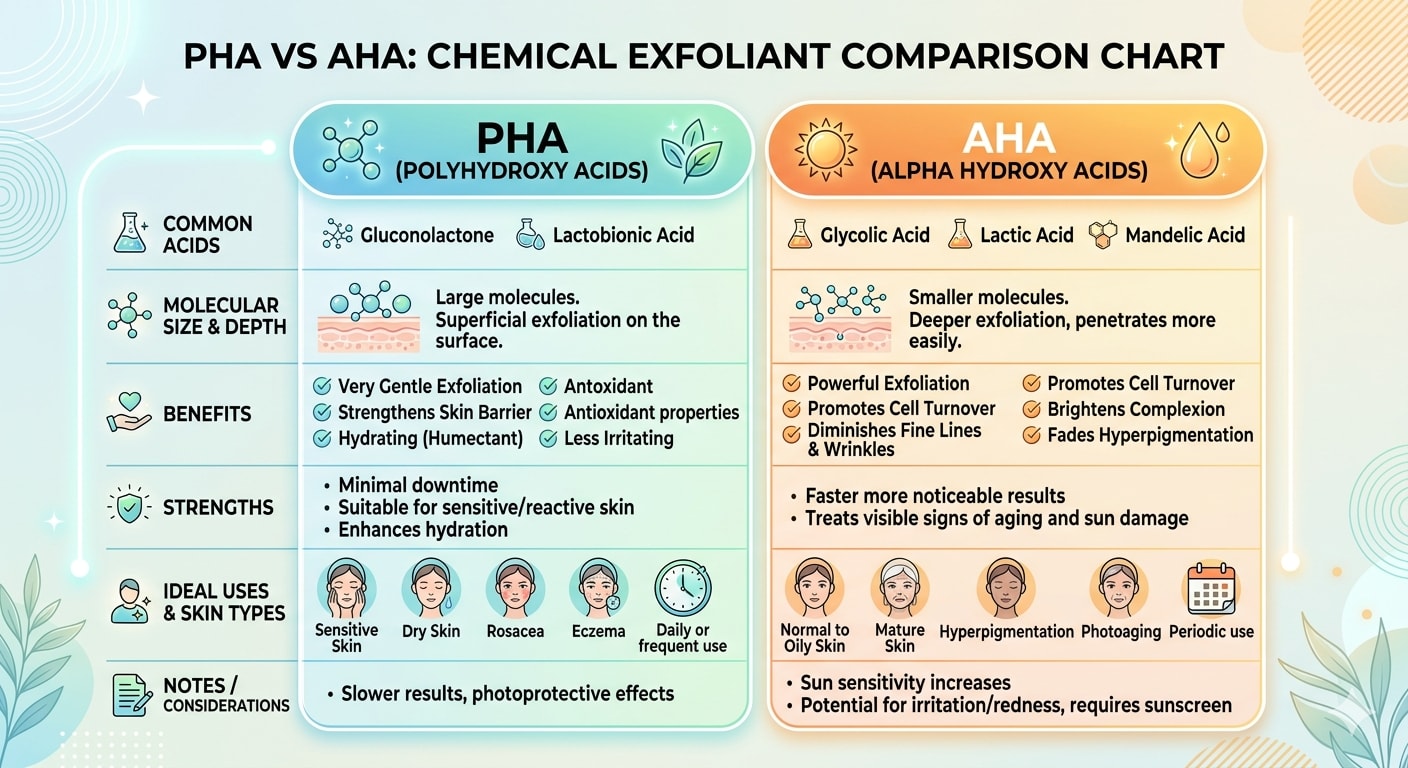
Let's break down the critical differences between these two acid families:
Molecular Structure & Penetration
AHAs (Glycolic, Lactic, Mandelic): Small to medium molecular size allows rapid penetration into epidermis. Glycolic acid (smallest) penetrates deepest, reaching living skin cells quickly. This fast action delivers dramatic results but triggers irritation, stinging, and photosensitivity in sensitive individuals.
PHAs (Gluconolactone, Lactobionic): Large molecular size prevents deep, rapid penetration. Works primarily on stratum corneum (outermost dead cell layer), providing gradual exfoliation without reaching nerve endings that cause stinging. Slower action = gentler experience with comparable long-term results.
Exfoliation Mechanism
AHAs: Break bonds (desmosomes) between dead skin cells through acidic action. Lower pH (typically 3-4) creates stronger exfoliation but also higher irritation potential. Results appear faster but may compromise skin barrier with overuse.
PHAs: Also break desmosomal bonds, but at a slower, more controlled rate. Higher pH (closer to 5-6) maintains skin's natural acid mantle while still providing effective exfoliation. Chelating properties bind to metals that can accelerate aging, providing antioxidant protection.
Hydration & Moisture Retention
AHAs: Can be drying, especially glycolic acid. Require careful formulation with humectants and emollients to prevent transepidermal water loss. Users often experience flaking and dryness during initial weeks.
PHAs: Naturally humectant-attract and bind water molecules to skin. Multiple hydroxyl groups act like magnets for hydration. Provide exfoliation PLUS moisturization simultaneously. Ideal for dry, dehydrated skin types.
Antioxidant Properties
AHAs: Limited antioxidant activity. Primarily work through exfoliation alone.
PHAs: Demonstrate significant antioxidant activity by chelating iron and copper ions that generate free radicals. Lactobionic acid is particularly potent, providing anti-aging benefits beyond exfoliation. This dual action (exfoliation + antioxidant protection) makes PHAs uniquely beneficial for mature, sensitive skin.
Sun Sensitivity
AHAs: Increase photosensitivity significantly. FDA requires warning labels on AHA products advising daily sunscreen use. Alpha hydroxy acids thin the stratum corneum, making skin more vulnerable to UV damage.
PHAs: Do NOT increase sun sensitivity. Studies show PHAs don't thin the stratum corneum to the same degree as AHAs. Some research suggests PHAs may actually provide mild photoprotection through antioxidant activity. Still recommend daily SPF, but PHAs are safer for those who struggle with consistent sunscreen use.
Quick Comparison Chart:
| Feature | AHAs | PHAs |
|---|---|---|
| Molecular Size | Small-Medium | Large-Very Large |
| Penetration Speed | Fast | Slow |
| Irritation Potential | Moderate-High | Very Low |
| Hydration | Can be drying | Humectant |
| Antioxidant | Minimal | Significant |
| Sun Sensitivity | Increases | No effect |
| Best For | Resilient skin | Sensitive skin |
Types of PHAs: Gluconolactone, Lactobionic Acid & More

Not all PHAs are identical. Here are the three primary types you'll encounter in skincare:
1. Gluconolactone
Source: Derived from gluconic acid, naturally occurring in fruits and honey.
Molecular Weight: 178 g/mol
Key Benefits:
- Gentle exfoliation suitable for daily use
- Excellent humectant properties-attracts moisture
- Strengthens skin barrier function
- Provides mild antioxidant protection
- Clinically proven safe for sensitive skin including rosacea and eczema
Best For: Beginners, extremely sensitive skin, daily maintenance exfoliation, dry/dehydrated skin types. Most commonly used PHA in skincare products.
2. Lactobionic Acid
Source: Oxidized form of lactose (milk sugar).
Molecular Weight: 358 g/mol (largest PHA)
Key Benefits:
- Most gentle of all PHAs-virtually no irritation
- Powerful antioxidant-chelates iron and copper ions
- Superior humectant-can hold 1000x its weight in water
- Inhibits matrix metalloproteinases (MMPs) that break down collagen
- Provides skin conditioning and smoothing
Best For: Mature skin, photoaged skin, post-procedure care, those who can't tolerate any other acids, antioxidant seekers. Often called the "superstar PHA."
3. Galactose
Source: Sugar molecule found in dairy products, bananas, and certain plants.
Molecular Weight: 180 g/mol
Key Benefits:
- Gentle exfoliation similar to gluconolactone
- Supports skin barrier repair
- Provides hydration and softening
- Often combined with other PHAs for enhanced benefits
Best For: Sensitive skin needing barrier support, combination with other gentle actives. Less common as standalone ingredient, typically found in blends.
Expert Tip: Many products combine multiple PHAs for synergistic benefits. Look for formulations with both gluconolactone and lactobionic acid for comprehensive gentle exfoliation plus antioxidant protection.
Benefits for Sensitive Skin: Why PHAs Excel
PHAs aren't just "AHAs for wimps"-they offer unique advantages specifically beneficial for sensitive, reactive, and compromised skin:
1. Minimal Irritation & Stinging
Clinical studies confirm PHAs cause significantly less irritation than AHAs at equivalent concentrations. In one study, participants with sensitive skin applied either 10% gluconolactone (PHA) or 10% glycolic acid (AHA). The glycolic acid group experienced moderate-to-severe stinging, redness, and peeling. The PHA group reported minimal to no irritation despite receiving comparable exfoliation benefits.
2. Enhanced Hydration
Unlike AHAs that can strip skin, PHAs actively attract and retain moisture. The multiple hydroxyl groups function as humectants, drawing water from the dermis and environment into the epidermis. Users report softer, plumper skin within days of starting PHA use-even those with chronically dry skin.
3. Barrier Repair Support
Sensitive skin often has a compromised moisture barrier. PHAs stimulate ceramide synthesis and enhance barrier lipid production, strengthening skin's defensive wall. A stronger barrier means better moisture retention, less sensitivity to external triggers, and improved overall resilience over time.
4. Antioxidant Protection
Lactobionic acid demonstrates significant antioxidant activity by chelating metal ions (iron, copper) that catalyze free radical formation. This provides anti-aging benefits beyond exfoliation-neutralizing environmental damage, preventing collagen breakdown, and reducing inflammation. Perfect for mature, sensitive skin needing multi-functional care.
5. Safe for Rosacea & Eczema
Dermatologists routinely recommend PHAs for patients with rosacea, eczema, and seborrheic dermatitis. The gentle exfoliation removes scales and flakes without triggering flare-ups. Anti-inflammatory properties calm redness while hydration soothes dry patches. Many prescription eczema creams now include PHAs to enhance penetration of medicated ingredients.
6. No Increased Sun Sensitivity
Unlike AHAs, PHAs don't increase photosensitivity. This makes them ideal for people who struggle with consistent sunscreen use or live in sunny climates. While daily SPF is still recommended, PHA users face lower risk of UV-induced damage from exfoliation.
7. Compatible With Other Actives
PHAs play well with others. Can be safely combined with retinoids, vitamin C, niacinamide, peptides, and hyaluronic acid without destabilizing ingredients or causing excessive irritation. This versatility makes PHAs excellent "gateway acids" for skincare beginners or those rebuilding routines after barrier damage.
8. Pregnancy-Safe Exfoliation
Many OB-GYNs approve PHAs for use during pregnancy and breastfeeding. Unlike high-percentage AHA peels or salicylic acid treatments, PHAs don't penetrate deeply enough for systemic absorption. Provides safe option for managing pregnancy-related dullness, congestion, and melasma.
Clinical Evidence Summary:
- Exfoliation efficacy: Comparable to AHAs at 8-12 weeks
- Irritation rates: <5% for PHAs vs 30-50% for AHAs in sensitive skin
- Hydration improvement: 20-30% increase in skin moisture within 4 weeks
- Barrier function: Measurable enhancement in 6-8 weeks
- Antioxidant activity: Significant reduction in oxidative stress markers
Who Should Use PHAs? Ideal Candidates Explained

PHAs suit a wide range of skin types and concerns. Here's who benefits most:
Extremely Sensitive Skin
If your skin reacts to everything-fragrance, essential oils, most actives-PHAs are your safest bet for chemical exfoliation. Start with 5% gluconolactone toner, use every other day, and monitor tolerance. Most sensitive skin types can eventually use PHAs daily without issues.
Rosacea & Couperose Skin
Rosacea-prone skin is notoriously reactive. PHAs provide gentle removal of dry, flaky patches without triggering flushing or inflammation. Avoid physical scrubs entirely- PHAs are far superior for managing rosacea-related texture issues.
Eczema & Atopic Dermatitis
Eczema creates rough, scaly patches that need gentle exfoliation. PHAs smooth these areas while hydrating and supporting barrier repair. Many dermatologists prescribe PHA-containing creams alongside corticosteroids for enhanced penetration and effectiveness.
Pregnancy & Breastfeeding
Hormonal changes during pregnancy can cause congestion, dullness, and melasma. PHAs offer pregnancy-safe exfoliation without the risks associated with high-strength AHAs, retinoids, or hydroquinone. Continue using throughout pregnancy and nursing.
Mature, Photoaged Skin
Aging skin becomes thinner and more sensitive over time. PHAs deliver anti-aging benefits (exfoliation, hydration, antioxidant protection) without compromising already fragile skin. Lactobionic acid is particularly beneficial for mature skin due to its superior antioxidant properties.
Post-Procedure Recovery
After laser treatments, chemical peels, or microneedling, skin needs gentle care during healing. Dermatologists often recommend PHA-based products 1-2 weeks post-procedure to remove flaking skin without irritation. Wait for professional clearance before resuming.
Skincare Beginners
New to chemical exfoliation? Start with PHAs to learn how your skin responds to acids without risking severe reactions. Build confidence and tolerance over 2-3 months before potentially graduating to AHAs-if needed. Many people find PHAs sufficient long-term.
Dry & Dehydrated Skin
PHAs' humectant properties make them ideal for dry skin types who need exfoliation without moisture stripping. Layer PHA serum under rich moisturizer for maximum hydration boost.
Who Should Avoid PHAs: Those with active infections, open wounds, severe cystic acne (BHAs better), or known allergies to specific PHA ingredients. Always patch test new products.
Application Guide: How to Use PHAs Correctly
Proper application ensures maximum benefits with minimal risk. Follow these expert guidelines:
Morning Routine
Step 1: Gentle Cleanser
Wash face with lukewarm water and mild, non-foaming cleanser. Pat dry.
Step 2: PHA Toner or Serum
Apply PHA product to completely dry skin. If using toner, saturate cotton pad and sweep across face avoiding eye area. If using serum, dispense 2-3 drops into palms, press onto face and neck. Focus on rough, congested areas.
Step 3: Wait 1-2 Minutes
Allow PHA to absorb fully before layering next product.
Step 4: Hydrating Serum (Optional)
Layer hyaluronic acid, niacinamide, or peptide serum for enhanced benefits. PHAs enhance penetration of subsequent products.
Step 5: Moisturizer
Apply your regular moisturizer to seal in hydration.
Step 6: Sunscreen
Finish with broad-spectrum SPF 30+. While PHAs don't increase sun sensitivity, daily protection is essential for anti-aging and preventing hyperpigmentation.
Evening Routine
Step 1: Double Cleanse
Remove makeup and sunscreen with micellar water or cleansing oil. Follow with gentle water-based cleanser.
Step 2: PHA Product
Apply PHA toner, serum, or treatment. Evening is ideal for slightly higher concentrations or leave-on formulas since skin undergoes repair overnight.
Step 3: Wait 5-10 Minutes
Let PHA work undisturbed.
Step 4: Treatment Serums
Can layer retinol, bakuchiol, or other treatment serums after PHA absorbs. PHAs enhance retinol penetration while minimizing irritation.
Step 5: Night Moisturizer
Apply richer night cream or facial oil to support barrier repair during sleep.
Frequency Guidelines
- Week 1-2: Start every other day (AM or PM)
- Week 3-4: Increase to daily use if well-tolerated
- Ongoing: Can use once or twice daily indefinitely
- Very Sensitive Skin: Maintain 2-3 times weekly if preferred
Layering With Other Actives
Safe Combinations:
- PHA + Hyaluronic Acid (enhanced hydration)
- PHA + Niacinamide (calming + brightening)
- PHA + Retinol (gentle exfoliation + cell turnover)
- PHA + Vitamin C (antioxidant boost-use Vit C AM, PHA PM)
- PHA + Peptides (anti-aging synergy)
- PHA + Ceramides (barrier support)
Use Caution:
- PHA + Strong AHA/BHA (potential over-exfoliation)
- PHA + High-Strength Retinoids (monitor for irritation)
- Multiple PHA products simultaneously (unnecessary)
Pro Tips:
- Always apply to dry skin-wet skin increases penetration and potential irritation
- Avoid eye area and corners of mouth/nose where skin is thinner
- Don't use physical scrubs on PHA days-let the acid do the work
- If using PHA + retinol, apply PHA first, wait 10 minutes, then retinol
- Patch test behind ear for 3 days before full-face application
- Store PHA products in cool, dark place to preserve stability
10 Best PHA Products for Every Budget
We've analyzed formulations, concentrations, additional ingredients, customer reviews, and dermatologist recommendations to bring you the top PHA products:
Budget-Friendly ($16-$25)
1. The Ordinary Gluconolactone 5% + Caffeine Solution ($16)
Simple, effective, affordable. 5% gluconolactone provides gentle exfoliation plus caffeine for depuffing. Water-based serum texture. Fragrance-free, vegan. Excellent starter PHA. Use in AM for quick glow.
2. Neostrata Enlighten Pigment Controller ($24)
10% gluconolactone plus niacinamide and vitamin C. Targets hyperpigmentation while gently exfoliating. Lightweight gel texture. Good for combination skin. From PHA pioneers.
3. Johnson's Baby Soft Wash ($18)
Contains lactobionic acid for ultra-gentle exfoliation. Soap-free, hypoallergenic. Suitable for entire family. Great for body exfoliation or extremely sensitive facial skin.
Mid-Range ($26-$50)
4. Neostrata Restore Facial Cleanser ($32)
Creamy, non-foaming cleanser with 8% gluconolactone. Perfect for dry, sensitive skin. Removes makeup while gently exfoliating. Doesn't strip skin. Dermatologist favorite for rosacea patients.
5. Exuviance Surface Radiance Complex ($48)
Leave-on treatment with 10% gluconolactone plus antioxidants. Refines texture, boosts radiance. Silky lotion texture. Suitable for daily use. From Neostrata's sister brand specializing in PHAs.
6. Avène PhysioLift NIGHT Smoothing Fluid ($45)
Combines PHAs with retinaldehyde (gentle vitamin A derivative). Anti-aging powerhouse for sensitive skin. Fragrance-free, hypoallergenic. French pharmacy favorite.
7. SkinCeuticals Phyto Corrective Gel ($77)
Soothing gel with PHAs plus botanical extracts. Calms redness while gently exfoliating. Ideal for post-procedure care or reactive skin. Expensive but therapeutic-grade.
High-End ($51-$82)
8. Exuviance Age Reverse Day Repair ($68)
10% gluconolactone plus 10% lactobionic acid. Dual-PHA formula for comprehensive benefits. Also contains peptides and SPF 30. Multi-tasking day cream. Luxurious texture, elegant packaging.
9. Neostrata Skin Active Matrix Support ($82)
Advanced anti-aging with PHAs, peptides, and growth factors. Targets wrinkles, firmness, and texture. Rich cream suitable for mature, dry skin. Investment piece for serious skincare enthusiasts.
10. Exuviance OptiLight Daily Brightening Moisturizer ($54)
PHAs plus vitamin C and licorice root extract. Brightens dull skin while gently exfoliating. Lightweight formula suits combination skin. Addresses hyperpigmentation comprehensively.
Product Selection Guide: Beginners ’ The Ordinary 5% solution; Dry skin ’ Neostrata Restore Cleanser; Mature skin ’ Neostrata Skin Active; Rosacea ’ Avène PhysioLift; Budget-conscious ’ Johnson's Baby Soft Wash; Luxury seekers ’ Exuviance Age Reverse. Remember: start low concentration (5-8%), build tolerance before trying 10%+.
Disclaimer: This article is for informational purposes only and should not be considered medical advice. Always consult with a healthcare professional before making any changes to your health routine.
Frequently Asked Questions
Yes! PHAs have larger molecules that penetrate slower, causing minimal irritation. Perfect for sensitive skin that reacts to traditional AHAs.
Yes! PHAs are gentle enough for daily use. Start every other day, then build to daily as tolerated. Over-exfoliation risk is much lower than with AHAs.
Mildly. PHAs provide gentle exfoliation that prevents clogged pores. For active acne, BHAs (salicylic acid) are more effective. PHAs excel at maintenance and hydration.
Absolutely! PHAs + retinol is an excellent combination for sensitive skin. PHAs gently exfoliate while retinol works deeper. Use PHA in morning, retinol at night.
Immediate smoothness and hydration. Visible brightness and texture improvements in 2-4 weeks. Long-term anti-aging benefits accumulate over 8-12 weeks.
Yes! PHAs like gluconolactone are considered pregnancy-safe. They don't penetrate deeply enough to cause systemic absorption concerns.
Lactic acid (an AHA) is stronger than PHAs but gentler than glycolic acid. If lactic acid still irritates, switch to PHA for even milder exfoliation.
Conclusion
PHAs aren't just weaker alternatives to AHAs"they're strategically-designed gentle exfoliants perfect for sensitive, reactive, or compromised skin. From providing hydration to delivering antioxidants, from smoothing texture to supporting barrier function, PHAs offer comprehensive benefits without the irritation typical of stronger acids. Your Action Plan: Choose PHA serum or toner with 5-10% concentration for beginners Apply every other evening initially, building to daily if desired Layer with hydrating serums and ceramide moisturizers Expect gentle exfoliation without peeling, stinging, or sensitivity Combine with daily SPF for optimal protection and results Whether you're managing rosacea or eczema, recovering from barrier damage, seeking pregnancy-safe exfoliation, wanting gentle anti-aging, or simply having skin that rebels against traditional acids"PHAs are your perfect solution. Remember: effective skincare isn't about strength"it's about finding ingredients YOUR skin tolerates consistently. PHAs deliver results through gentleness, not aggression. Ready to experience exfoliation without irritation? Your smoothest, calmest skin awaits!
Marwari Luxe Team
Health & Wellness Experts
Our dedicated team of health and wellness professionals committed to providing accurate, research-based information.