Hyaluronic Acid for Dehydrated Skin: Complete Guide to Hydration & Plumping

Table of Contents
- 1. Introduction
- 2. What Is Hyaluronic Acid?
- 3. How Hyaluronic Acid Works on Skin
- 4. Understanding Molecular Weights
- 5. Step-by-Step Application Technique
- 6. Layering with Other Actives
- 7. 5 Common Mistakes Causing Dryness
- 8. 12 Best Hyaluronic Acid Serums Reviewed
- 9. Customizing for Your Skin Type
- 10. Humidity & Climate Considerations
- 11. Frequently Asked Questions
- 12. Conclusion
Introduction: The Hydration Hero Your Skin Needs
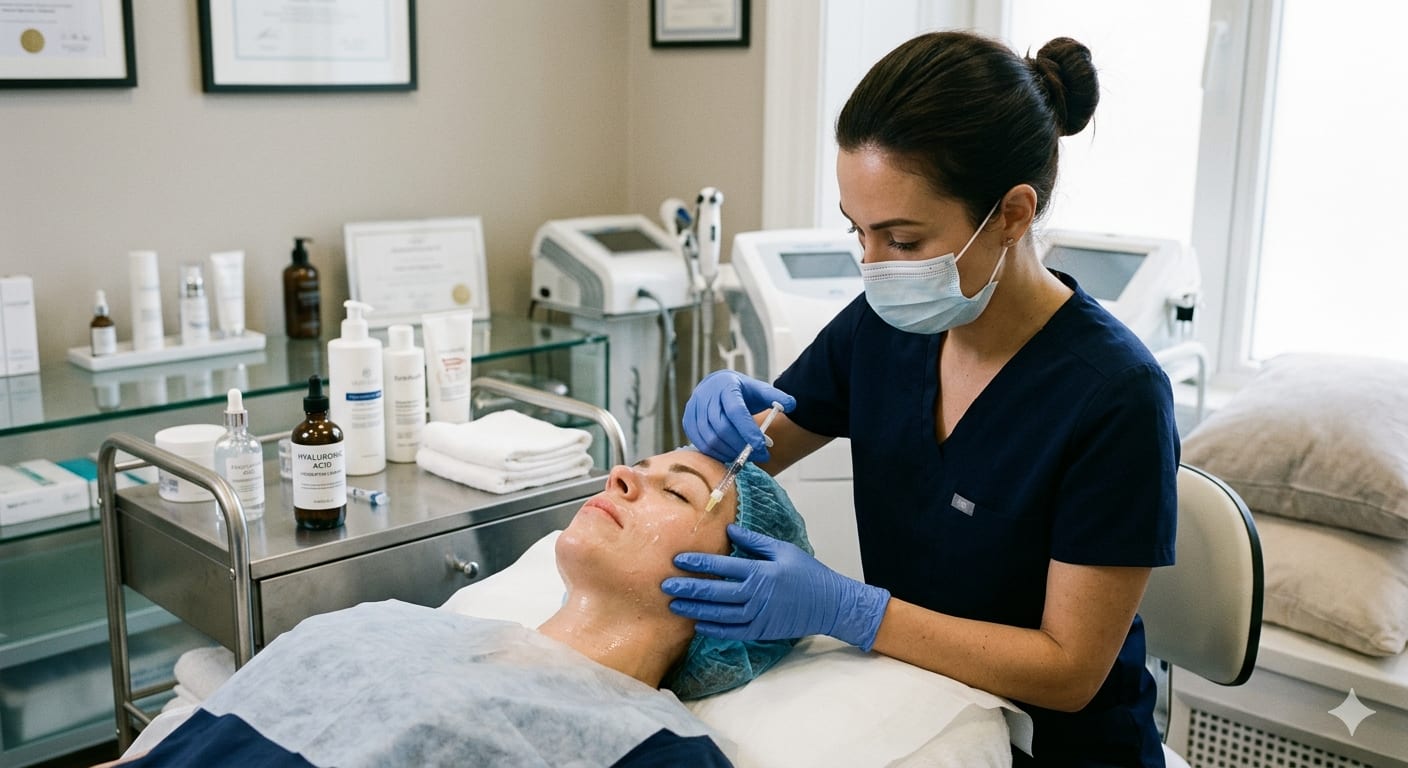
If you've been struggling with tight, flaky, or lackluster skin despite using expensive moisturizers, the problem might not be your cream"it could be missing hyaluronic acid in your routine. This powerful humectant has taken the beauty world by storm, and for good reason: it holds up to **1000 times its weight in water**, making it one of the most effective hydration ingredients available.
� Critical Warning: Using hyaluronic acid incorrectly can actually DEHYDRATE your skin further. Applying to dry skin or skipping moisturizer in low-humidity climates can cause it to pull moisture FROM your skin instead of the air. This guide will teach you the proper technique.
Whether you're dealing with winter dryness, air conditioning-induced dehydration, post-retinol peeling, or naturally dry skin, understanding how to properly use hyaluronic acid can transform your complexion from parched to plump within days. Let's dive into the science-backed method.
What Is Hyaluronic Acid? Science Breakdown
Hyaluronic acid (HA) is a glycosaminoglycan"a fancy term for a sugar molecule"naturally produced by your body. Found abundantly in your skin, eyes, and joints, HA's primary function is moisture retention. In your skin, it comprises about 50% of your natural moisturizing factor (NMF), the substance that keeps your skin barrier functioning optimally.
Key Fact: Your body produces less hyaluronic acid as you age. By age 50, HA levels drop by approximately 50%, contributing to visible dryness, fine lines, and loss of elasticity. Topical application helps replenish these declining levels.
Unlike harsh exfoliating acids (glycolic, salicylic), hyaluronic acid doesn't strip or irritate. It's biocompatible, meaning your skin recognizes and readily absorbs it, making it suitable for even the most sensitive skin types"including rosacea and eczema-prone complexions.
How Hyaluronic Acid Works: The Humectant Mechanism
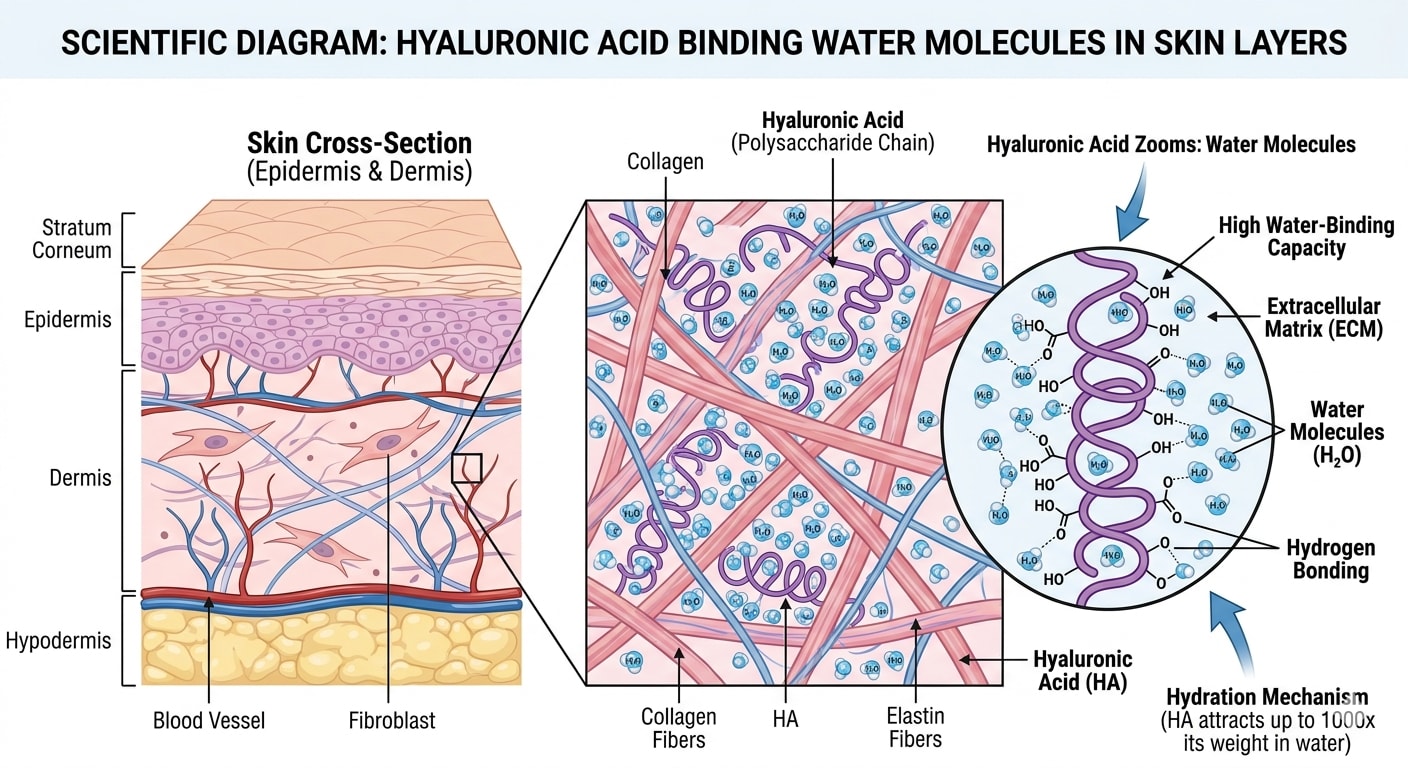
As a humectant, hyaluronic acid works by attracting water molecules from the environment and binding them to your skin. Think of it as a microscopic sponge that soaks up moisture and holds it in place. But here's where it gets interesting: HA doesn't just sit on the surface"it penetrates multiple skin layers depending on its molecular size.
The Three-Layer Hydration System:
1. Epidermal Layer (Surface): Large HA molecules create a breathable film on your skin's surface, providing immediate smoothing and preventing transepidermal water loss (TEWL). This instant effect is what gives you that "glass skin" appearance.
2. Mid-Dermis Layer: Medium-sized molecules penetrate deeper, filling the spaces between skin cells and creating a reservoir of hydration that plumps fine lines from within.
3. Deep Dermis Layer: Low-molecular-weight HA reaches the deepest layers, stimulating fibroblast activity and encouraging your skin to produce more natural HA over time.
This multi-depth action is why hyaluronic acid outperforms traditional moisturizers that only work on the surface. You're not just masking dryness"you're fundamentally improving your skin's water-holding capacity.
Understanding Molecular Weights: High vs Low HA
Not all hyaluronic acid is created equal. The molecular weight determines penetration depth and function. Here's your complete breakdown:
Pro Tip: Look for serums labeled "multi-molecular weight" or those listing multiple forms of HA (sodium hyaluronate, hydrolyzed hyaluronic acid, sodium acetylated hyaluronate). These provide comprehensive hydration across all skin layers.
Step-by-Step Application: The 60-Second Rule

Timing is everything with hyaluronic acid. Apply within 60 seconds of cleansing while your skin is still slightly damp. This gives HA immediate access to water molecules, maximizing its binding potential.
Morning Routine:
- Cleanse: Use a gentle, pH-balanced cleanser. Pat dry leaving skin slightly damp.
- Tone (Optional): Apply alcohol-free toner or facial mist for extra moisture.
- Apply HA Serum: Dispense 2-3 drops into palms, press onto face and neck. Don't rub"pressing prevents pilling.
- Wait 30 Seconds: Let HA absorb and form its moisture-binding network.
- Layer Treatment Serums: Vitamin C, niacinamide, or peptides go next.
- Moisturize: Seal everything in with your day cream containing occlusives.
- Sunscreen: Finish with SPF 30+ (non-negotiable!).
Night Routine:
- Double Cleanse: Remove makeup/sunscreen with oil cleanser, follow with water-based cleanser.
- Exfoliate (1-2x weekly): Use AHA/BHA if part of your routine.
- Mist or Tone: Rehydrate skin post-cleansing.
- Apply HA: Same pressing technique as morning.
- Treatment Actives: Retinol, prescription treatments, or targeted serums.
- Rich Moisturizer: Night cream with ceramides, fatty acids, cholesterol.
- Facial Oil (Optional): Lock in all layers with 2-3 drops of squalane or jojoba oil.
� The 60-Second Rule: If you wait longer than 60 seconds after cleansing, your skin's surface water evaporates, leaving HA with nothing to bind. This causes it to pull moisture from deeper skin layers, paradoxically causing MORE dryness. Always apply to damp skin!
Layering with Other Actives: Compatibility Chart
Hyaluronic acid plays well with almost every ingredient, but order matters. Here's your definitive guide:
5 Common Mistakes That Cause Dryness
Mistake #1: Applying to Dry Skin
Solution: Always apply within 60 seconds of cleansing. Keep a spray bottle nearby if your skin dries quickly.
Mistake #2: Skipping Moisturizer
HA attracts water but doesn't seal it in. Without an occlusive moisturizer on top, hydration evaporates, worsening dryness.
Mistake #3: Using in Desert-Dry Climates Without Occlusion
In humidity below 40%, HA struggles to find atmospheric moisture. You MUST seal with a heavy cream or facial oil.
Mistake #4: Using Only One Type of HA
Single-molecular-weight formulas only hydrate one skin layer. Invest in multi-weight serums for comprehensive results.
Mistake #5: Expecting Overnight Results
While surface hydration is immediate, true barrier repair takes 4-6 weeks of consistent twice-daily use.
Frequently Asked Questions
Can I use hyaluronic acid with retinol?
Absolutely! HA + retinol is a power couple. Apply HA first to damp skin, wait 10 minutes, apply retinol, then layer HA again followed by moisturizer. This "sandwich technique" dramatically reduces retinol irritation while maintaining hydration.
Is hyaluronic acid suitable for oily/acne-prone skin?
Yes! Oily skin can be dehydrated. HA provides lightweight, non-comedogenic hydration without adding oil. Look for gel-based serums rather than cream formulations. Dehydrated oily skin often overproduces sebum to compensate"proper hydration can actually reduce breakouts.
How much hyaluronic acid serum should I use?
2-3 drops (pea-sized amount) for face and neck. More isn't better"excess HA sits on skin's surface and can pill under makeup. Spread evenly by pressing, not rubbing.
Can I use hyaluronic acid around my eyes?
Yes! The eye area benefits greatly from HA's plumping effect, reducing the appearance of fine lines. Use your ring finger to gently pat a tiny amount around the orbital bone. Avoid getting directly into eyes.
Does hyaluronic acid expire?
Unopened HA serums last 2-3 years. Once opened, use within 6-12 months. Signs of expiration: color change (yellowing), altered texture (stringy or clumpy), or unusual odor. Store in a cool, dark place away from direct sunlight.
Can teenagers use hyaluronic acid?
Definitely! HA is safe for all ages, including teens. It's an excellent preventive anti-aging ingredient and helps balance teenage skin's hydration needs without clogging pores or causing breakouts.
Should I use HA in humid or dry climates?
Both! In humid climates (>60% humidity), HA thrives pulling moisture from air. In dry climates (<40% humidity), apply to DAMP skin and immediately seal with rich moisturizer or facial oil to prevent moisture loss.
Conclusion: Your Path to Plump, Hydrated Skin Starts Now
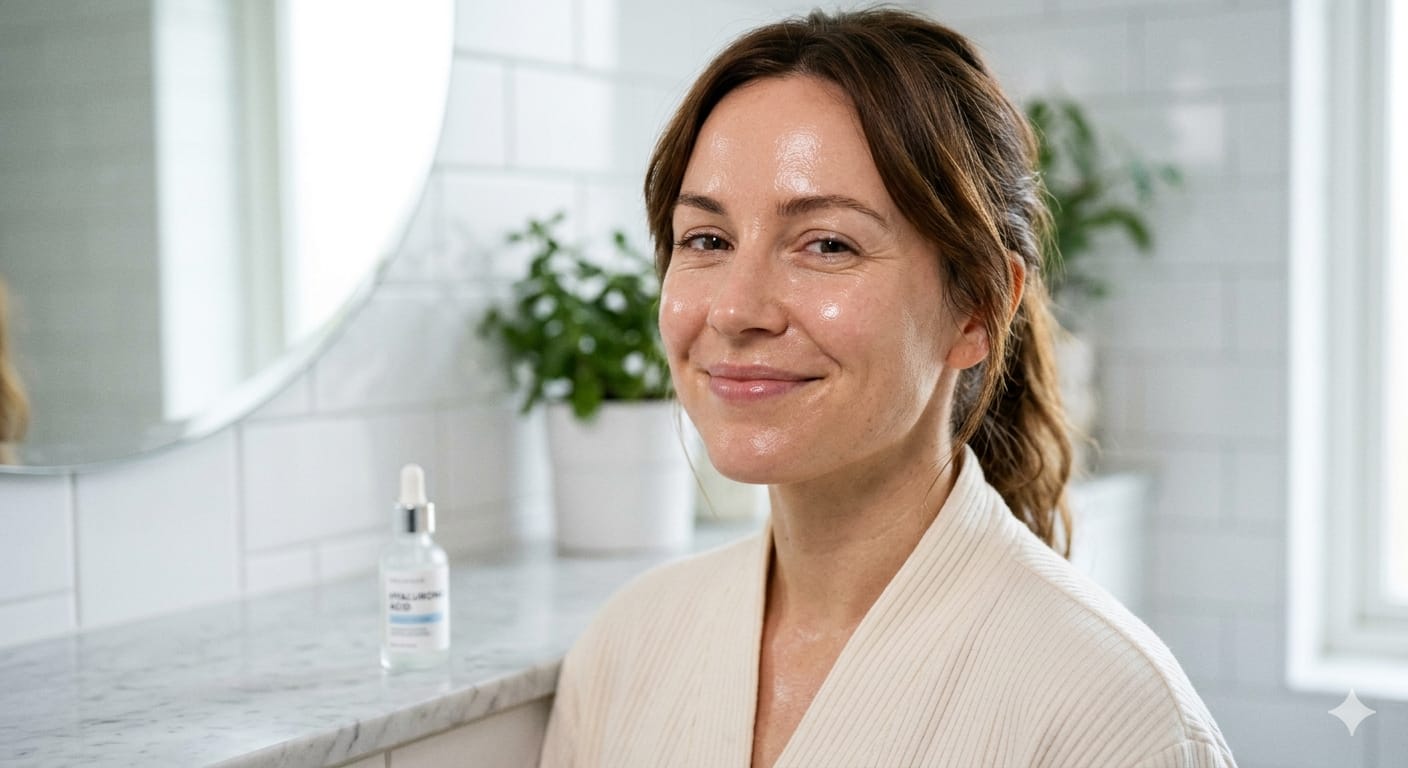
Hyaluronic acid isn't just another trendy ingredient"it's a dermatologist-recommended powerhouse that delivers measurable, visible improvements in skin hydration, texture, and overall health. From instantly plumping fine lines to building long-term moisture resilience, the benefits are backed by decades of scientific research.
Your Action Plan:
- Choose a multi-molecular weight HA serum
- Apply to DAMP skin within 60 seconds of cleansing
- ALWAYS seal with moisturizer to prevent TEWL
- Use morning AND night for 24-hour hydration
- Layer strategically with other actives
- Be consistent for 4-6 weeks to see transformative results
Whether you're battling seasonal dryness, recovering from a damaged moisture barrier, managing combination skin, or simply wanting that dewy, glass-skin glow"hyaluronic acid is your ultimate hydration ally.
Remember: hydrated skin is healthy skin. And healthy skin is confident skin. Ready to transform your complexion from dehydrated to dewy? Start today"your plump, radiant future self will thank you!
Ready to Transform Your Skin?
Pick an HA serum from our recommendations, master the damp-skin application technique, never skip moisturizer, and watch your skin become bouncier, smoother, and more radiant over the next month. Here's to your best-hydrated skin ever! §
Disclaimer: This article is for informational purposes only and should not be considered medical advice. Always consult with a healthcare professional before making any changes to your health routine.
Frequently Asked Questions
Absolutely! HA + retinol is a power couple. Apply HA first to damp skin, wait 10 minutes, apply retinol, then layer HA again followed by moisturizer. This 'sandwich technique' dramatically reduces retinol irritation while maintaining hydration.
Yes! Oily skin can be dehydrated. HA provides lightweight, non-comedogenic hydration without adding oil. Look for gel-based serums rather than cream formulations. Dehydrated oily skin often overproduces sebum to compensate”proper hydration can actually reduce breakouts.
2-3 drops (pea-sized amount) for face and neck. More isn't better”excess HA sits on skin's surface and can pill under makeup. Spread evenly by pressing, not rubbing.
Yes! The eye area benefits greatly from HA's plumping effect, reducing the appearance of fine lines. Use your ring finger to gently pat a tiny amount around the orbital bone. Avoid getting directly into eyes.
Unopened HA serums last 2-3 years. Once opened, use within 6-12 months. Signs of expiration: color change (yellowing), altered texture (stringy or clumpy), or unusual odor. Store in a cool, dark place away from direct sunlight.
Definitely! HA is safe for all ages, including teens. It's an excellent preventive anti-aging ingredient and helps balance teenage skin's hydration needs without clogging pores or causing breakouts.
Both! In humid climates (>60% humidity), HA thrives pulling moisture from air. In dry climates (<40% humidity), apply to DAMP skin and immediately seal with rich moisturizer or facial oil to prevent moisture loss.
Conclusion
Hyaluronic acid isn't just another trendy ingredient”it's a dermatologist-recommended powerhouse that delivers measurable, visible improvements in skin hydration, texture, and overall health. From instantly plumping fine lines to building long-term moisture resilience, the benefits are backed by decades of scientific research. Your Action Plan: Choose a multi-molecular weight HA serum Apply to DAMP skin within 60 seconds of cleansing ALWAYS seal with moisturizer to prevent TEWL Use morning AND night for 24-hour hydration Layer strategically with other actives Be consistent for 4-6 weeks to see transformative results Whether you're battling seasonal dryness, recovering from a damaged moisture barrier, managing combination skin, or simply wanting that dewy, glass-skin glow”hyaluronic acid is your ultimate hydration ally. Remember: hydrated skin is healthy skin. And healthy skin is confident skin. Ready to transform your complexion from dehydrated to dewy? Start today”your plump, radiant future self will thank you!
Marwari Luxe Team
Health & Wellness Experts
Our dedicated team of health and wellness professionals committed to providing accurate, research-based information.