How to Grow Hair Faster: Scalp Treatment Routine for Thinning Hair in 30 Days

Table of Contents
- 1. Introduction
- 2. Science of Hair Growth
- 3. Why Hair Thins: Root Causes
- 4. Scalp Care = Hair Growth
- 5. Top 10 Proven Hair Growth Ingredients
- 6. Complete 30-Day Scalp Treatment Routine
- 7. Best Scalp Treatments Reviewed
- 8. Natural Remedies That Actually Work
- 9. Lifestyle Factors Affecting Growth
- 10. 8 Mistakes Slowing Your Growth
- 11. When to See a Dermatologist
- 12. Frequently Asked Questions
- 13. Conclusion
Introduction
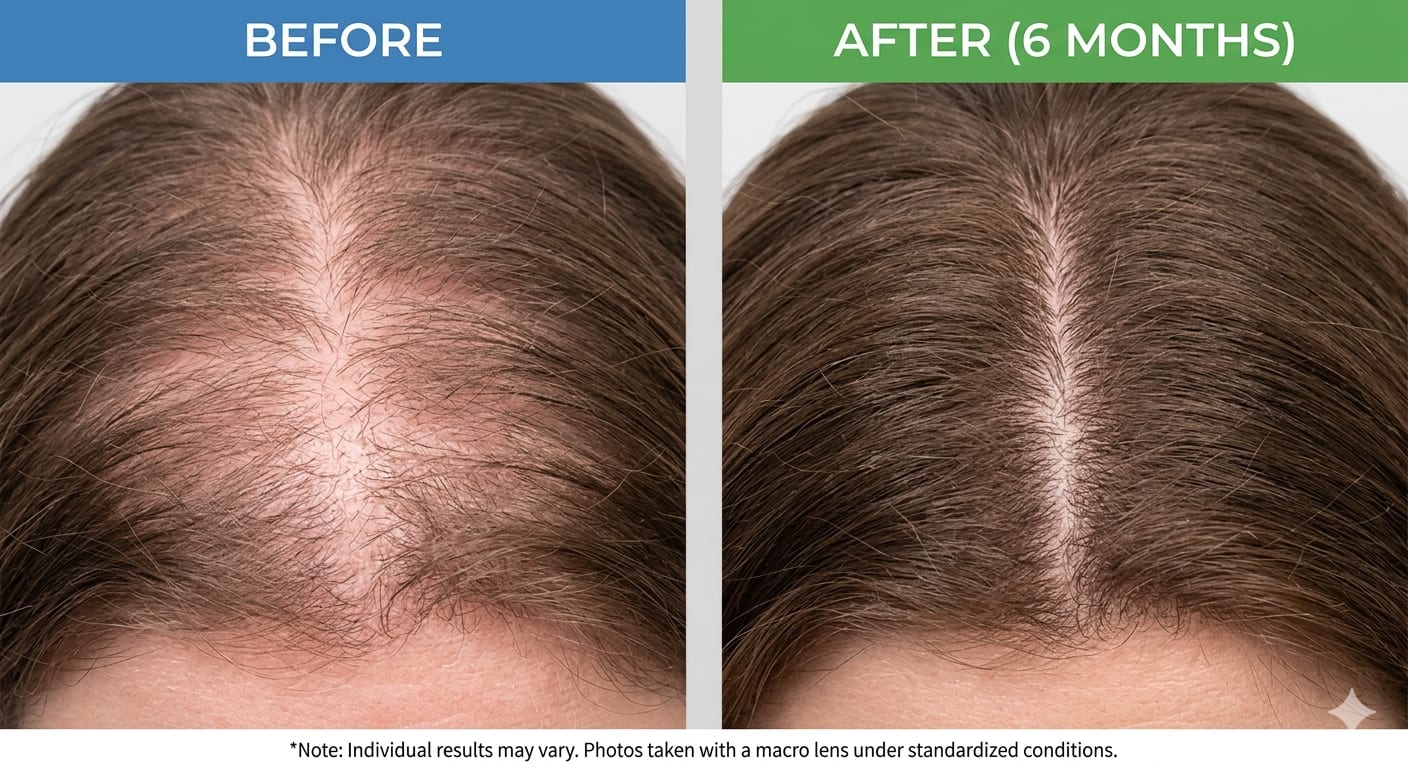
You brush your hair and see **more strands on your brush than on your head**. Your ponytail feels thinner. Your part looks wider. Every mirror check becomes an anxiety-inducing examination of just how much ground you can see through your hair.
Here's what nobody tells you: **Thinning hair isn't inevitable**, and you don't need expensive procedures or prescription medications to see real improvement. The secret lies in treating your **scalp like skincare**.
Just as you wouldn't expect glowing skin without proper cleansing, exfoliation, and treatment, you can't expect thick, fast-growing hair without addressing scalp health. **Your scalp is the soil from which your hair grows**"neglect it, and growth suffers.
What This Complete Guide Delivers:
- The science behind hair growth cycles and why understanding them matters
- 12 common causes of thinning hair (and which ones you can reverse)
- 10 clinically-proven ingredients that stimulate growth
- Step-by-step 30-day scalp treatment routine with daily/weekly protocols
- 15 best scalp treatments reviewed and ranked
- Natural remedies backed by science (rosemary oil, pumpkin seed oil, more)
- Lifestyle optimizations for maximum growth potential
- Common mistakes that sabotage your progress
- When thinning requires medical intervention
Whether you're dealing with postpartum shedding, stress-related thinning, genetic pattern loss, or just want longer, thicker hair faster, this guide gives you the complete roadmap. Let's grow your best hair yet.
The Science of Hair Growth: Understanding the Cycle
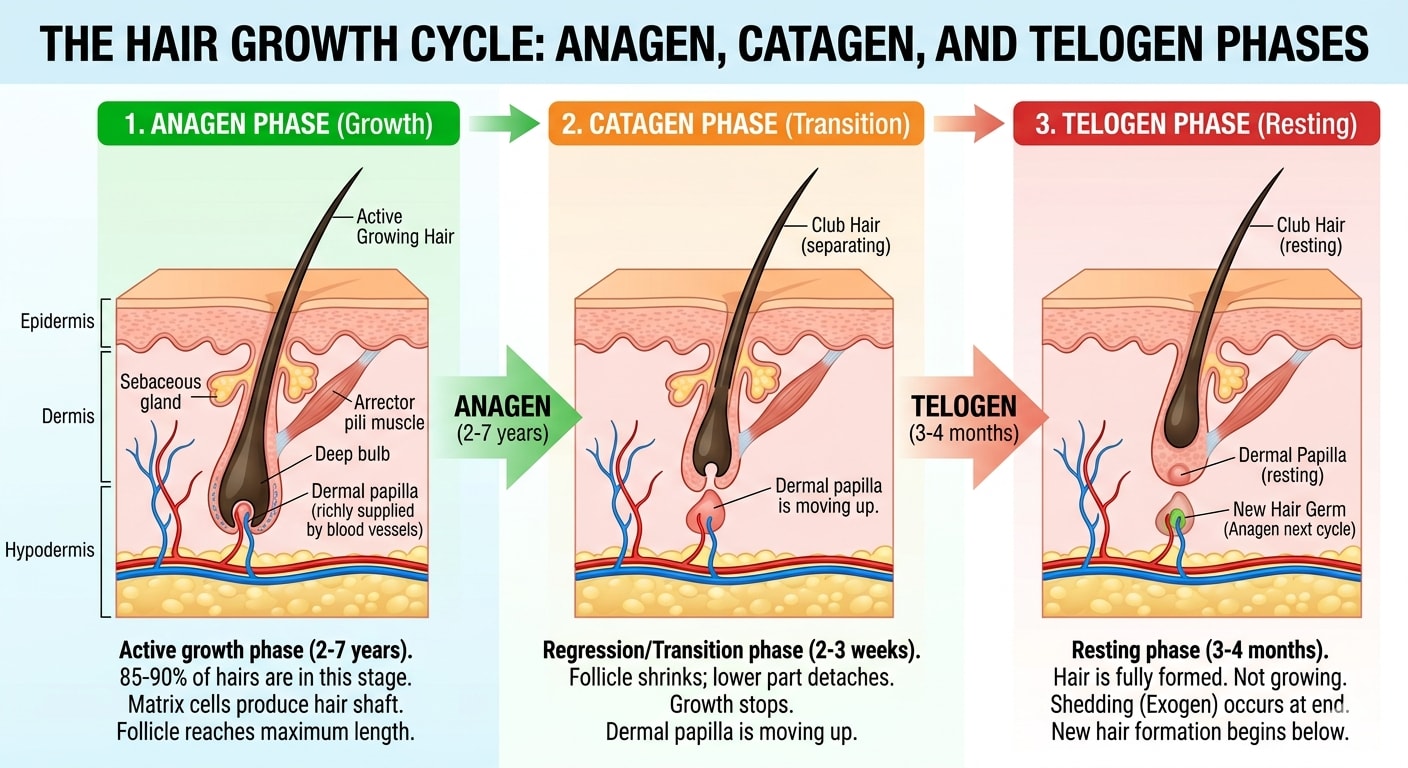
To grow hair faster, you must understand **how it grows**. Each hair follicle cycles through three distinct phases"and your goal is to optimize each one.
The Three Phases of Hair Growth
1. Anagen (Growth Phase): 2-7 Years
85-90% of your hairs are in this active growth phase at any time. Cells divide rapidly, adding about **0.5 inches (1.25 cm) per month**. Genetics determine how long your anagen phase lasts"this is why some people can grow waist-length hair while others struggle past shoulder length.
2. Catagen (Transition Phase): 2-3 Weeks
Growth stops. The follicle shrinks to about 1/6 its normal size. Blood supply is cut off, and the hair becomes a "club hair" (detached from its blood supply). Only 1% of hairs are in this phase at any time.
3. Telogen (Resting/Shedding Phase): 3-4 Months
The follicle rests while new hair grows beneath it. Eventually, the old hair sheds (50-100 hairs daily is normal), and the cycle restarts. 10-15% of hairs are in telogen at any time.
Why This Matters for Your Goals
To grow hair faster and thicker, you need to:
- Extend the anagen phase so hairs grow longer before shedding
- Minimize premature catagen entry caused by stress, inflammation, or damage
- Support healthy telogen shedding so new hairs can emerge unimpeded
- Stimulate dormant follicles to re-enter anagen
Realistic Expectations:
Hair grows ~6 inches per year maximum. In 30 days, expect 0.4-0.5 inches of growth plus reduced shedding. Significant thickness improvements take 3-6 months of consistent care.
Why Hair Thins: 12 Root Causes & Which Are Reversible
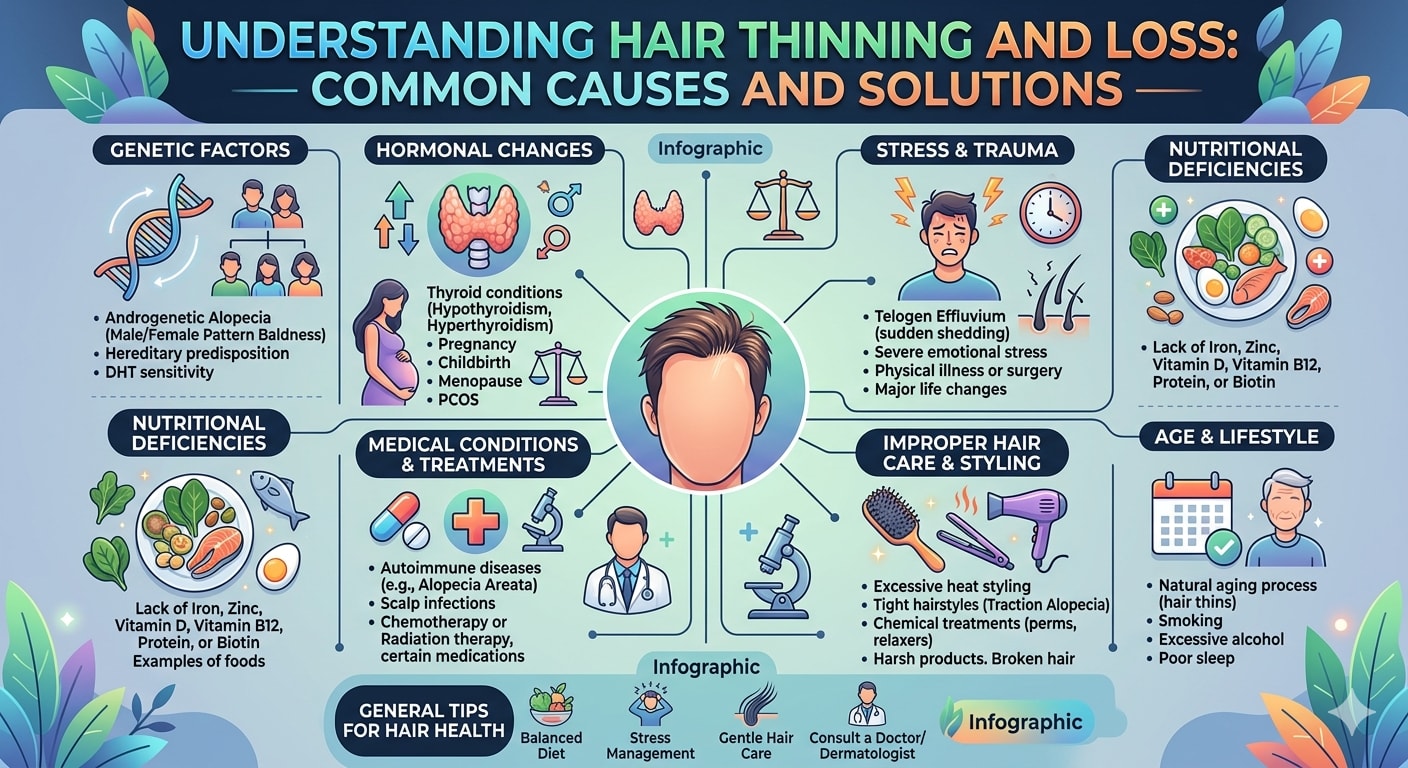
Effective treatment starts with identifying **why** you're losing hair. Here are the primary culprits:
Genetic/Hormonal Causes (Partially Reversible)
- Androgenetic Alopecia (Female/Male Pattern Baldness): Affects 50% of women by age 50. DHT hormone shrinks follicles, shortening anagen phase. Treatment: Minoxidil, anti-androgens, PRP
Temporary/Reversible Causes
- Telogen Effluvium (Stress Shedding): Physical/emotional stress pushes hairs into telogen prematurely. Occurs 2-3 months after trigger (illness, surgery, childbirth, extreme dieting). Treatment: Stress management, time"resolves in 6-9 months
- Nutritional Deficiencies: Iron/ferritin <30 ng/mL, vitamin D <30 ng/mL, zinc, B12, protein deficiency. Common in vegetarians/vegans. Treatment: Blood tests, targeted supplementation, increased protein (0.8g per lb bodyweight)
- Thyroid Disorders: Both hypothyroidism and hyperthyroidism cause diffuse thinning. Treatment: Thyroid medication, selenium, zinc
- Postpartum Hair Loss: Estrogen drop after delivery triggers massive shedding at 3-4 months postpartum. Treatment: Time"resolves by baby's first birthday
- Medication Side Effects: Birth control changes, antidepressants, blood thinners, retinoids, beta-blockers. Treatment: Consult doctor about alternatives
Scalp Conditions (Treatable)
- Seborrheic Dermatitis/Dandruff: Inflammation from Malassezia yeast overgrowth. Itchy, flaky scalp impairs growth. Treatment: Ketoconazole shampoo, salicylic acid, zinc pyrithione
- Psoriasis: Autoimmune condition causing thick scales. Can cause temporary loss. Treatment: Coal tar, salicylic acid, prescription topicals
- Folliculitis: Inflamed/infected follicles from bacteria or fungi. Treatment: Antibiotics, antifungal treatments
Lifestyle/Damage (Preventable)
- Traction Alopecia: Tight hairstyles (braids, ponytails) pull on follicles. Treatment: Looser styles, early intervention prevents permanent loss
- Heat/Chemical Damage: Excessive coloring, bleaching, flat irons break hair shafts. Treatment: Protein treatments, heat protectants, reduce processing
- Poor Scalp Circulation: Sedentary lifestyle, tight hairstyles, lack of massage. Treatment: Daily scalp massage, exercise, inversion method
Action Step: Track your shedding pattern, recent life changes, and family history. This helps identify the cause and choose appropriate treatments.
Scalp Care = Hair Growth: The Golden Rules
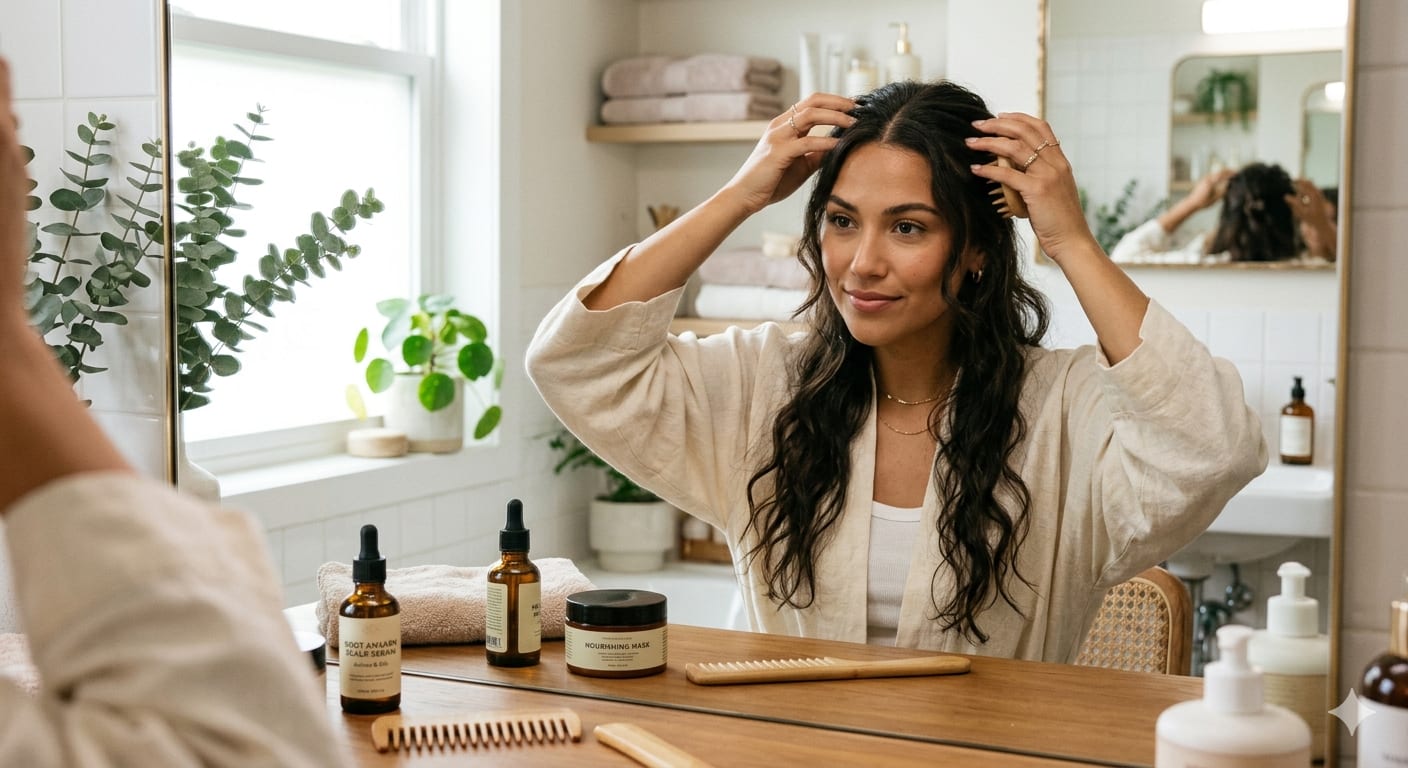
Your scalp is skin"just thicker than your face with more blood vessels and oil glands. Treat it with the same intentionality, and watch your hair thrive.
The Four Pillars of Scalp Health
1. Cleanliness: Remove Buildup Without Stripping
- Wash 2-4x weekly based on your hair type (oily = more frequent, dry/curly = less)
- Use sulfate-free shampoos to preserve natural oils
- Clarify monthly to remove product buildup that clogs follicles
- Double cleanse if using heavy oils, serums, or dry shampoo
2. Exfoliation: Clear Dead Skin Cell Buildup
- Physical exfoliation: Scalp brushes, scrubs 1-2x monthly
- Chemical exfoliation: Salicylic acid, glycolic acid toners 1-2x weekly
- Enzyme exfoliation: Papaya/pineapple extracts for sensitive scalps
- Signs you need exfoliation: itchiness, flakes, product doesn't absorb, dull hair
3. Nourishment: Feed Follicles Actives
- Apply leave-in treatments daily or every other day
- Focus on proven actives: peptides, caffeine, rosemary oil, niacinamide
- Massage for 3-5 minutes to increase absorption and circulation
- Layer products correctly: thinnest (water-based) to thickest (oils)
4. Protection: Prevent Damage & Inflammation
- UV protection: Wear hats, use hair products with SPF
- Heat protection: Always use heat protectant before styling tools
- Gentle handling: Silk pillowcases, loose hairstyles, wide-tooth combs
- Avoid overwashing which strips protective sebum
Scalp Type Matters:
Oily scalp: Focus on balancing, not stripping. Use lightweight, water-based treatments.
Dry scalp: Prioritize hydration with hyaluronic acid, squalane, light oils.
Sensitive scalp: Fragrance-free, minimal ingredients, patch test everything.
Combination: Oily roots + dry ends need targeted application.
Top 10 Proven Hair Growth Ingredients (Backed by Science)
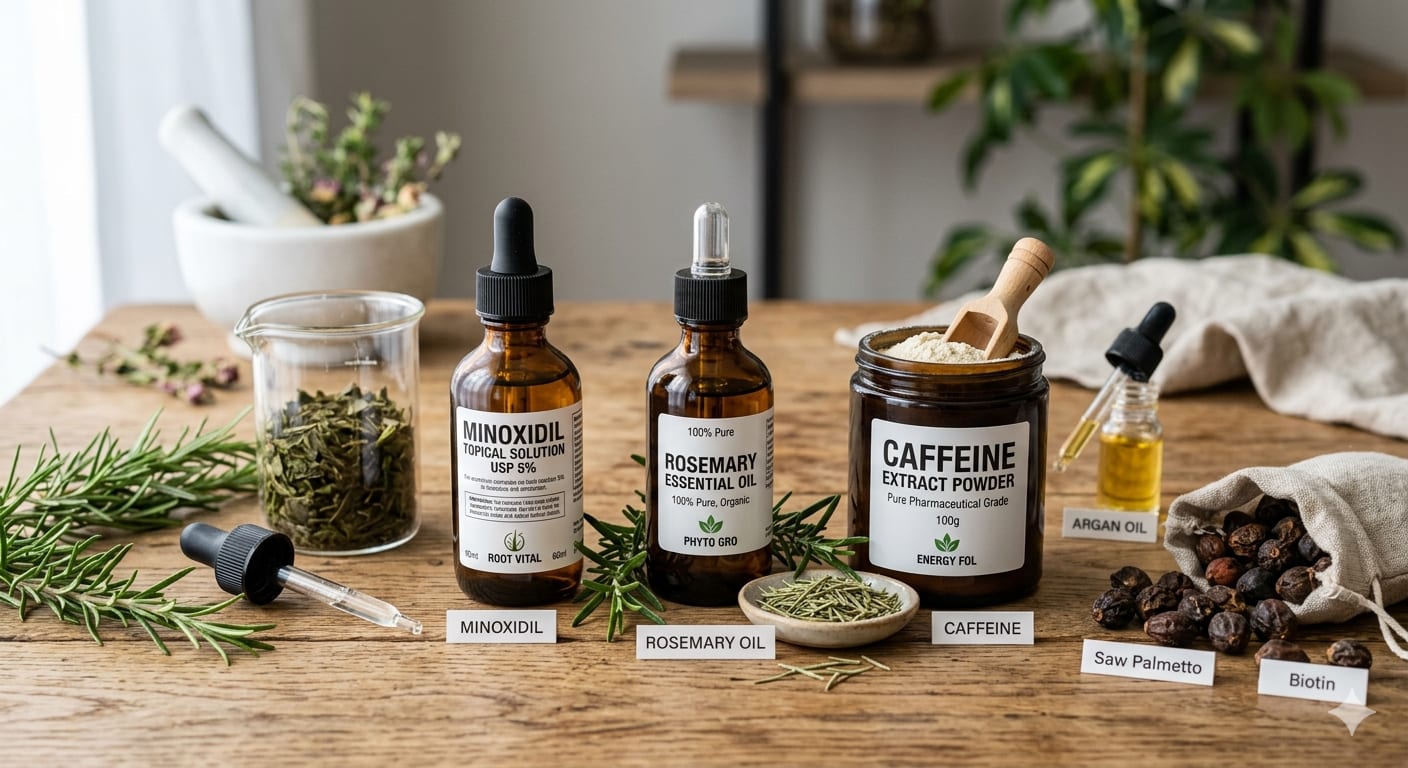
Not all ingredients are created equal. These 10 have clinical evidence supporting their efficacy:
- Minoxidil (Rogaine): FDA-approved vasodilator. Extends anagen phase, increases follicle size. 2% solution shows 30-40% improvement in 4-6 months. Side effects: Initial shedding, potential facial hair growth.
- Rosemary Oil: 2015 study showed comparable results to 2% minoxidil after 6 months. Improves circulation, reduces DHT. Use 2-3 drops diluted in carrier oil. Best for: Those avoiding pharmaceuticals.
- Caffeine: Stimulates hair shaft elongation, blocks DHT effects. Works within 2 minutes of application. Look for 0.001%-0.005% concentrations. Best for: Quick absorption, morning routines.
- Peptides (Copper Peptides, Biotinoyl Tripeptide-1): Signal molecules that stimulate collagen, increase follicle size. Studies show 20-30% density increase in 90 days. Best for: Thinning, aging hair.
- Niacinamide (Vitamin B3): Increases blood flow to scalp, strengthens keratin infrastructure. 2-5% concentrations ideal. Best for: Overall scalp health, barrier support.
- Pumpkin Seed Oil: Blocks 5-alpha-reductase (enzyme converting testosterone to DHT). 2014 study showed 40% hair count increase in 24 weeks. Take orally or apply topically. Best for: Hormonal thinning.
- Saw Palmetto: Plant-derived DHT blocker. Oral supplementation (320mg daily) shows modest improvement. Topical formulations emerging. Best for: Androgenetic alopecia.
- Hyaluronic Acid: Hydrates scalp, creates optimal environment for growth. Doesn't directly stimulate growth but supports healthy follicles. Best for: Dry, flaky scalps.
- Ketoconazole: Antifungal that also has anti-androgen effects. 1-2% shampoos reduce inflammation and DHT. Use 2-3x weekly. Best for: Dandruff + thinning combination.
- Redensyl: Newer ingredient targeting hair follicle stem cells. Clinical studies show 28% more hairs in anagen after 84 days. Gentler than minoxidil. Best for: Sensitive scalps.
Synergy Strategy:
Combine ingredients with different mechanisms: Minoxidil OR Rosemary Oil + Caffeine + Peptides + Niacinamide = maximum impact.
Complete 30-Day Scalp Treatment Routine for Faster Growth
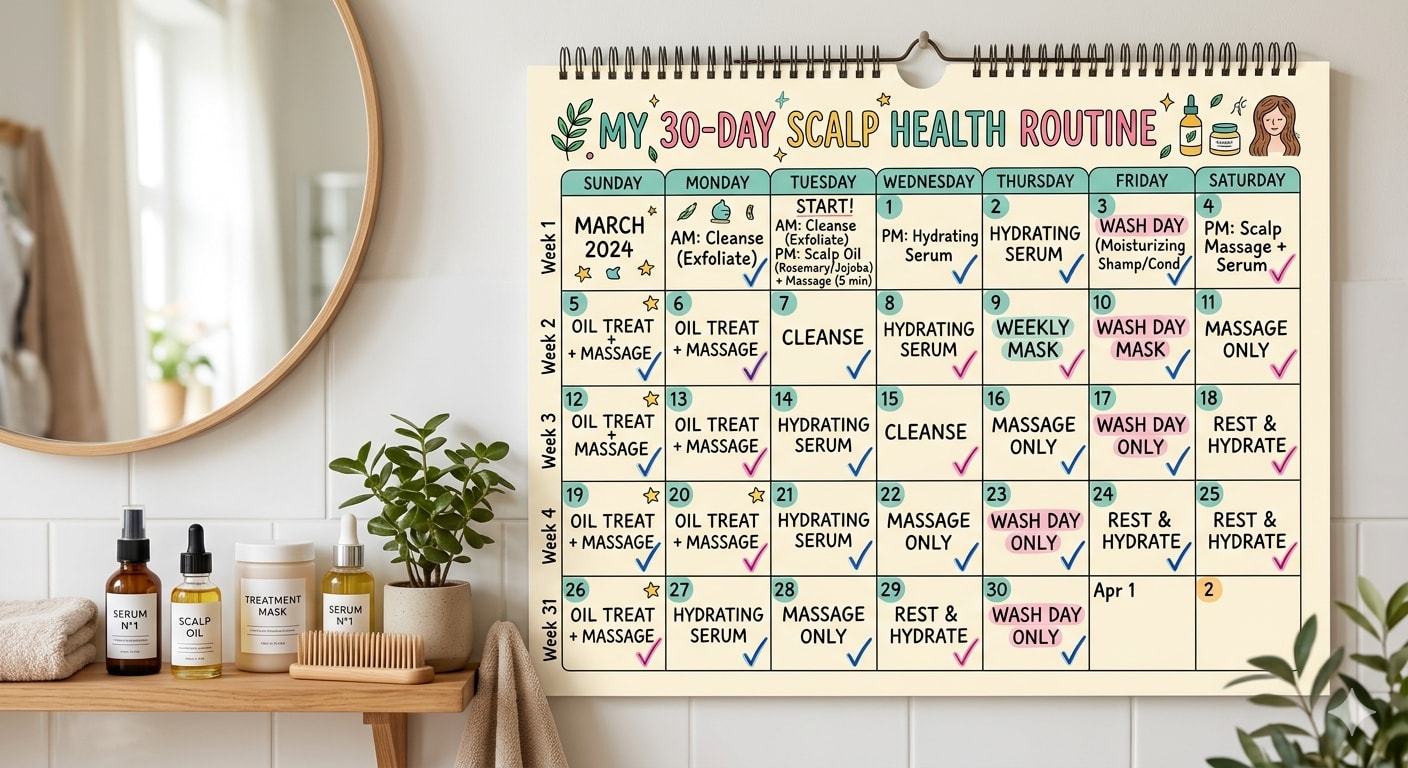
This progressive routine builds habits while delivering actives consistently. Adjust based on your schedule and hair type.
Week 1-2: Foundation Phase
Daily (Morning or Night):
- Scalp massage: 3-5 minutes with fingertips (not nails)
- Apply caffeine serum or rosemary oil diluted in jojoba oil
- Focus on problem areas (hairline, part, crown)
Wash Days (2-3x weekly):
- Double cleanse with sulfate-free shampoo
- Condition mid-lengths to ends only
- Apply leave-in peptide treatment to damp scalp
Once This Week:
- Scalp scrub or salicylic acid exfoliant
- Deep conditioning mask on lengths
Week 3-4: Intensification Phase
Add to Daily Routine:
- Niacinamide serum (2-5%) before oil treatment
- Inversion method: Hang head upside down 4 minutes while massaging (increases blood flow)
Add Once Weekly:
- Pumpkin seed oil scalp mask (leave on 30+ minutes)
- Gentle scalp brush during shampoo
Day 30 Check-In:
Take progress photos, note reduced shedding, measure growth (should be ~0.5 inches). Continue routine for 60+ more days for visible thickness changes.
Best Scalp Treatments for Hair Growth: 15 Products Reviewed

Top Tier ($40-60):
- The Ordinary Multi-Peptide Serum for Hair Density: $29 - Copper peptides, caffeine, biotinoyl tripeptide-1
- Kérastase Genesis Defense Serum: $62 - Aminexil, caffeine, vitamin B3
- Vegamour GRO Hair Serum: $58 - Curcumin, mung bean, biotin
- Briogeo Scalp Revival Charcoal + Coconut Oil Micro-Exfoliating Shampoo: $42 - Charcoal, tea tree oil, peppermint
Mid-Range ($20-40):
- The Inkey List Caffeine Stimulating Hair Treatment: $14 - Caffeine, hyaluronic acid, niacinamide
- Mielle Organics Rosemary Mint Scalp & Hair Strengthening Oil: $13 - Rosemary oil, biotin, neem oil
- Ouai Hair & Body Supplements: $35 - Biotin, zinc, ashwagandha
Budget-Friendly (Under $20):
- Nizoral A-D Anti-Dandruff Shampoo: $15 - 1% ketoconazole
- OGX Renewing Argan Oil of Morocco Penetrating Oil: $9 - Argan oil, vitamin E
- Maple Holistics Tea Tree Oil Shampoo: $17 - Tea tree, jojoba, argan oils
Natural Remedies That Actually Work for Hair Growth

- Rosemary Oil: Mix 2-3 drops with 1 tbsp carrier oil. Massage into scalp 2-3x weekly. Leave on 30+ minutes or overnight.
- Castor Oil: Rich in ricinoleic acid. Dilute with lighter oil (it's thick!). Apply to edges and problem areas.
- Aloe Vera: Soothes inflammation, balances pH. Apply fresh gel directly to scalp, leave 30 minutes before washing.
- Onion Juice: High in sulfur. Blend onion, strain juice, apply to scalp 15 minutes before shampooing. Smells but works!
- Green Tea Rinse: Brew strong green tea, cool, pour over hair after shampooing. EGCG stimulates follicles.
- Fenugreek Seeds: Soak overnight, blend into paste, apply as mask. High in protein and nicotinic acid.
Lifestyle Factors Affecting Hair Growth
- Protein Intake: Hair is 95% keratin protein. Consume 0.8-1g per lb bodyweight daily from eggs, fish, legumes, Greek yogurt.
- Iron Status: Ferritin levels should be >70 ng/mL for optimal growth. Eat spinach, red meat, lentils. Supplement if deficient.
- Sleep Quality: Growth hormone peaks during deep sleep. Aim for 7-9 hours nightly. Silk pillowcase reduces friction.
- Stress Management: Chronic stress elevates cortisol, triggering telogen effluvium. Practice meditation, yoga, deep breathing daily.
- Exercise: Increases overall circulation including scalp. Cardio + strength training 3-5x weekly.
- Hydration: Dehydrated body = dehydrated scalp. Drink half your bodyweight in ounces daily.
- Avoid Crash Dieting: Rapid weight loss triggers massive shedding 2-3 months later. Lose weight gradually (0.5-1 lb weekly).
8 Mistakes Slowing Your Hair Growth
- Inconsistency: Skipping applications or giving up too soon. Results take 90+ days.
- Overwashing: Strips natural oils. Stick to 2-4x weekly maximum.
- Tight Hairstyles: Constant tension causes traction alopecia. Wear hair loose when possible.
- Skipping Heat Protectant: Heat damage breaks hair shafts. Always spray before hot tools.
- Poor Nutrition: You can't out-supplement a bad diet. Prioritize whole foods.
- Ignoring Underlying Issues: Thyroid problems, PCOS, deficiencies need medical treatment.
- Using Too Many Actives: Overwhelming scalp causes irritation. Start simple, add slowly.
- Not Tracking Progress: Take monthly photos in consistent lighting. Measure ponytail circumference.
When to See a Dermatologist
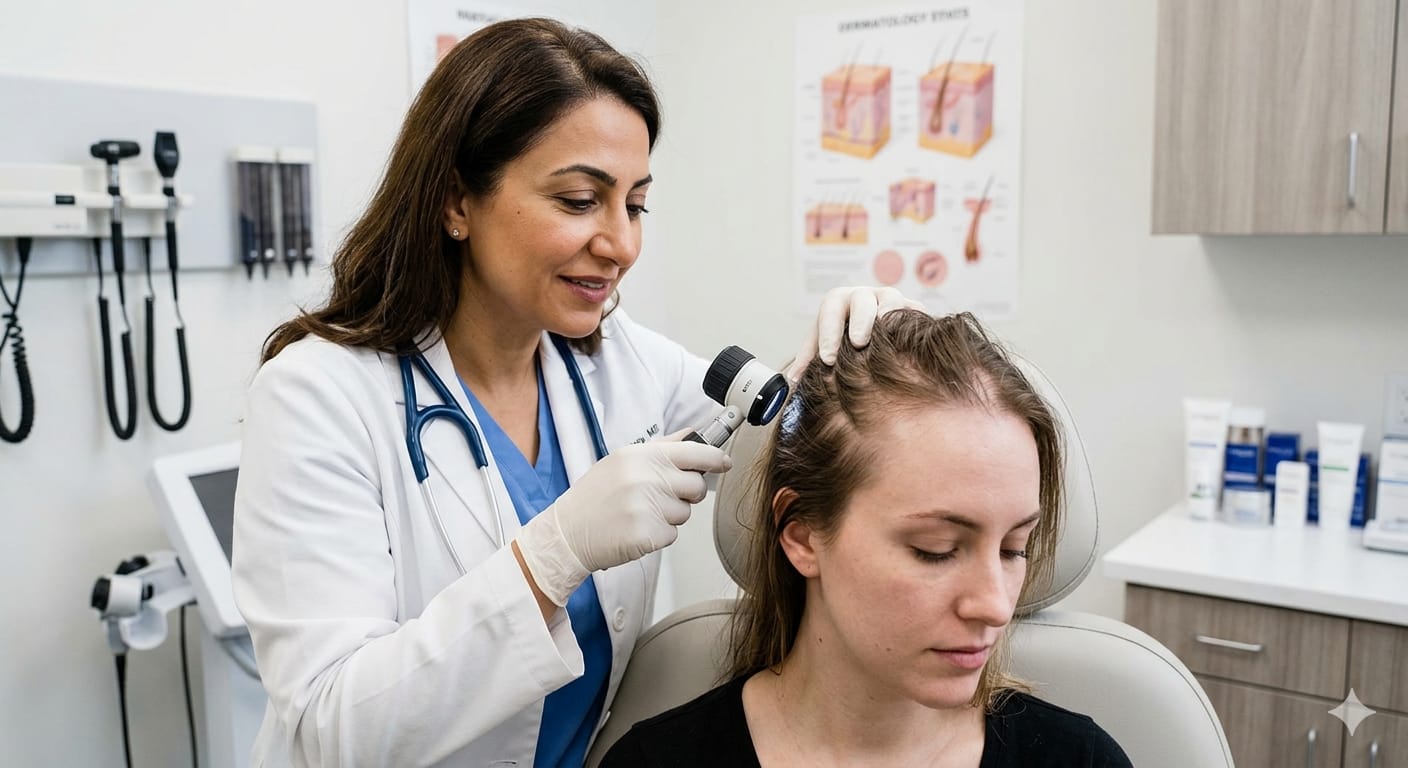
Seek professional help if you experience:
- Sudden, patchy hair loss (could indicate alopecia areata)
- Scalp pain, burning, or severe itching
- Visible bald spots or receding hairline
- Shedding >150 hairs daily for over 2 months
- No improvement after 6 months of consistent at-home treatment
- Signs of hormonal imbalance: irregular periods, acne, excess facial hair
Medical Treatments Available:
- Prescription-strength minoxidil (5%)
- Anti-androgens (spironolactone, finasteride)
- PRP (Platelet-Rich Plasma) therapy
- Corticosteroid injections for alopecia areata
- Low-level laser therapy (LLLT)
- Hair transplant surgery (for advanced cases)
Early Intervention Matters:
The sooner you address hair loss, the better the prognosis. Don't wait years hoping it will resolve on its own.
Disclaimer: This article is for informational purposes only and should not be considered medical advice. Always consult with a healthcare professional before making any changes to your health routine.
Frequently Asked Questions
Reduced shedding in 2-4 weeks, improved texture in 4-8 weeks, visible thickness changes in 3-6 months. Consistency is critical.
Natural treatments can slow progression and improve density but cannot fully reverse androgenetic alopecia. Minoxidil or prescription treatments may be necessary.
Massage helps by increasing blood flow 40%, but works best combined with active ingredients like rosemary oil, caffeine, or peptides.
No. Clean scalps grow better. Wash 2-4x weekly based on your hair type. Use gentle, sulfate-free shampoos.
No. Trimming removes split ends but doesn't affect growth rate at the follicle. However, regular trims prevent breakage, maintaining length.
Only if you have deficiencies. Biotin helps if deficient (rare). Focus on protein, iron, zinc, vitamin D through diet first.
Stress-induced telogen effluvium is usually temporary. Hair regrows once stress is managed. Chronic stress can trigger genetic predisposition though.
Yes. Some shedding increases initially as treatments push old hairs out to make way for new growth. This subsides after 2-4 weeks.
Serums with proven actives (peptides, caffeine) show fastest results. Oils provide nourishment but slower growth stimulation. Best approach: combine both.
Absolutely. Most treatments work for all genders. Men may need higher minoxidil concentrations (5% vs 2%) due to different hormone profiles.
Conclusion
Growing hair faster requires treating your scalp like skincare”consistent cleansing, exfoliation, treatment, and protection. The 30-day routine combining proven actives, scalp massage, proper nutrition, and gentle handling delivers measurable results: 0.5 inches monthly growth plus reduced shedding. Address root causes, stay consistent for 90+ days, and consult dermatologists for persistent thinning. Your thickest, healthiest hair starts with healthy scalp habits today.
Marwari Luxe Team
Health & Wellness Experts
Our dedicated team of health and wellness professionals committed to providing accurate, research-based information.