Chemical vs Physical Sunscreen: Which Is Better for Your Skin Type?

Introduction: Your Ultimate Sun Protection Guide

Walking down the sunscreen aisle feels overwhelming. Chemical, physical, mineral, hybrid"what do these terms even mean? More importantly, which one should YOU trust with your skin's protection? The debate between chemical and physical sunscreens has divided beauty enthusiasts and dermatologists alike, but here's the truth: both have merit, and the "best" choice depends entirely on your unique skin needs.
� Critical Fact: Skin cancer rates have tripled since 1970, according to the American Academy of Dermatology. Daily broad-spectrum SPF 30+ reduces melanoma risk by 50% and prevents 90% of visible skin aging. This isn't about beauty"it's about health.
Whether you're battling breakouts from heavy formulas, struggling with white cast on deep skin tones, dealing with extreme sensitivity, or simply wanting lightweight daily protection, understanding the fundamental differences between chemical and physical sunscreens empowers you to make informed decisions. Let's decode the science together.
How Sunscreen Protects: UV Radiation Basics
To understand sunscreen, you must first understand what it's protecting you from. The sun emits three types of ultraviolet radiation: UVA, UVB, and UVC. UVC is blocked by Earth's atmosphere, but UVA and UVB reach your skin"and both cause damage.
UVA Rays (Aging):
- Longer wavelength (320-400 nm)
- Penetrate deep into dermis (second skin layer)
- Break down collagen and elastin fibers
- Cause premature wrinkles, sagging, age spots
- Pass through glass and clouds
- Present with equal intensity during all daylight hours
UVB Rays (Burning):
- Shorter wavelength (290-320 nm)
- Affect epidermis (outer skin layer)
- Directly damage DNA, causing sunburn
- Primary cause of skin cancers
- Vary in intensity: strongest 10 AM - 4 PM, summer months
- Blocked by glass but reflect off water, sand, snow
Essential Knowledge: "Broad spectrum" means the sunscreen protects against BOTH UVA and UVB. Without this label, you're only protected from burning"not aging or long-term DNA damage. Always choose broad spectrum.
Chemical Sunscreens: The Absorption Method
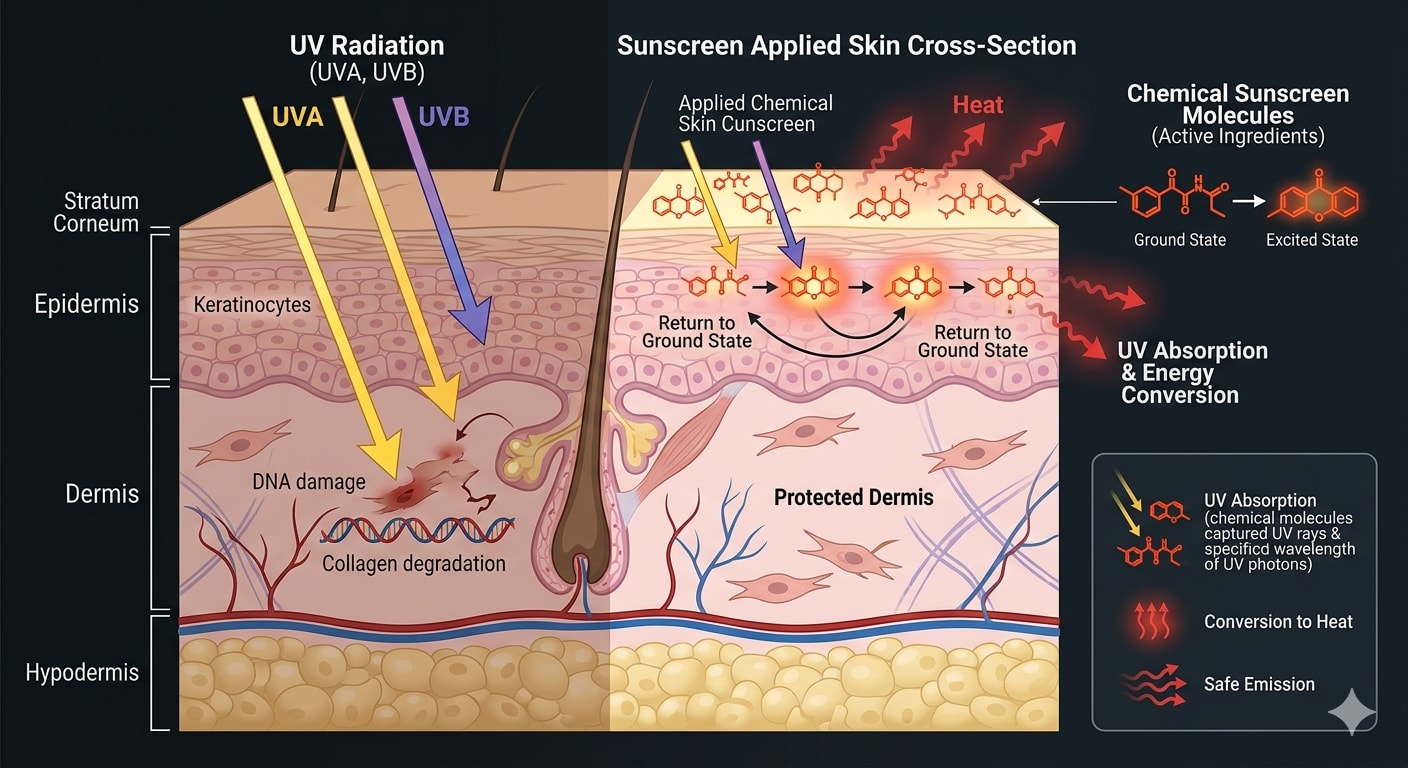
Chemical sunscreens work like sponges"they absorb UV radiation, convert it to heat, and release it from your skin. Think of them as tiny bodyguards that intercept UV rays before they can damage your cells.
Common Active Ingredients:
- Oxybenzone: Excellent UVA/UVB coverage, penetration concerns
- Avobenzone: Best UVA protection, unstable without stabilizers
- Octinoxate: Strong UVB protection, reef safety concerns
- Homosalate: UVB filter, enhances penetration of other ingredients
- Octocrylene: Stabilizes avobenzone, moderate water resistance
- Octisalate: UVB protection, improves water resistance
Advantages:
- Lightweight, invisible finish"no white cast
- Easily layers under makeup
- Superior water and sweat resistance
- More comfortable for daily wear
- Better for darker skin tones (Fitzpatrick IV-VI)
- Generally more affordable
Disadvantages:
- Requires 20 minutes to become effective
- Can irritate sensitive skin and eyes
- Higher risk of allergic reactions
- Some ingredients linked to hormone disruption (oxybenzone)
- Degrades faster in sunlight, requires frequent reapplication
- Environmental concerns: coral reef bleaching
� Timing Matters: Chemical sunscreens MUST be applied 20 minutes before sun exposure. Applying right before going outside leaves you unprotected during those critical first minutes.
Physical (Mineral) Sunscreens: The Reflection Method

Physical sunscreens"also called mineral sunscreens"work like a shield. They sit on top of your skin, physically blocking and reflecting UV rays away before they can penetrate. The two FDA-approved mineral filters are zinc oxide and titanium dioxide.
Active Minerals:
Zinc Oxide: The gold standard. Provides complete broad-spectrum protection against UVA I, UVA II, and UVB. Anti-inflammatory properties calm sensitive skin. Safe for children and reef-safe.
Titanium Dioxide: Primarily UVB + short UVA protection. Less white cast than zinc but narrower coverage. Often combined with zinc for comprehensive protection.
Advantages:
- Works immediately upon application"no waiting
- Gentle enough for sensitive, reactive skin
- Non-comedogenic"won't clog pores
- Stable formula"doesn't degrade in sunlight
- Reef-safe and environmentally friendly
- No systemic absorption"stays on surface
- Ideal for rosacea, eczema, post-procedure skin
Disadvantages:
- White cast, especially on deeper skin tones
- Thicker, heavier texture
- Can pill under makeup
- Less water-resistant (washes off easier)
- May feel drying on already dry skin
- Typically more expensive than chemical options
Dermatologist Pick: For sensitive skin, acne-prone complexions, rosacea sufferers, and anyone undergoing laser treatments or peels, mineral sunscreens are unanimously recommended by dermatologists worldwide.
Frequently Asked Questions
Is mineral or chemical sunscreen better for acne?
Mineral sunscreens win for acne-prone skin. Zinc oxide is naturally anti-inflammatory and won't clog pores. Chemical filters like oxybenzone can trap heat and trigger breakouts. Look for "non-comedogenic" mineral formulas with lightweight textures.
Can I mix chemical and mineral sunscreens?
Yes! Hybrid sunscreens combine both types for enhanced protection and cosmetic elegance. Many modern formulas use zinc oxide plus chemical filters to achieve high SPF without heavy white cast. Just ensure total SPF remains 30+.
Do chemical sunscreens cause cancer?
No conclusive evidence proves this in humans. While some chemical filters (oxybenzone, octinoxate) show concerning absorption levels in FDA studies, there's zero proof they cause cancer. However, if concerned, choose mineral sunscreens"gras recognized as safe and effective.
Why don't mineral sunscreens sting my eyes?
Mineral filters are inert"they don't react chemically with skin or eyes. Chemical sunscreens, however, can migrate into eyes and cause burning sensations. For eye area, always use mineral stick formulas designed for sensitive zones.
Are tinted mineral sunscreens worth it?
Absolutely! Tinted versions neutralize white cast using iron oxides. Bonus: iron oxides also protect against visible light (HEV), which worsens melasma and hyperpigmentation. Perfect solution for medium to deep skin tones wanting mineral protection without ghostly appearance.
How often should I reapply sunscreen?
Every 2 hours when outdoors. Water-resistant formulas last 40-80 minutes while swimming/sweating. Chemical sunscreens degrade faster and need more frequent reapplication. Mineral sunscreens remain stable longer but still require 2-hour reapplication for continuous protection.
Is SPF in makeup enough protection?
No. You'd need to apply 7x more foundation than typical to achieve labeled SPF. Plus, makeup SPF rarely offers broad-spectrum protection. Always apply dedicated sunscreen first, then makeup. Consider SPF powder for touch-ups throughout the day.
Conclusion: The Best Sunscreen Is the One You'll Actually Use

The chemical vs. physical sunscreen debate doesn't have a one-size-fits-all answer. Both types effectively protect against harmful UV rays when used correctly. The real question isn't which is universally better"it's which is better for YOUR skin, lifestyle, and values.
Quick Decision Guide:
- Choose Chemical If: You want lightweight feel, no white cast, superior water resistance, and have normal to oily resilient skin.
- Choose Mineral If: You have sensitive skin, acne, rosacea, prefer immediate protection, care about reef safety, or want minimal ingredient lists.
- Try Hybrid If: You want balanced benefits"cosmetic elegance plus gentle protection.
Remember: the best sunscreen is the one you'll actually enjoy wearing every single day. Whether chemical, physical, or hybrid, commit to daily application, generous amounts (1/4 teaspoon for face), and diligent reapplication. Your future skin will thank you.
Make Sunscreen Non-Negotiable: Regardless of type, SPF 30+ broad spectrum daily use is the #1 anti-aging, cancer-preventing step you can take. Find your perfect match, keep it by your bedside, and never skip"rain or shine, winter or summer. Here's to lifelong skin health! ☀�
Disclaimer: This article is for informational purposes only and should not be considered medical advice. Always consult with a healthcare professional before making any changes to your health routine.
Frequently Asked Questions
Mineral sunscreens win for acne-prone skin. Zinc oxide is naturally anti-inflammatory and won't clog pores. Chemical filters can trap heat and trigger breakouts.
Yes! Hybrid sunscreens combine both types for enhanced protection and cosmetic elegance. Many modern formulas use zinc oxide plus chemical filters.
No conclusive evidence proves this in humans. However, if concerned, choose mineral sunscreens”GRAS recognized as safe and effective.
Mineral filters are inert”they don't react chemically with skin or eyes. Chemical sunscreens can migrate into eyes and cause burning.
Absolutely! Tinted versions neutralize white cast using iron oxides, which also protect against visible light (HEV) that worsens melasma.
Every 2 hours when outdoors. Water-resistant formulas last 40-80 minutes while swimming/sweating. Chemical sunscreens degrade faster.
No. You'd need to apply 7x more foundation than typical to achieve labeled SPF. Always apply dedicated sunscreen first, then makeup.
Conclusion
The chemical vs. physical sunscreen debate doesn't have a one-size-fits-all answer. Both types effectively protect against harmful UV rays when used correctly. The real question isn't which is universally better"it's which is better for YOUR skin, lifestyle, and values. Quick Decision Guide: Choose Chemical If: You want lightweight feel, no white cast, superior water resistance, and have normal to oily resilient skin. Choose Mineral If: You have sensitive skin, acne, rosacea, prefer immediate protection, care about reef safety, or want minimal ingredient lists. Try Hybrid If: You want balanced benefits"cosmetic elegance plus gentle protection. Remember: the best sunscreen is the one you'll actually enjoy wearing every single day. Whether chemical, physical, or hybrid, commit to daily application, generous amounts, and diligent reapplication. Your future skin will thank you.
Marwari Luxe Team
Health & Wellness Experts
Our dedicated team of health and wellness professionals committed to providing accurate, research-based information.