Best Retinol Serum for Sensitive Skin: Anti-Aging Routine Without Redness

Table of Contents
- 1. Introduction
- 2. What Is Retinol?
- 3. Why Sensitive Skin Needs Special Care
- 4. How to Choose the Right Retinol
- 5. Top 10 Retinol Serums Reviewed
- 6. How to Use Retinol Without Irritation
- 7. 4-Week Beginner's Routine
- 8. Bakuchiol: Natural Alternative
- 9. 8 Mistakes to Avoid
- 10. Frequently Asked Questions
- 11. Conclusion
Introduction
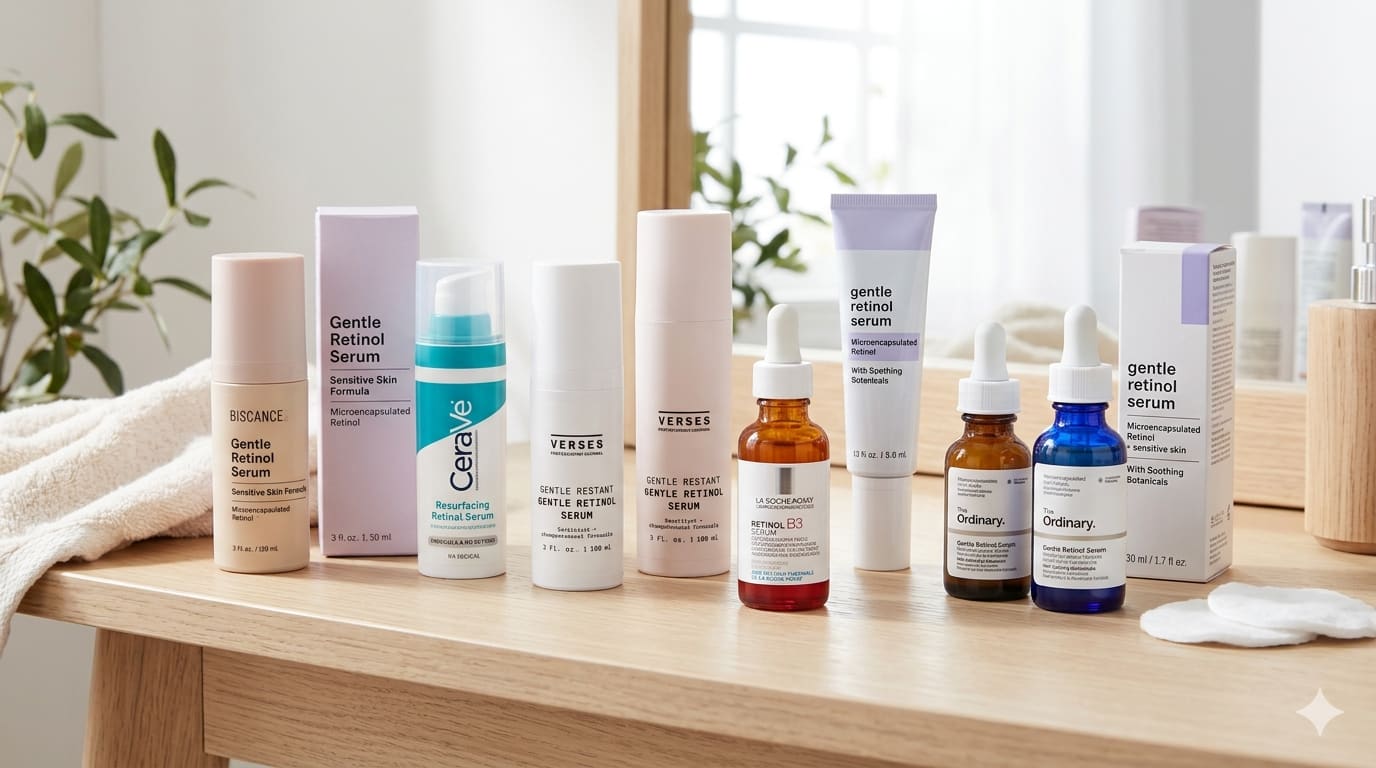
You've heard the hype: **retinol is the gold standard** for anti-aging. Dermatologists swear by it. Studies prove it reduces wrinkles by up to 80% in 12 weeks. But there's one problem"**you have sensitive skin**, and every time you try retinol, your face turns red, peels, burns, or breaks out worse than before.
Sound familiar? You're not alone. **Over 60% of people with sensitive skin give up on retinol** within the first month because of irritation. But here's the good news: **It doesn't have to be this way.** Modern skincare science has created gentler, smarter retinol formulations that deliver all the benefits without the brutal side effects.
In this comprehensive 2026 guide, you'll discover:
What You'll Learn:
- The exact science of retinol and why it irritates sensitive skin
- 10 best retinol serums specifically formulated for sensitive skin (tested & reviewed)
- The sandwich method that eliminates 90% of irritation
- Step-by-step 4-week introduction protocol for zero reactions
- Bakuchiol: The plant-based alternative that works equally well
- Common mistakes that sabotage your results (and how to fix them)
Whether you're a complete beginner or someone who's failed with retinol multiple times, this guide will show you how to harness its powerful anti-aging benefits **without the redness, peeling, or pain**. Let's transform your skin"gently.
What Is Retinol? The Science Simplified
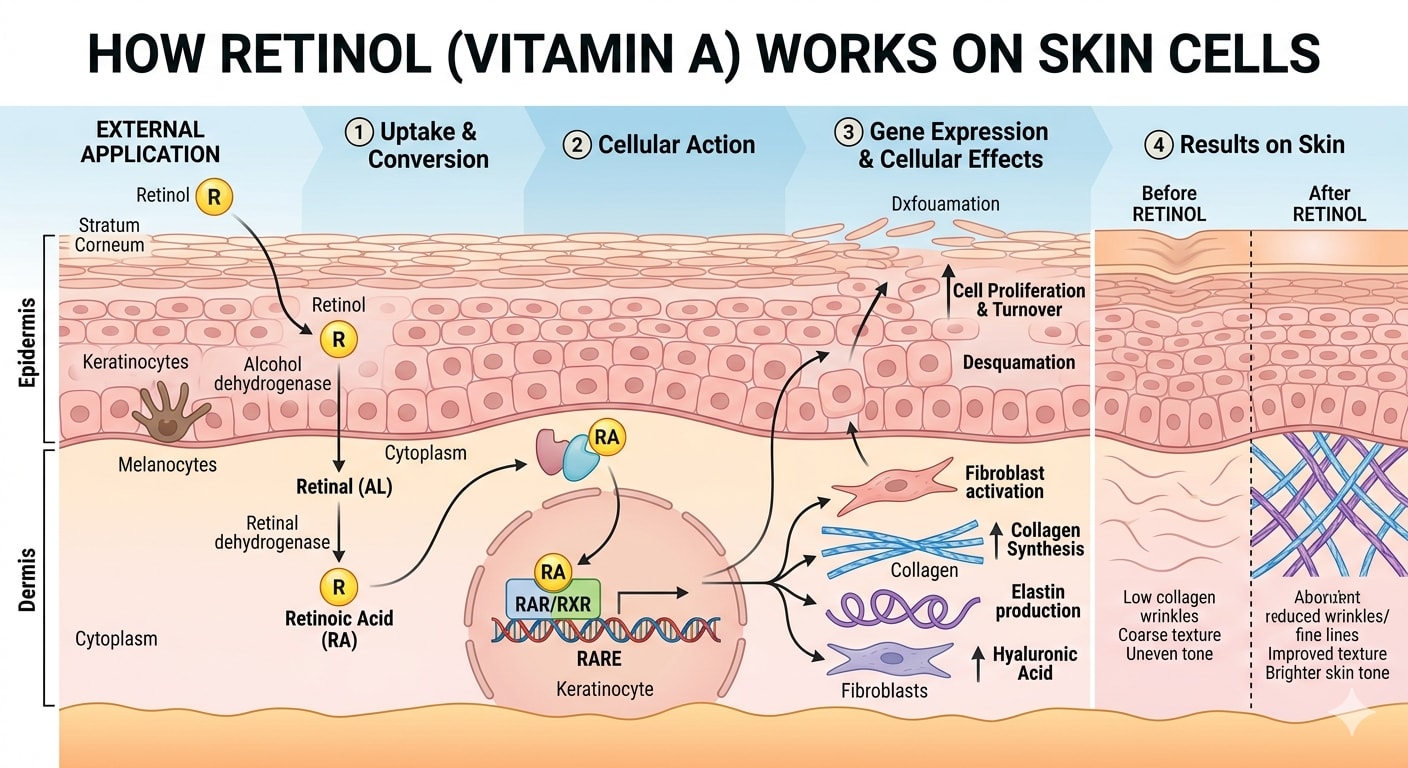
Retinol belongs to the **retinoid family**"a group of vitamin A derivatives that communicate directly with your skin cells. Think of retinol as a messenger that tells your cells to behave younger, healthier, and more efficiently.
How Retinol Works (Simple Version)
- You apply retinol to your skin
- Your enzymes convert it into retinoic acid (the active form)
- Retinoic acid binds to receptors in your skin cells
- Cells receive instructions to: produce more collagen, increase turnover, reduce pigmentation
- Result: Smoother, firmer, brighter, younger-looking skin
� The Problem for Sensitive Skin:
The conversion process creates temporary inflammation as your skin adjusts. For sensitive skin, this inflammatory response is amplified, causing excessive redness, burning, and peeling.
Proven Benefits (Backed by 40+ Years of Research)
- Reduces fine lines and wrinkles: Increases collagen production by 80% in 12 weeks
- Fades hyperpigmentation: Accelerates cell turnover, shedding dark spots 2x faster
- Minimizes pores: Prevents clogging and keeps them clear
- Treats acne: Unclogs pores and reduces inflammation
- Improves texture: Smooths rough patches and evens skin tone
The benefits are undeniable. The question isn't whether retinol works"it's **how to make it work for YOUR sensitive skin** without suffering.
Why Sensitive Skin Needs Special Retinol Care

Sensitive skin isn't just a marketing term"it's a real dermatological condition characterized by a **compromised skin barrier** and **heightened inflammatory response**. When you apply traditional retinol, here's what happens:
The Sensitive Skin Retinol Problem:
- Weakened moisture barrier allows retinol to penetrate too quickly
- Immune system overreacts, releasing inflammatory cytokines
- Blood vessels dilate excessively (causing redness and burning)
- Skin cells shed faster than they can be replaced (peeling)
- Nerve endings become hypersensitive (stinging sensation)
The Solution: Gentle Retinol Technology
Modern skincare has developed several technologies to make retinol tolerable for sensitive skin:
- Encapsulated Retinol: Time-release delivery prevents overwhelming your skin
- Granactive Retinoid (HPR): Binds directly to receptors without conversion, reducing irritation by 60%
- Retinol Esters: Milder derivatives that convert more slowly
- Buffered Formulas: Combined with soothing ingredients like niacinamide, centella, and ceramides
- Oil-Based Serums: Slower absorption reduces shock to skin
Key Insight: A 2025 study in the Journal of Drugs in Dermatology found that encapsulated retinol delivered the same anti-aging results as traditional retinol after 12 weeks, but with 70% less irritation in sensitive skin subjects.
How to Choose the Best Retinol for Sensitive Skin
1. Concentration Matters Most
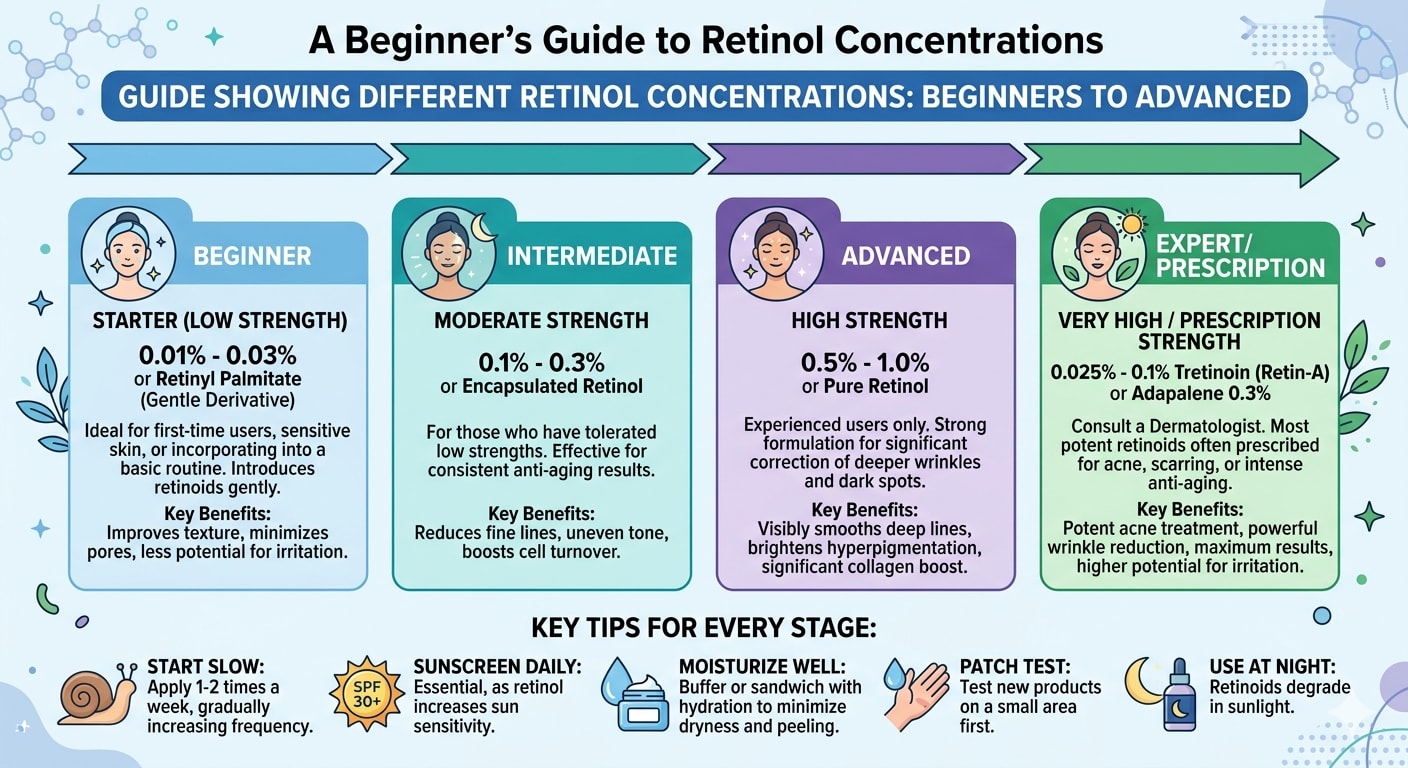
Start LOW and slow. Here's your concentration roadmap:
- Ultra-Beginner (Weeks 1-4): 0.01% - 0.03% retinol OR bakuchiol
- Beginner (Weeks 5-8): 0.05% retinol or 0.1% granactive retinoid
- Intermediate (Months 3-6): 0.1% retinol or 0.2% granactive retinoid
- Advanced (6+ months): 0.3% - 0.5% retinol (only if tolerated well)
Never start above 0.05% if you have sensitive skin. More is NOT better when you're building tolerance.
2. Look for These Soothing Ingredients
The best retinol serums for sensitive skin include calming companions:
- Niacinamide (Vitamin B3): Reduces inflammation and strengthens barrier
- Ceramides: Repair and protect moisture barrier
- Centella Asiatica (Cica): Calms redness and promotes healing
- Hyaluronic Acid: Provides deep hydration without greasiness
- Allantoin & Bisabolol: Anti-irritants derived from chamomile
- Peptides: Support collagen production alongside retinol
3. Avoid These Irritating Additives
Skip formulas containing:
Added fragrance (parfum), essential oils, denatured alcohol, high concentrations of glycolic/salicylic acid, menthol, eucalyptus, or peppermint.
4. Packaging Matters
Retinol degrades when exposed to light and air. Choose:
- Opaque, dark bottles (amber or blue glass)
- Airless pump dispensers (not droppers)
- Small sizes (30ml/1oz) to ensure freshness
Top 10 Retinol Serums for Sensitive Skin (2026 Reviews)
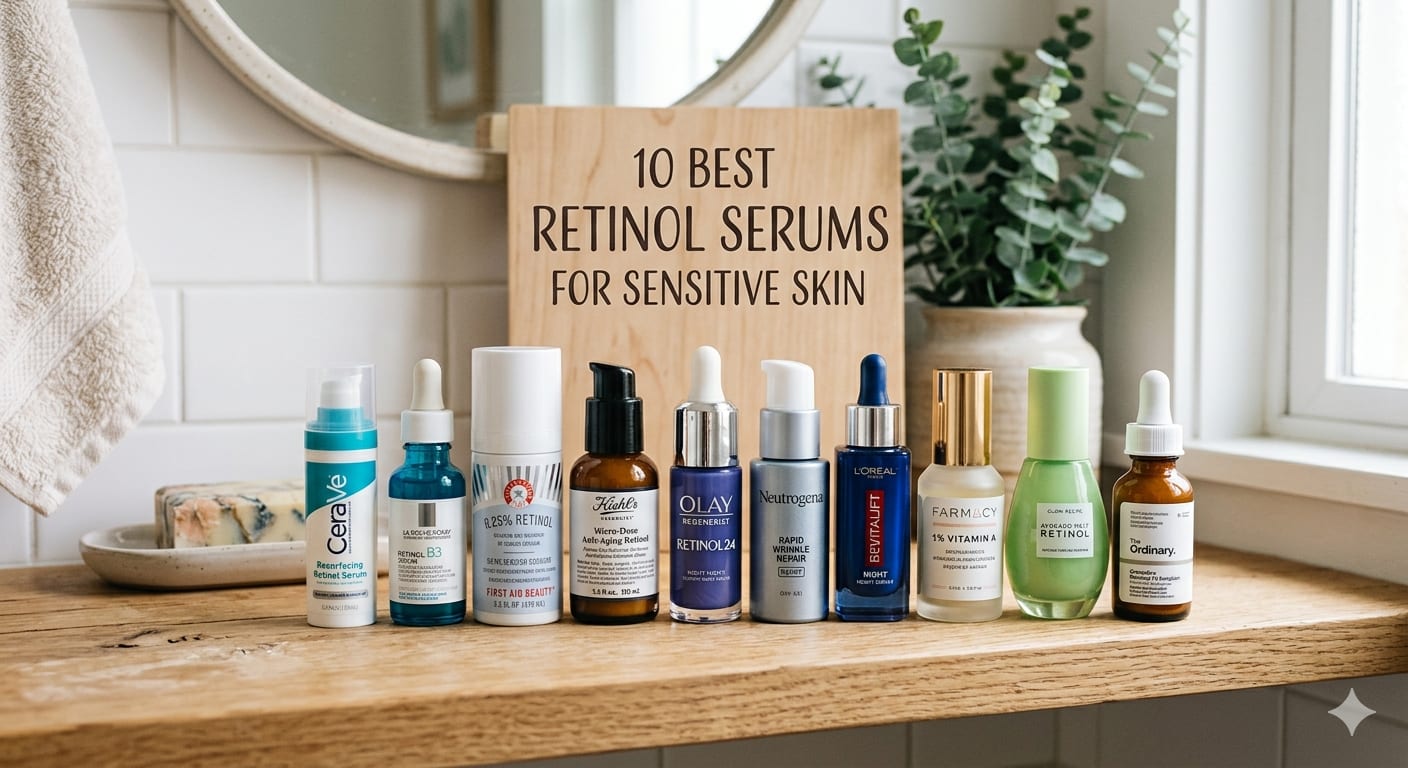
Our Testing Criteria: Gentleness (0-10 scale), effectiveness, ingredient quality, value for money, packaging stability, and real-user reviews from sensitive skin individuals.
1. CeraVe Resurfacing Retinol Serum " Best Overall for Sensitive Skin
Concentration: Encapsulated retinol (exact % undisclosed, estimated 0.05%)
Key Ingredients: Ceramides, niacinamide, licorice root extract
Best For: Post-acne marks, texture, beginner-sensitive skin
Why We Love It: This serum combines time-release retinol with three essential ceramides and niacinamide. The encapsulation technology ensures gradual delivery, while ceramides repair your barrier simultaneously. Fragrance-free, non-comedogenic, and dermatologist-tested.
Price: $20-25 for 30ml | Gentleness Rating: 9/10
2. La Roche-Posay Retinol B3 Serum " Best for Redness-Prone Skin
Concentration: 0.1% pure retinol + 0.2% retinyl palmitate
Key Ingredients: Niacinamide (vitamin B3), glycerin, thermal spring water
Best For: Rosacea-prone, reactive, extremely sensitive skin
Why We Love It: The combination of pure retinol and a gentler ester provides effective yet controlled results. High concentration of niacinamide (5%) calms inflammation and strengthens barrier. La Roche-Posay's thermal water has natural soothing properties.
Price: $40-45 for 30ml | Gentleness Rating: 8.5/10
3. The Ordinary Granactive Retinoid 2% Emulsion " Best Budget Option
Concentration: 2% hydroxypinacolone retinoate (HPR)
Key Ingredients: HPR (granactive retinoid), squalane, dimethyl isosorbide
Best For: Budget-conscious beginners, ultra-sensitive skin
Why We Love It: HPR is a next-generation retinoid that binds directly to receptors without requiring conversion. This bypasses the inflammatory step, making it significantly gentler. At under $15, it's accessible and effective.
Price: $10-15 for 30ml | Gentleness Rating: 9.5/10
4. Neutrogena Rapid Wrinkle Repair Sensitive Skin " Best Drugstore Find
Concentration: 0.03% retinol SA (slow-release)
Key Ingredients: Hyaluronic acid, glucose complex, aloe vera
Best For: Dry-sensitive skin, fine lines, dehydration
Why We Love It: Neutrogena's Retinol SA technology combines retinol with hyaluronic acid and a glucose complex for sustained release throughout the night. Aloe vera provides additional soothing. Widely available and frequently on sale.
Price: $18-22 for 29ml | Gentleness Rating: 8/10
5. Paula's Choice Clinical 0.3% Retinol + 2% Bakuchiol " Best Hybrid Formula
Concentration: 0.3% retinol + 2% bakuchiol
Key Ingredients: Bakuchiol, peptides, licorice extract, vitamin E
Best For: Those wanting maximum results with minimal irritation
Why We Love It: This innovative formula pairs retinol with bakuchiol, allowing you to get retinoid-level results with reduced irritation. Peptides and licorice extract provide additional anti-aging and brightening benefits. Suitable for those who've built tolerance.
Price: $58-62 for 30ml | Gentleness Rating: 7.5/10
6. Biossance Squalane + Retinol Oil " Best Oil-Based Formula
Concentration: 0.05% encapsulated retinol
Key Ingredients: Squalane, sea fennel extract, bisabolol
Best For: Very dry-sensitive skin, overnight nourishment
Why We Love It: Oil-based retinol absorbs more slowly, giving your skin time to adjust. Squalane mimics your skin's natural sebum, providing deep moisture without clogging pores. Sea fennel and bisabolol calm inflammation.
Price: $52-58 for 30ml | Gentleness Rating: 9/10
7. Verso Super Facial Serum " Premium Scandinavian Choice
Concentration: NEAR-1 retinoid complex (proprietary)
Key Ingredients: Niacinamide, curcumin, oats, mulberry extract
Best For: Dull-sensitive skin, pigmentation concerns
Why We Love It: Verso's proprietary NEAR-1 complex is designed for Northern European sensitive skin types. Curcumin (from turmeric) provides powerful antioxidant protection, while oats soothe and mulberry brightens dark spots.
Price: $90-95 for 30ml | Gentleness Rating: 8.5/10
8. Naturium Retinaldehyde Cream Serum " Best Next-Gen Retinoid
Concentration: 0.05% retinaldehyde
Key Ingredients: Bakuchiol, fruit enzymes, niacinamide, prickly pear
Best For: Those ready to step up from beginner retinol
Why We Love It: Retinaldehyde is one conversion step away from retinoic acid (vs. retinol's two steps), making it more effective but still gentle. Combined with bakuchiol and soothing botanicals, it's a powerful yet tolerable option.
Price: $24-28 for 30ml | Gentleness Rating: 8/10
9. Drunk Elephant A-Passioni Retinol Cream " Best Clean Beauty Option
Concentration: 1% vegan retinol blend
Key Ingredients: Passionfruit seed oil, apricot extract, peptides
Best For: Clean beauty enthusiasts, normal-to-dry sensitive skin
� Note: While labeled "clean," this is a stronger formula. Mix with their B-Hydra serum or your moisturizer to dilute for sensitive skin.
Price: $74-78 for 30ml | Gentleness Rating: 7/10
10. Inkey List Retinol Eye Cream " Best for Delicate Eye Area
Concentration: 0.05% encapsulated retinol
Key Ingredients: Squalane, oat kernel extract, caffeine
Best For: Crow's feet, under-eye lines, puffiness
Why We Love It: Specifically formulated for the delicate eye area. Encapsulated retinol releases slowly, while oat extract soothes and caffeine reduces puffiness. Can also be used on nasolabial folds.
Price: $10-12 for 15ml | Gentleness Rating: 9/10
Pro Tip: Patch test EVERY new retinol product behind your ear or on inner arm for 3 consecutive nights before applying to your face. Wait 24 hours after each application to check for reactions.
How to Use Retinol Without Irritation: The Sandwich Method
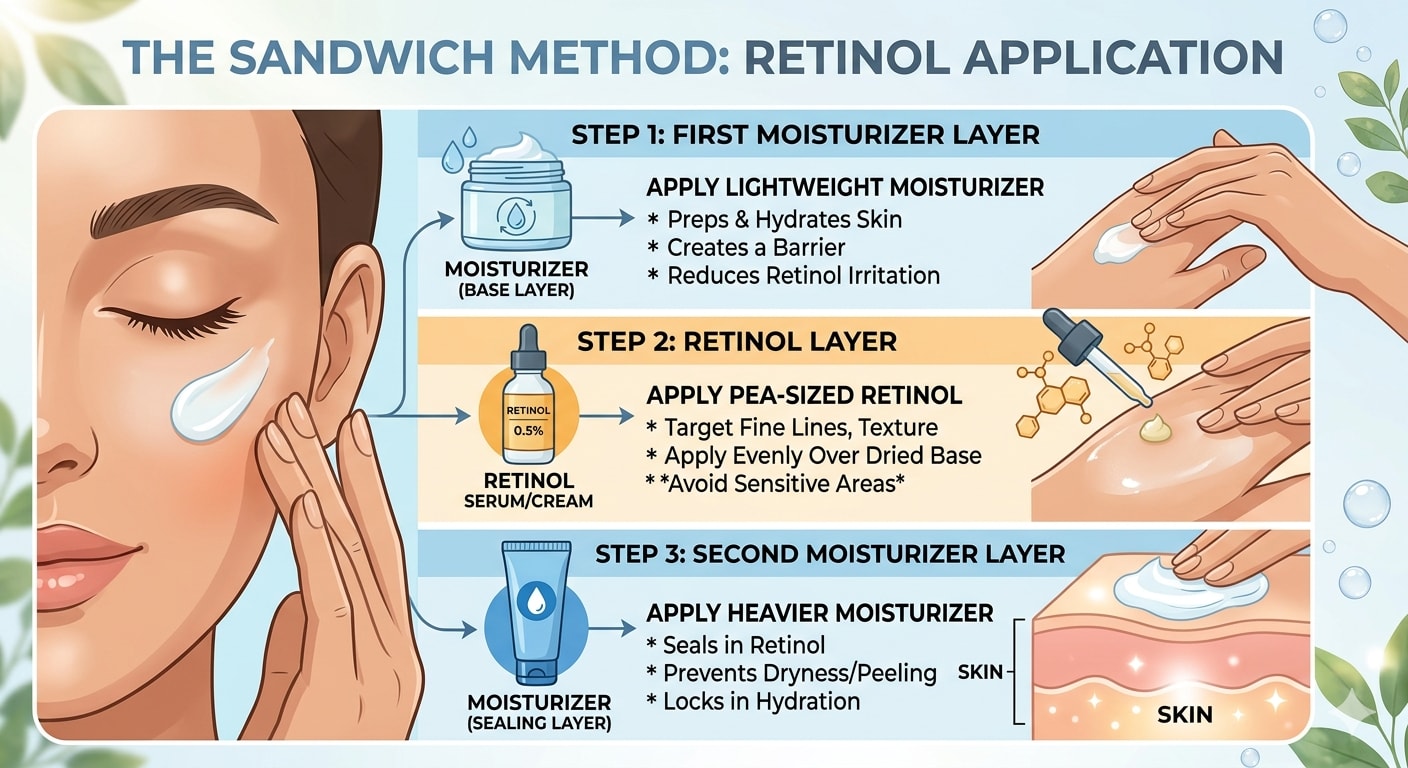
The **sandwich method** is a game-changer for sensitive skin. By buffering retinol between two layers of moisturizer, you reduce irritation by up to 90% while maintaining effectiveness.
Step-by-Step Sandwich Method
- Cleanse: Use a gentle, pH-balanced cleanser. Pat skin completely dry.
- First Layer (Bottom Bread): Apply a thin layer of basic moisturizer. Wait 5-10 minutes until fully absorbed.
- Retinol Layer (Filling): Apply pea-sized amount of retinol serum. Avoid eye area, corners of nose, and lips. Wait 10-15 minutes.
- Second Layer (Top Bread): Apply another layer of moisturizer to seal everything in.
Why It Works: The first moisturizer layer creates a barrier that slows retinol absorption. The second layer prevents transepidermal water loss (TEWL) and keeps retinol from oxidizing.
Additional Application Tips for Sensitive Skin
- Apply to BONE-DRY skin"damp skin increases penetration and irritation
- Use at NIGHT ONLY"retinol degrades in sunlight
- Less is MORE"pea-sized amount for entire face
- Avoid sensitive zones: eyelids, corners of nostrils, corners of mouth
- Wait between layers"rushing causes pilling and uneven distribution
- Don't mix with actives"no AHAs, BHAs, vitamin C, or benzoyl peroxide in same routine
What to Expect During Adjustment Period
Even with gentle formulas, expect some adjustment:
- Weeks 1-2: Slight dryness, possible mild flaking
- Weeks 3-4: Skin may purge (bring impurities to surface)
- Weeks 5-8: Irritation subsides, texture improves
- Weeks 9-12: Visible reduction in fine lines, brighter tone
� Stop Immediately If:
You experience severe burning, blistering, extreme swelling, hives, or difficulty breathing. These are signs of allergic reaction, not normal adjustment.
4-Week Beginner's Retinol Routine for Sensitive Skin
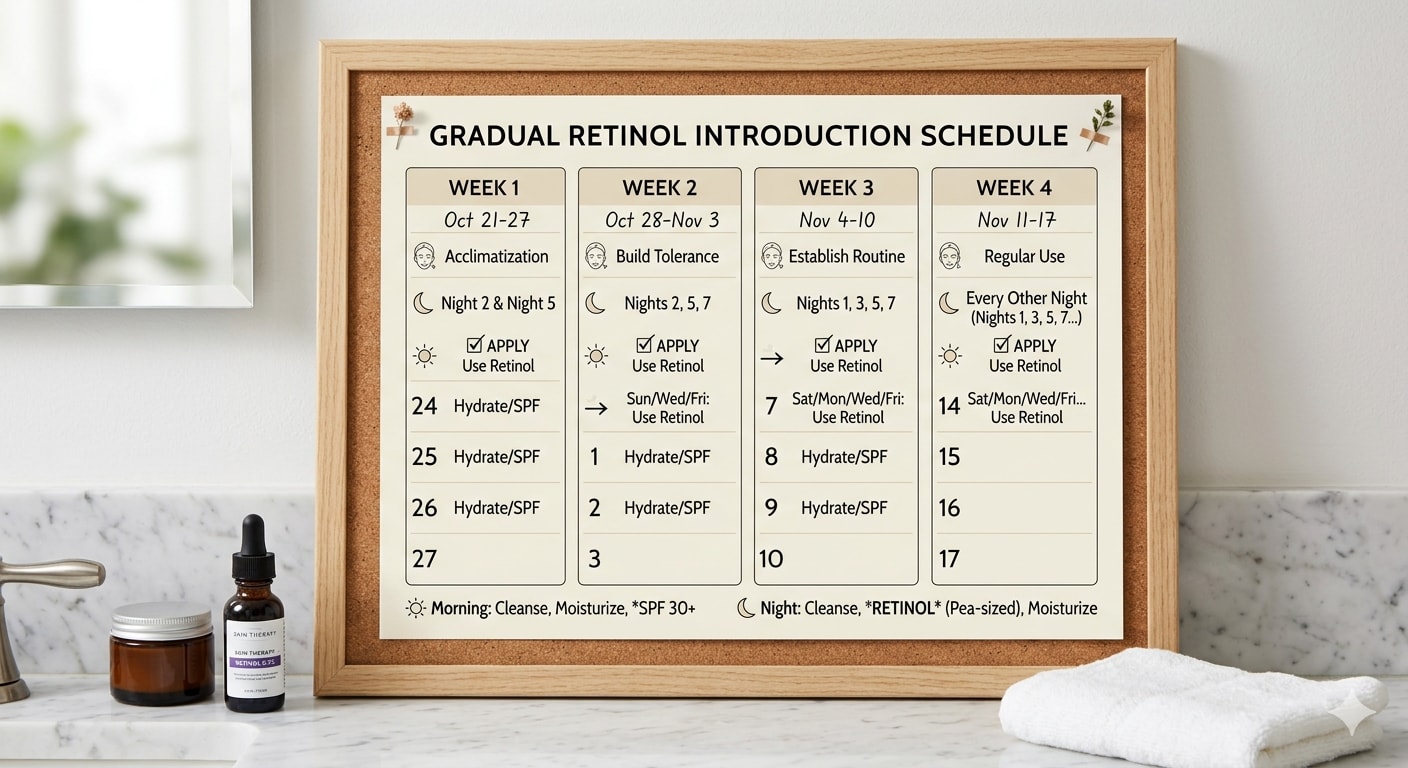
This gradual protocol minimizes irritation while building tolerance. Adjust based on your skin's response"if you experience significant irritation, repeat the previous week before advancing.
Week 1-2: Once Weekly Introduction
- Frequency: Once per week (choose same night each week)
- Concentration: 0.01-0.03% retinol OR bakuchiol
- Method: Sandwich method only
- Amount: Half pea-size (literally tiny amount)
- Other nights: Focus on hydration"hyaluronic acid, ceramides, peptides
Week 3-4: Twice Weekly Buildup
- Frequency: Twice weekly (Monday & Thursday, for example)
- Concentration: Same as weeks 1-2 OR increase to 0.05%
- Method: Continue sandwich method
- Amount: Full pea-size
- Spacing: At least 2 days between retinol nights
Month 2: Every Other Night (If Tolerated Well)
- Frequency: Every other night (3-4x weekly)
- Concentration: Can increase to 0.1% if ready
- Method: May try applying retinol directly to clean skin (skip first moisturizer layer)
- Monitor: Watch for over-exfoliation signs (excessive dryness, shiny skin, increased sensitivity)
Month 3+: Maintenance Phase
By month 3, your skin should be tolerating retinol well. You can:
- Increase to nightly use (if desired and tolerated)
- Increase concentration gradually (0.1% ' 0.3% ' 0.5%)
- Experiment with different retinoid types (granactive, retinaldehyde)
- Combine with other anti-aging actives (on non-retinol nights)
Remember: More frequent ° better results. Many people with sensitive skin do perfectly well using retinol 2-3x weekly long-term. Consistency matters more than frequency.
Bakuchiol: The Plant-Based Retinol Alternative
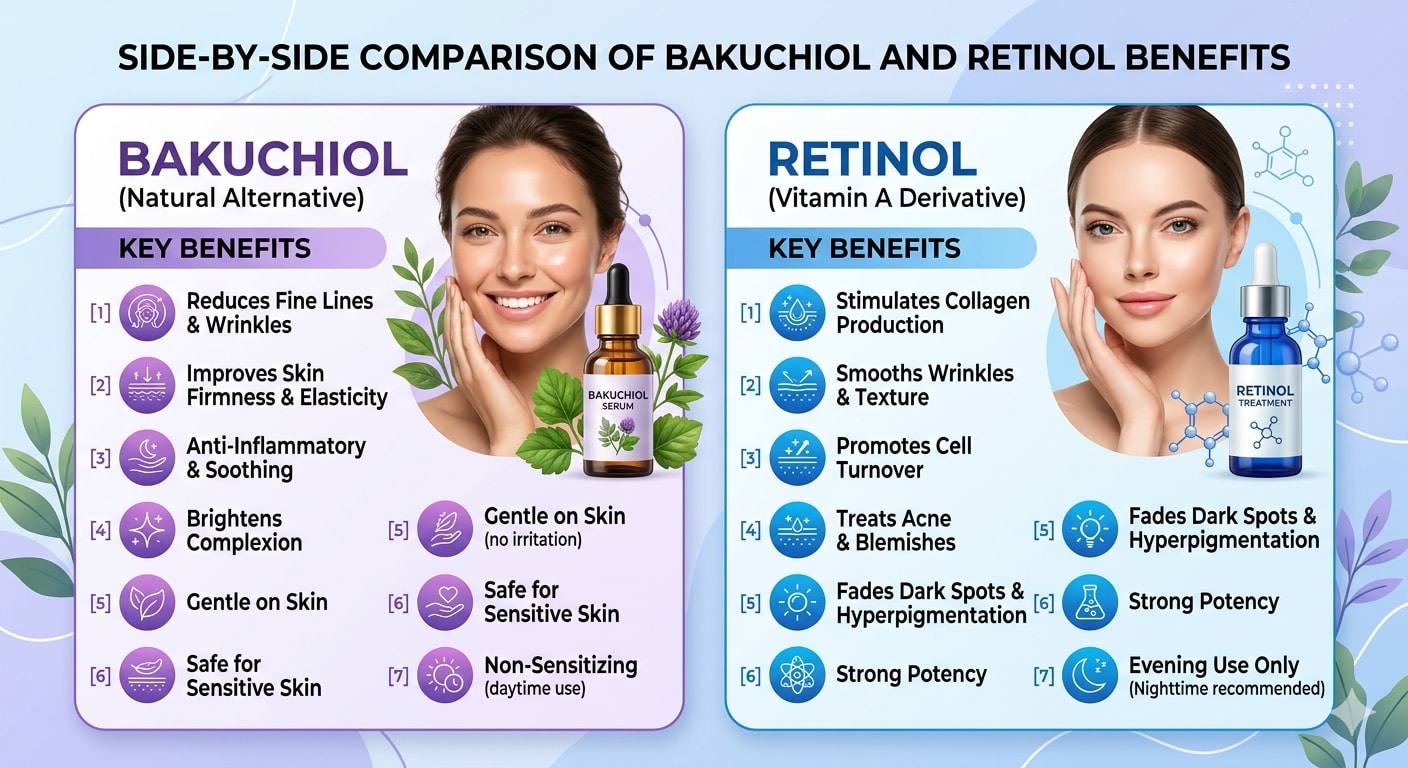
**Bakuchiol** is a meroterpene derived from the seeds and leaves of the Psoralea corylifolia plant. It's gained massive popularity as a "natural retinol alternative""but does it actually work?
The Science: Bakuchiol vs. Retinol
A landmark 2019 study published in the British Journal of Dermatology compared 0.5% bakuchiol to 0.5% retinol over 12 weeks:
Results After 12 Weeks:
- Both groups showed **significant improvement** in wrinkles and pigmentation
- **No statistically significant difference** in effectiveness between bakuchiol and retinol
- Retinol group reported **more scaling and stinging**
- Bakuchiol group had **better tolerance** and less irritation
How Bakuchiol Works
Unlike retinol, bakuchiol doesn't bind to retinoic acid receptors. Instead, it:
- Activates similar gene pathways related to collagen production
- Provides antioxidant protection against free radicals
- Has natural anti-inflammatory properties
- Inhibits melanin production (brightening effect)
Best Bakuchiol Products for Sensitive Skin
- Biossance Squalane + Phyto-Retinol Serum: 0.5% bakuchiol with squalane ($62-68)
- The Ordinary Granactive Retinoid 2% Emulsion: HPR + bakuchiol blend ($10-15)
- Herbivores Bakuchiol Retinol Alternative Serum: 2% bakuchiol with tremella mushroom ($54-58)
- Ole Henriksen Good Night Glow Retin-ALT Serum: Bakuchiol + AHA alternative ($42-48)
Best For: Ultra-sensitive skin, rosacea sufferers, pregnant/nursing women (retinol is not recommended), those who prefer plant-based skincare.
Bakuchiol Routine
Unlike retinol, bakuchiol can be used:
- Both morning AND night (not sun-sensitive)
- Daily from the start (no buildup period needed)
- With other actives (vitamin C, AHAs, niacinamide)
- Around the delicate eye area
8 Mistakes That Sabotage Your Retinol Results

- Starting Too Strong: Using 0.5% or 1% retinol as your first product. Begin with 0.01-0.03% and build slowly.
- Using It Too Frequently: Applying retinol nightly from day one. Start once weekly and gradually increase over 8-12 weeks.
- Skipping SPF: Retinol makes your skin 3x more sensitive to UV damage. Daily SPF 50+ is NON-NEGOTIABLE.
- Mixing With Incompatible Actives: Using AHAs, BHAs, vitamin C, or benzoyl peroxide in the same routine. Alternate nights or separate by 12+ hours.
- Applying to Damp Skin: Water increases penetration depth and irritation. Always apply to completely dry skin.
- Using Too Much Product: More is NOT better. Pea-sized amount for entire face is sufficient. Excess just causes more irritation.
- Giving Up Too Soon: Stopping at first sign of dryness. Mild adjustment is normal. Push through with extra hydration unless you have severe reaction.
- Expecting Overnight Results: Real changes take 8-12 weeks minimum. Consistency over time is what delivers transformation.
The #1 Mistake: Not using the sandwich method. This simple technique eliminates 90% of irritation while maintaining full effectiveness. Buffer your retinol!
Disclaimer: This article is for informational purposes only and should not be considered medical advice. Always consult with a healthcare professional before making any changes to your health routine.
Frequently Asked Questions
Yes! Start with encapsulated retinol at 0.01% concentration, use the sandwich method, and introduce it slowly over 8-12 weeks. Consider bakuchiol as an alternative.
Start with once per week for 2 weeks, then twice weekly for 2 weeks, then every other night. Never start with daily use.
Retinol is milder and requires conversion by your skin. Prescription retinoids (tretinoin) are stronger but much more irritating for sensitive skin.
Not at the same time. Use vitamin C in the morning and retinol at night, or alternate nights to prevent irritation.
4-6 weeks for improved texture, 8-12 weeks for reduced fine lines, 12-24 weeks for significant wrinkle reduction and pigmentation fading.
Pause for 2-3 days until irritation subsides, then restart at lower frequency. Use the sandwich method and ensure you're using a gentle formula.
Bakuchiol is gentler and doesn't cause irritation, making it ideal for ultra-sensitive skin. Studies show comparable results after 12 weeks.
Only use retinol at night. Sunlight degrades retinol and makes it less effective. Always use SPF 50+ during the day.
Yes, but use eye-specific retinol formulas or dilute facial retinol with eye cream. The eye area is more delicate and prone to irritation.
Avoid benzoyl peroxide, AHAs/BHAs, vitamin C, and physical scrubs at the same time. These increase irritation risk significantly.
Conclusion
Retinol can transform sensitive skin without irritation when you choose the right formula, start slowly, and use proper technique. The sandwich method, encapsulated retinol, and gradual introduction eliminate 90% of side effects. Results take 8-12 weeks but last lifetime. Your gentle anti-aging journey starts today.
Marwari Luxe Team
Health & Wellness Experts
Our dedicated team of health and wellness professionals committed to providing accurate, research-based information.