Azelaic Acid: Complete Guide for Acne, Dark Spots & Rosacea Treatment

Table of Contents
Introduction: The Multi-Tasking Miracle You Haven't Tried Yet
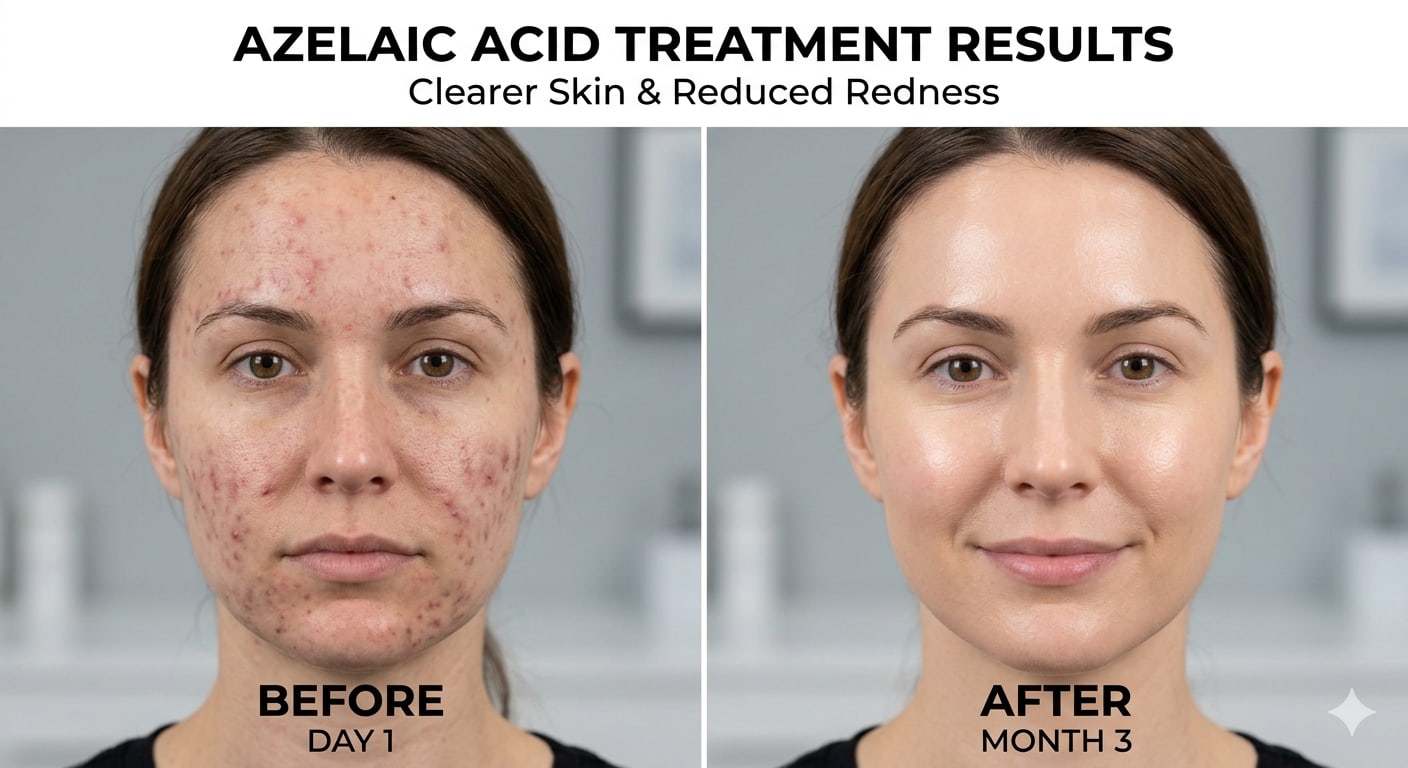
If you're juggling separate products for **stubborn acne, persistent dark spots, and frustrating redness**”what if ONE ingredient could address all three simultaneously? Enter **azelaic acid**, the dermatologist-secret weapon that's been quietly transforming complexions for decades. Naturally occurring in grains like wheat, rye, and barley, this gentle yet powerful acid delivers prescription-strength results without the typical retinol drama.
Dermatologist Secret: Azelaic acid is one of only TWO ingredients (alongside retinoids) proven effective for BOTH acne AND anti-aging. Unlike acids that merely exfoliate, azelaic acid penetrates pores, kills bacteria, reduces inflammation, AND inhibits pigment production”a true triple threat.
Whether you're battling hormonal breakouts, struggling with post-acne dark marks, managing rosacea-related redness, dealing with melasma from pregnancy or birth control, or simply wanting even-toned, clear skin without irritation”azelaic acid might be your perfect match. Let's explore why this underrated ingredient deserves superstar status.
What Is Azelaic Acid? (Nature Meets Science)
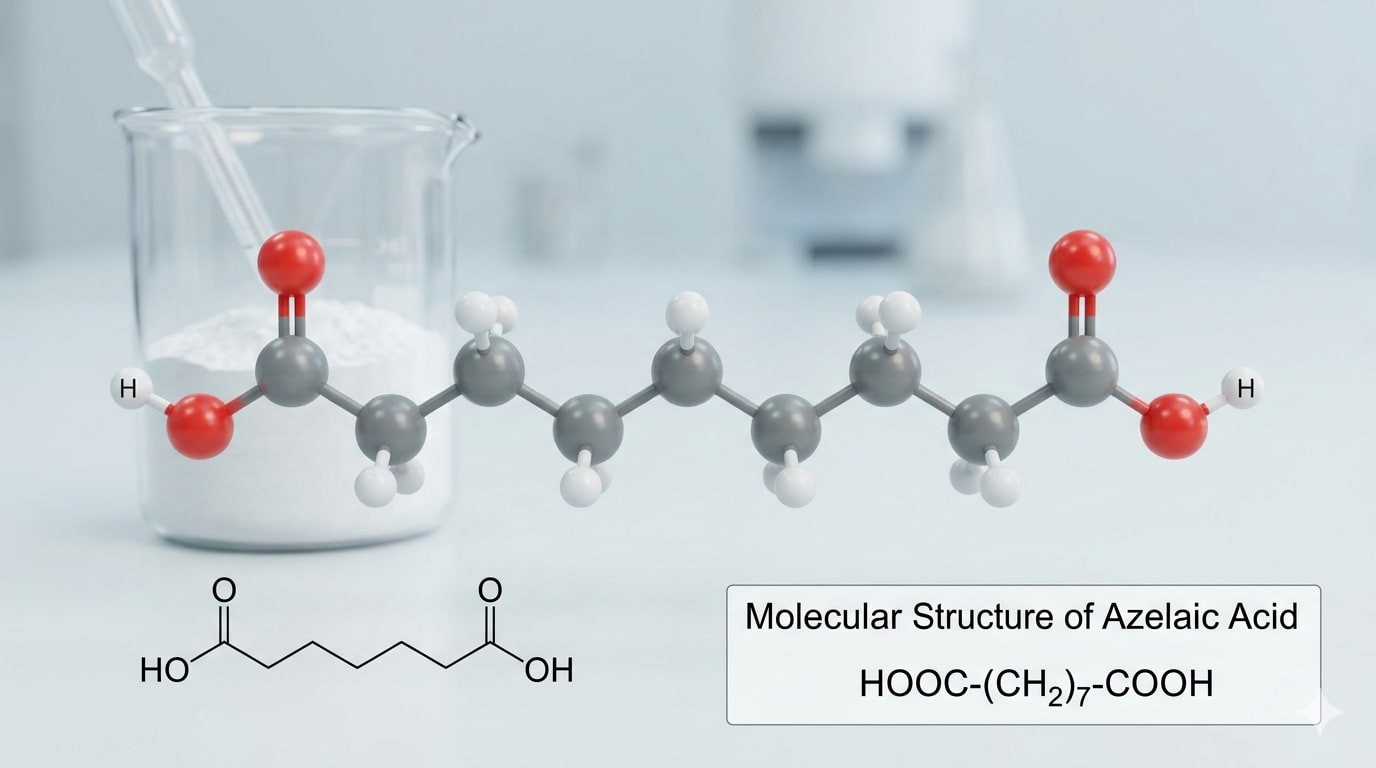
Azelaic acid is a **dicarboxylic acid** naturally produced by yeast living on healthy skin (*Malassezia furfur*). It's also found in whole grains like wheat, rye, barley, and sorghum. In skincare, it's synthesized in laboratories for purity and potency.
Historical Discovery:
Originally investigated in Italy during the 1980s as an oral treatment for skin conditions, researchers noticed remarkable side effects: acne clearance, skin lightening, and reduced inflammation. By 1995, FDA approved topical azelaic acid for acne treatment. Today, it's recognized globally for rosacea, hyperpigmentation, and anti-aging.
Key Characteristics:
- Type: Dicarboxylic acid (not AHA/BHA)
- Molecular Size: Medium (larger than glycolic, smaller than hyaluronic)
- pH Level: Works at skin's natural pH (5-7)”non-irritating
- Solubility: Lipid-soluble (penetrates oil-filled pores)
- Pregnancy Category: Category B”considered safe
- Sun Sensitivity: ZERO increased photosensitivity
Fun Fact: Your skin naturally produces azelaic acid! Healthy skin microbiome generates small amounts continuously. Supplementing with topical application amplifies its benefits.
Triple-Action Mechanism: How Azelaic Acid Transforms Skin
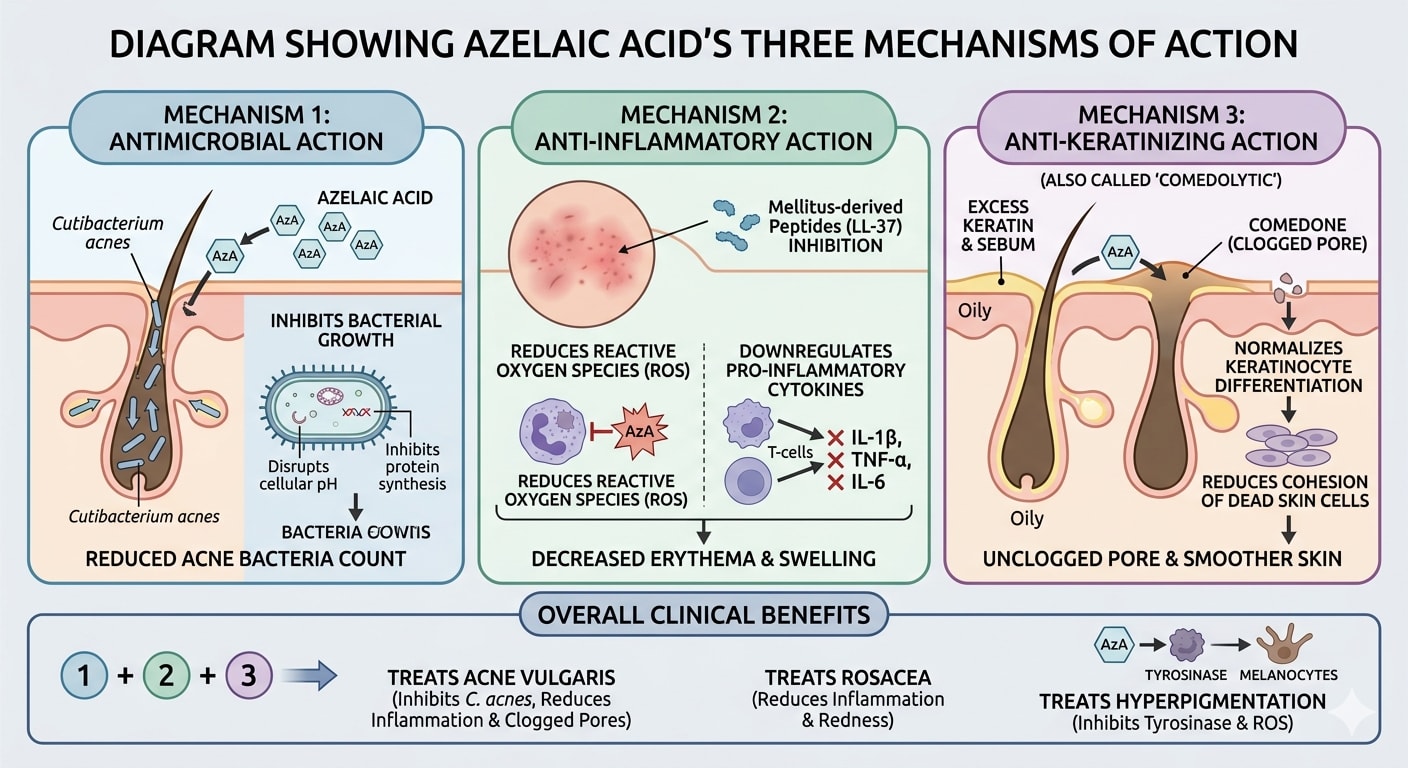
Azelaic acid works through **three distinct pathways**”making it uniquely effective for multiple concerns simultaneously:
Action #1: Antimicrobial Activity
Azelaic acid kills *Cutibacterium acnes* (C. acnes) bacteria responsible for inflammatory breakouts. Unlike antibiotics, bacteria cannot develop resistance to azelaic acid”making it effective for long-term use.
Action #2: Anti-Inflammatory Power
Reduces production of inflammatory cytokines and free radicals. Calms existing redness while preventing future flare-ups. Particularly effective for rosacea-related inflammation.
Action #3: Tyrosinase Inhibition
Blocks tyrosinase enzyme required for melanin production. Specifically targets overactive melanocytes without affecting normal pigmentation”perfect for treating dark spots without lightening overall complexion.
What Makes It Different:
- vs Retinoids: Zero sun sensitivity, minimal irritation, pregnancy-safe
- vs Hydroquinone: No cytotoxicity, no ochronosis risk, safe for long-term use
- vs AHAs/BHAs: Doesn't exfoliate surface, works deeper in pores, gentler
- vs Benzoyl Peroxide: No bleaching, less drying, better tolerance
Prescription vs OTC: Which Strength Do You Need?
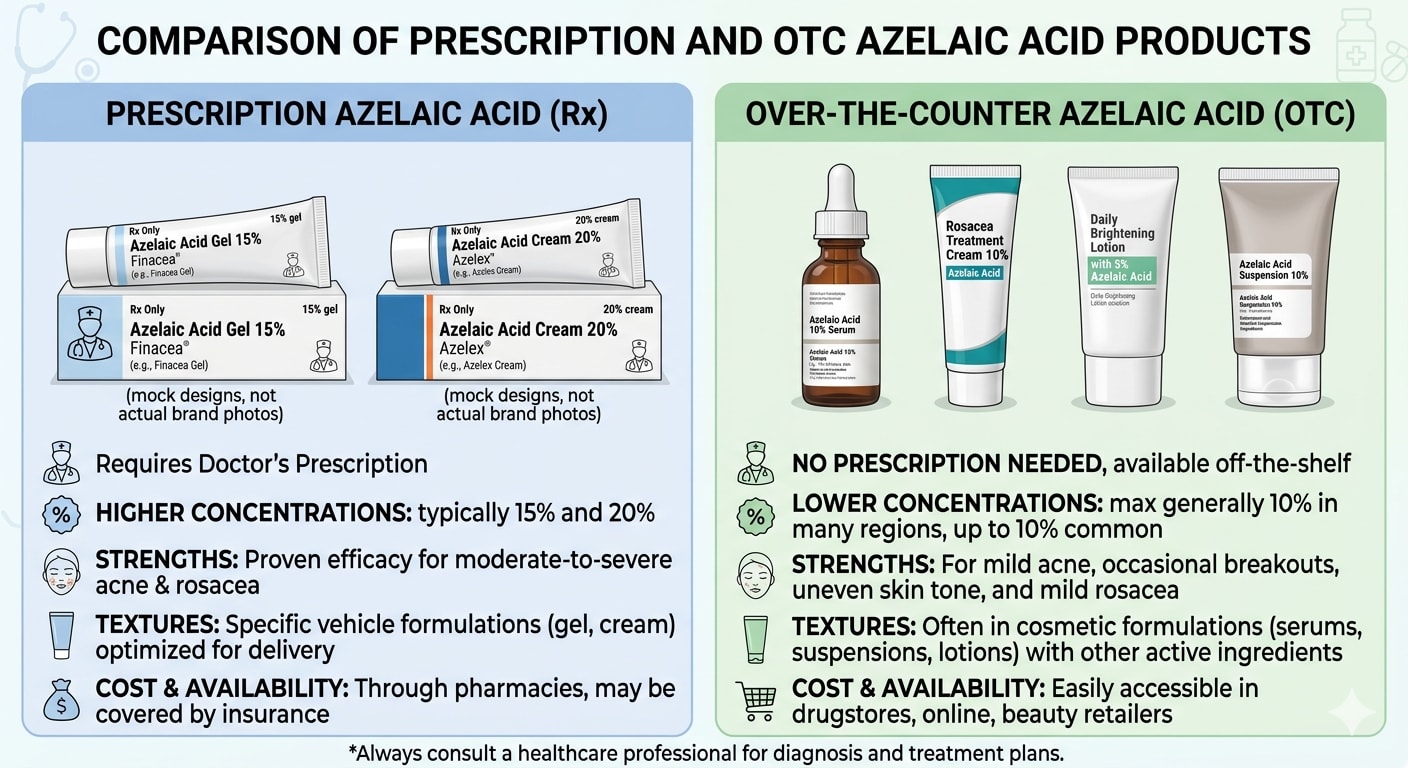
When to Consider Prescription:
- Moderate to severe inflammatory acne unresponsive to OTC treatments
- Rosacea with significant papules/pustules
- Extensive melasma or post-inflammatory hyperpigmentation
- Need faster results (prescription works 30-40% quicker)
- Budget allows ($50-150/month vs $10-30 for OTC)
Smart Strategy: Start with OTC 10% for 8 weeks ’ assess results ’ consult dermatologist for prescription if needed. Many achieve excellent results with consistent OTC use!
10 Science-Backed Benefits of Azelaic Acid

1. Treats Acne Effectively (60-70% Improvement)
Clinical studies show 15-20% azelaic acid reduces inflammatory lesions by 60-70% after 12 weeks. Comparable efficacy to benzoyl peroxide but with significantly less irritation.
2. Fades Hyperpigmentation (40-50% Reduction)
Research demonstrates azelaic acid 20% achieves 40-50% reduction in melasma severity after 16 weeks. Outperforms hydroquinone in some studies with zero side effects.
3. Reduces Rosacea Redness (50-60% Improvement)
FDA-approved for rosacea treatment. Studies show 50-60% reduction in papules, pustules, and background redness after 12-15 weeks.
4. Prevents Future Breakouts
Normalizes keratinization process, preventing pore clogging. Creates unfavorable environment for acne bacteria long-term.
5. Safe During Pregnancy & Breastfeeding
Category B classification means no known risks. Many OB-GYNs specifically recommend azelaic acid for pregnancy-related acne and melasma.
6. No Sun Sensitivity
Unlike retinoids and AHAs, azelaic acid doesn't increase photosensitivity. Can be used morning and night without increased burn risk.
7. Gentle Enough for Sensitive Skin
Minimal irritation reported in clinical trials. Suitable for rosacea patients”the gold standard for sensitive skin tolerance.
8. Evens Overall Skin Tone
Beyond spot treatment, creates more uniform complexion. Targets diffuse dullness and sallowness for all-over brightness.
9. Smooths Skin Texture
Mild keratolytic action gently smooths rough patches without harsh exfoliation. Improves skin refinement over 8-12 weeks.
10. Antibiotic-Free Alternative
Provides antimicrobial benefits without antibiotic resistance concerns. Ideal for long-term acne management.
Who Should Use Azelaic Acid? (Ideal Candidates)

Perfect Candidates:
- Acne-Prone Skin: Especially inflammatory acne with redness
- Post-Acne Hyperpigmentation: Dark marks lingering after breakouts heal
- Rosacea Sufferers: Papulopustular rosacea with bumps and redness
- Melasma: Hormonal pigmentation from pregnancy, birth control, or sun
- Pregnant/Breastfeeding: Need pregnancy-safe actives
- Sensitive Skin: Can't tolerate retinoids or strong acids
- Darker Skin Tones: Prone to PIH, need gentle brighteners
- Mature Skin: Want multi-tasking anti-acne + anti-aging
Universal Truth: Azelaic acid is one of the most universally tolerated actives. From teen acne to mature skin, from sensitive rosacea to resilient oily complexions”almost everyone can benefit!
How to Apply Azelaic Acid: Complete Guide
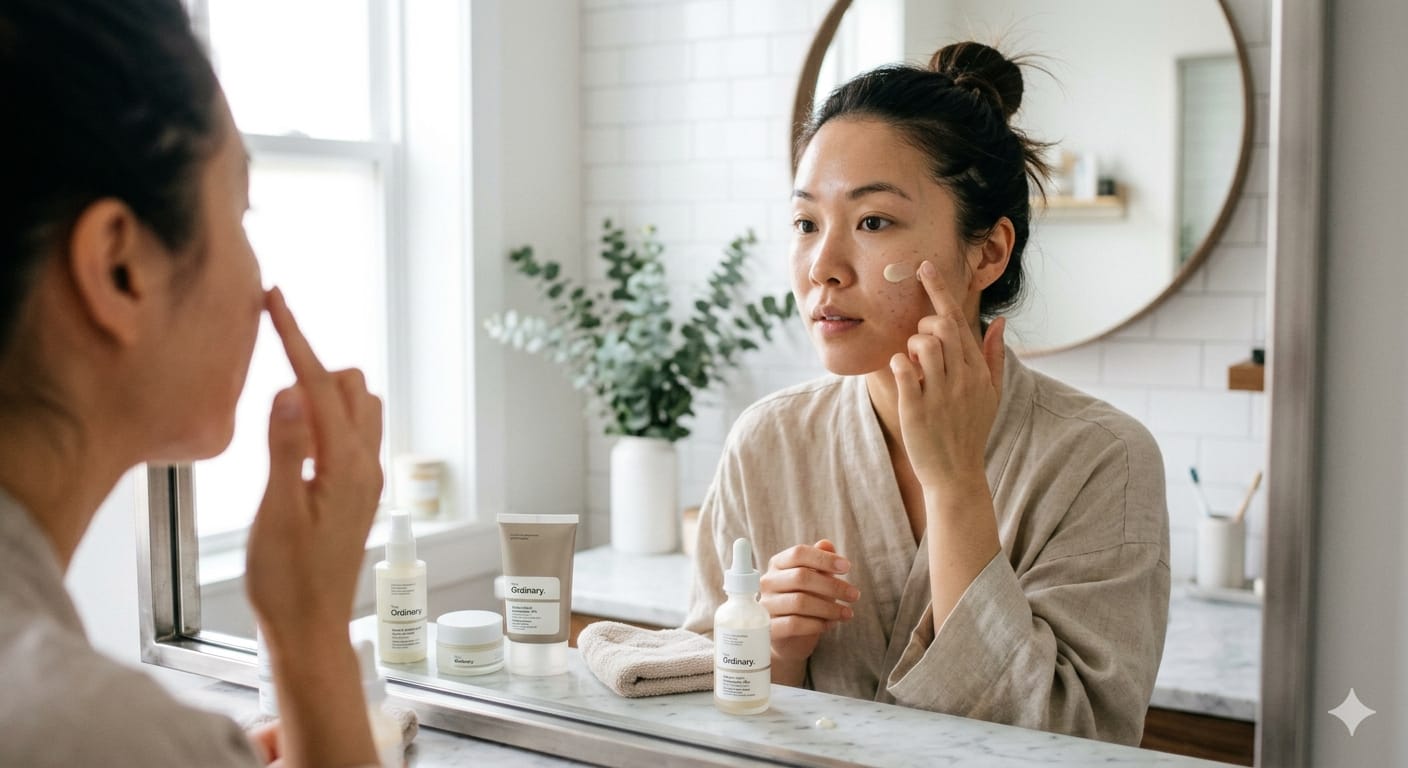
Morning Routine:
- Gentle cleanser
- Toner/essence (optional)
- Vitamin C or niacinamide serum (optional)
- Azelaic acid (pea-sized amount for entire face)
- Lightweight moisturizer
- Sunscreen SPF 30+
Evening Routine:
- Double cleanse (oil-based + water-based)
- Treatment serum (retinol, AHA/BHA”if using, alternate with azelaic)
- Azelaic acid
- Rich moisturizer or facial oil
Application Tips:
- Clean, dry skin only! Wait 10-15 minutes after washing
- Pea-sized amount: More isn't better”can cause pilling
- Thin layer: Spread evenly across entire face, not just spots
- Avoid eye area: Keep 1 inch away from eyes and lips
- Let absorb: Wait 2-3 minutes before next product
- Initial tingling: Normal for first 2 weeks, should subside
Building Tolerance Timeline:
- Weeks 1-2: Once daily (PM), monitor for irritation
- Weeks 3-4: Twice daily if well-tolerated
- Weeks 5-8: Continue twice daily, assess acne improvements
- Weeks 9-12: Evaluate pigmentation fading, adjust frequency if needed
Pro Tips: Apply to completely dry skin to minimize tingling Can mix with moisturizer if experiencing dryness Don't spot-treat”apply to entire affected area Consistency beats concentration Results are gradual but cumulative
Layering Azelaic Acid with Other Actives
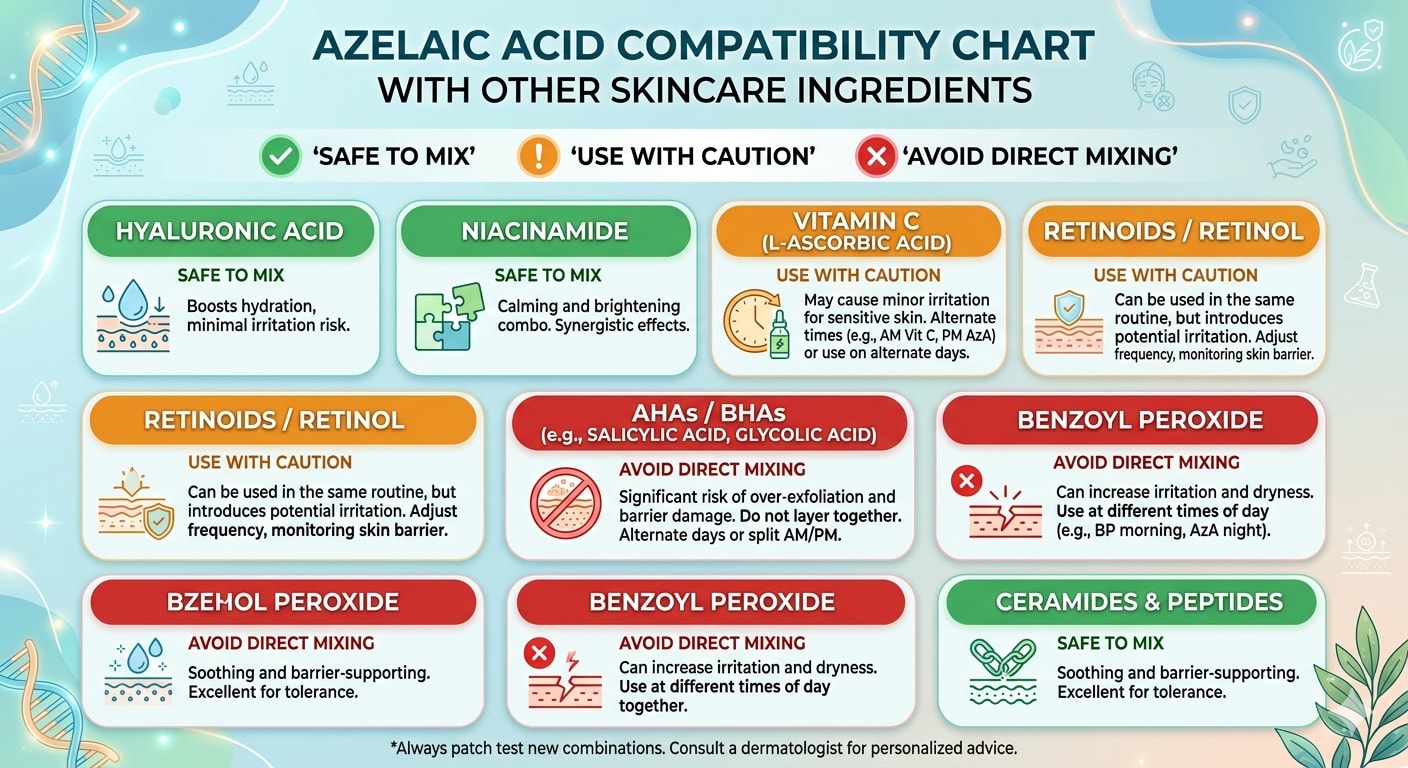
Excellent Combinations:
- + Niacinamide: Enhanced barrier support, reduced redness, amplified brightening
- + Hyaluronic Acid: Counteracts potential dryness, plumps skin
- + Peptides: Synergistic anti-aging benefits
- + Ceramides: Strengthens barrier, improves tolerance
- + Vitamin C (AM): Dual brightening power, antioxidant protection
Use With Caution:
- + Retinol/Retinoids: Can increase irritation. Alternate nights or use azelaic AM, retinol PM
- + AHAs/BHAs: Potential over-exfoliation. Use acids 2-3x/week, azelaic on off days
- + Benzoyl Peroxide: Both are drying. Use BP as spot treatment, azelaic all-over
Avoid Combining:
- Multiple strong actives simultaneously: Don't layer azelaic + retinol + AHA in same routine
- High concentrations of direct acids: Glycolic >10%, salicylic >2% immediately before azelaic
Sample Weekly Schedule:
- Mon/Wed/Fri AM: Vitamin C + Azelaic Acid
- Mon/Wed/Fri PM: Azelaic Acid only
- Tue/Thu/Sat PM: Retinol (skip azelaic these nights)
- Sunday PM: Gentle recovery night (hydrating products only)
14 Best Azelaic Acid Products ($8-$125)
Budget-Friendly ($8-$20):
- The Ordinary Azelaic Acid Suspension 10% ($8) - Incredible value, lightweight silicone texture, great starter
- Peach Slices Redness Relief Azelaic Acid Serum ($15) - 10% + niacinamide, fragrance-free
- Glossier Super Pure ($28) - 10% azelaic + zinc PCA for oil control
- e.l.f. Total Face Serum ($10) - 8% azelaic + peptides, budget winner
Mid-Range ($21-$50):
- Paula's Choice Azelaic Acid Booster 10% ($42) - Cult favorite, licorice root + salicylic acid enhancement
- Topicals Azelaic Acid Serum 10% ($38) - Soothing centella + ceramides included
- Inkey List Azelaic Acid Serum 10% ($12) - Simple, effective, affordable
- Naturium Azelaic Topical Acid 10% ($22) - Vegan, cruelty-free, gentle formula
- Cocokind Azelaic Serum 10% ($28) - Clean beauty option with oat extract
Prescription Options ($50-$125/month):
- Finacea Gel 15% (Rx) - Gold standard for rosacea, foam texture available
- Azelex Cream 20% (Rx) - Highest strength, best for severe acne
- Skinoren Cream 20% (Rx) - European formulation, highly effective
- Finacea Foam 15% (Rx) - Lightweight, ideal for oily skin
Product Picker: Beginners ’ The Ordinary Sensitive Skin ’ Peach Slices Acne Fighters ’ Paula's Choice Budget Option ’ e.l.f. or Inkey List Rosacea ’ Finacea Rx Luxury ’ SkinCeuticals
Side Effects & How to Manage Them

Common (Temporary) Side Effects:
- Tingling/Itching (20-30% of users): Usually subsides within 2-4 weeks. Apply to dry skin, start slowly.
- Dryness/Flaking (10-15%): Increase moisturizer use, reduce frequency temporarily.
- Mild Redness (5-10%): Typically resolves as skin adjusts. Use calming products (centella, aloe).
Rare Side Effects (<1%):
- Hypopigmentation: Lightening of surrounding skin (reversible upon discontinuation)
- Contact Dermatitis: Allergic reaction requiring immediate cessation
- Asthma Exacerbation: Extremely rare, those with asthma should patch test
Management Strategies:
- "Sandwich Method": Moisturizer ’ Azelaic Acid ’ Moisturizer
- Reduce Frequency: Drop to once daily or every other day
- Buffer with Hydration: Apply hydrating serum first
- Short Contact: Apply for 30 min, rinse off initially
- If Severe: Stop use, consult dermatologist immediately
When to See a Doctor: Severe burning/swelling Difficulty breathing Widespread rash Eye involvement Symptoms worsening after 4 weeks
Disclaimer: This article is for informational purposes only and should not be considered medical advice. Always consult with a healthcare professional before making any changes to your health routine.
Frequently Asked Questions
Yes! Azelaic acid is Category B pregnancy-safe (same as penicillin). It's naturally occurring in your body and doesn't cause birth defects like retinoids. Many OB-GYNs recommend it for pregnancy acne and melasma.
Minimal to none. Unlike retinoids or strong acids, azelaic acid doesn't dramatically accelerate cell turnover. Some may experience mild initial tingling or slight breakouts for 1-2 weeks maximum.
Yes! Azelaic acid + vitamin C work beautifully together. Vitamin C brightens and protects while azelaic acid treats and prevents. Use vitamin C in morning, azelaic acid at night”or both together if tolerated.
Acne improvements: 2-4 weeks. Redness reduction: 4-6 weeks. Dark spot fading: 8-12 weeks of consistent twice-daily use. Patience is key”azelaic acid works gradually but sustainably.
No! Unlike AHAs, BHAs, and retinoids, azelaic acid doesn't increase photosensitivity. However, daily SPF remains essential for preventing further pigmentation and protecting healing skin.
Absolutely! Azelaic acid is exceptionally well-tolerated”even by rosacea patients. Start with lower concentration (10%), apply every other night initially, then build to twice daily as tolerance develops.
For moderate-severe acne or significant pigmentation: Yes. Prescription 15-20% (Finacea, Azelex) delivers faster, stronger results. For mild concerns or maintenance: OTC 10% is effective and more affordable.
Conclusion
Azelaic acid isn't just another trendy ingredient"it's a clinically-proven, dermatologist-recommended powerhouse delivering measurable improvements across multiple skin concerns simultaneously. From clearing stubborn acne to fading persistent dark spots, from calming rosacea redness to smoothing rough texture, azelaic acid offers comprehensive transformation without compromise. Your Action Plan: Start with OTC 10% serum or cream for 4 weeks Apply pea-sized amount to clean, dry skin morning and/or night Layer after water-based serums, before moisturizer Expect gradual improvements: acne clears in 2-4 weeks, dark spots fade in 8-12 weeks Consider prescription 15-20% if OTC strength insufficient after 8 weeks Combine with daily SPF 50+ for optimal pigmentation prevention Whether you're fighting inflammatory acne, battling post-inflammatory hyperpigmentation, managing chronic rosacea, seeking pregnancy-safe actives, or simply wanting clearer, more even-toned skin"azelaic acid is your gentle, versatile, science-backed solution. Remember: great skin isn't about aggression"it's about consistency, compatibility, and choosing ingredients that deliver results YOUR skin can tolerate long-term. Azelaic acid does exactly that. Ready to experience the multi-tasking miracle your routine's been missing? Your clearest, calmest, most even complexion awaits!
Marwari Luxe Team
Health & Wellness Experts
Our dedicated team of health and wellness professionals committed to providing accurate, research-based information.