Anti-Inflammatory Meal Prep for Beginners: Mediterranean Diet Recipes for Weight Loss
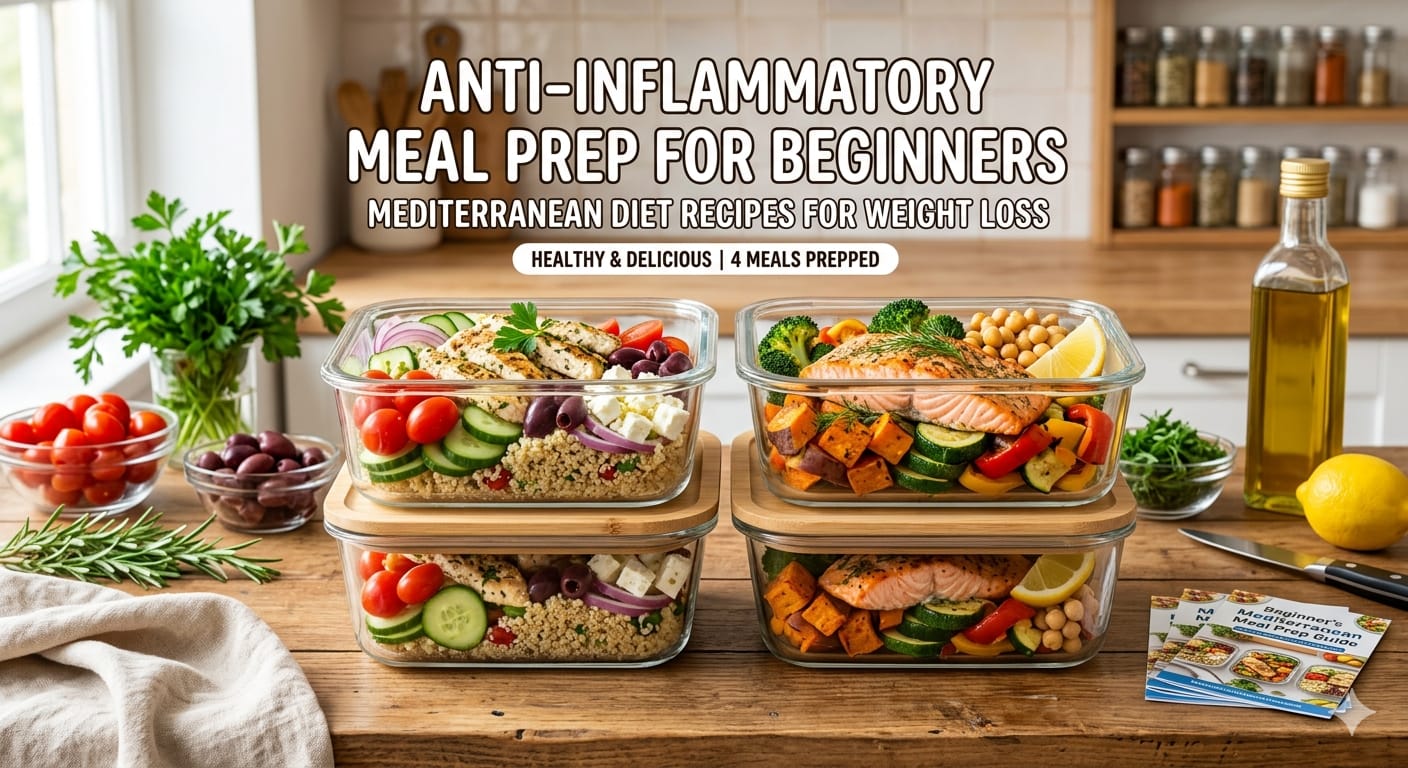
Table of Contents
Introduction
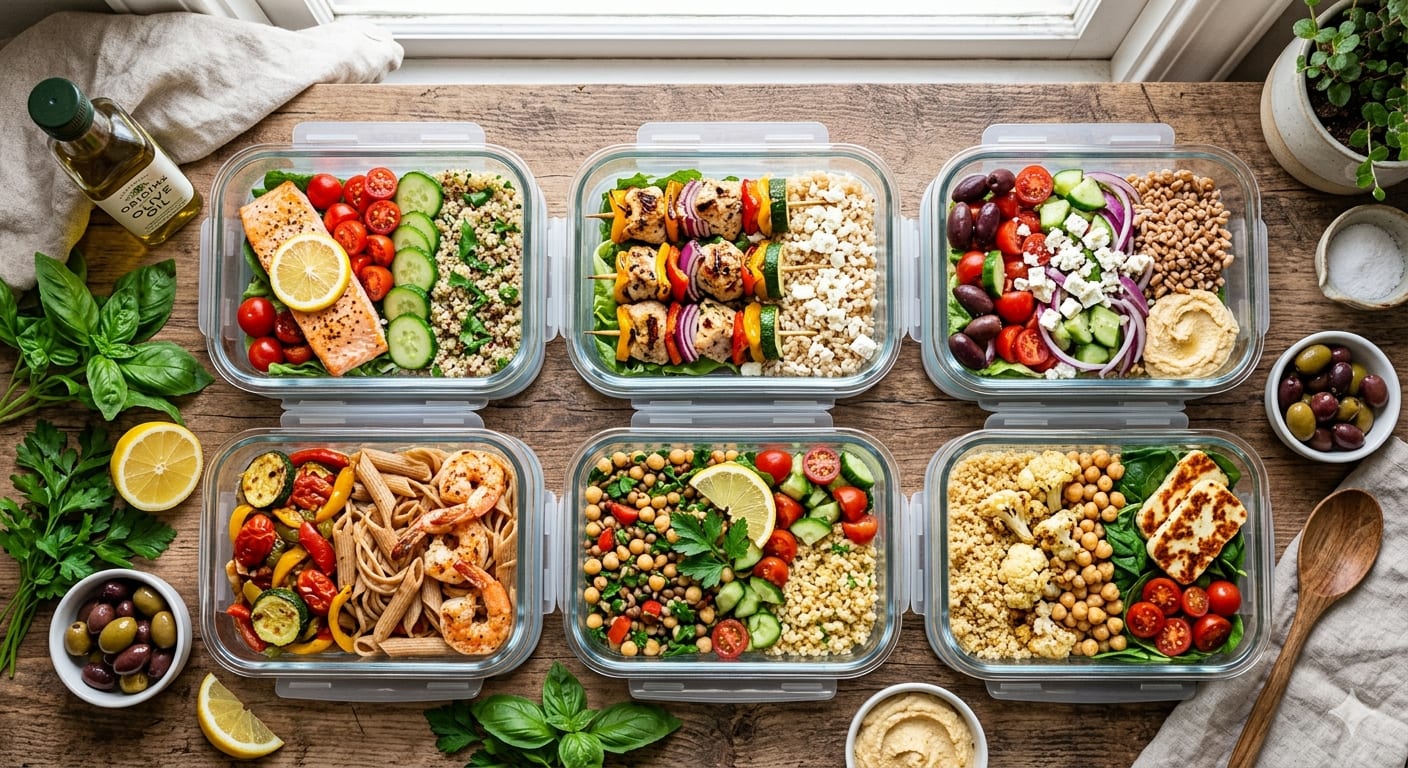
You've tried every diet under the sun. Keto. Paleo. Intermittent fasting. Juice cleanses. And yet, the scale won't budge. What if the problem isn't about eating less"but eating differently? Emerging research reveals a surprising culprit behind stubborn weight gain: **chronic inflammation**.
When your body is in a constant state of low-grade inflammation, it becomes nearly impossible to lose weight. Inflammation disrupts hunger hormones, slows metabolism, increases fat storage (especially around the belly), and triggers cravings for sugary, processed foods. It's a vicious cycle that keeps millions stuck in frustration.
But here's the breakthrough: **Anti-inflammatory eating combined with strategic meal prep can break this cycle**"and the Mediterranean diet is your most powerful tool. This isn't another restrictive diet. It's a delicious, science-backed way of eating that has helped millions shed pounds while enjoying flavorful food, satisfying portions, and zero calorie counting.
In this comprehensive 2026 guide, you'll discover exactly how to harness the dual power of anti-inflammatory nutrition and meal preparation to transform your health. You'll get a complete 7-day Mediterranean meal plan, beginner-friendly recipes ready in 30 minutes or less, a detailed shopping list, and expert tips that make healthy eating effortless.
What You'll Discover in This Complete Guide:
- The shocking link between inflammation and weight loss resistance
- Why Mediterranean diet ranks #1 for sustainable weight loss
- Step-by-step meal prep system for busy beginners
- Top 15 anti-inflammatory superfoods you need
- Complete 7-day meal plan with exact portions
- 5 delicious recipes ready in 30 minutes
- Shopping list and budget-saving strategies
Whether you're a complete beginner to meal prep or someone who's struggled with inflammation-related weight gain for years, this guide will give you everything you need to succeed. Let's dive in and start your transformation today.
How Chronic Inflammation Blocks Weight Loss
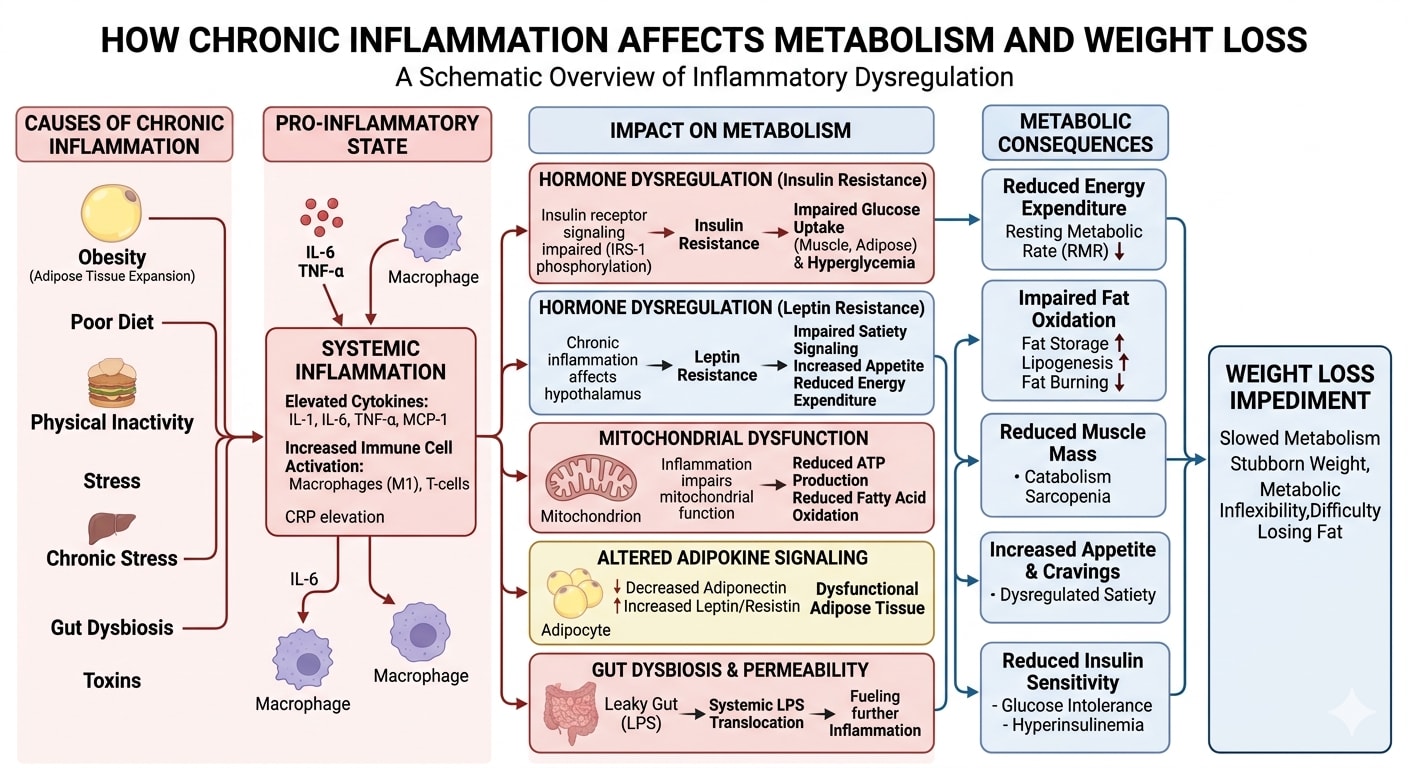
Before we dive into meal prep strategies, let's understand what's really happening in your body. **Inflammation is your immune system's natural response** to injury, infection, or toxins. Acute inflammation"like swelling around a cut or fever fighting off viruses"is temporary and protective. But chronic, systemic inflammation is different.
When inflammation becomes chronic, it silently damages tissues, disrupts hormone signaling, and creates metabolic chaos. Here's exactly how it sabotages your weight loss efforts:
1. Leptin Resistance: Your Brain Stops Getting the "Full" Signal
Leptin is your "satiety hormone""it tells your brain when you've eaten enough. Chronic inflammation causes **leptin resistance**, where your brain becomes deaf to leptin's signals. Result? You feel hungry even after eating adequate calories, leading to constant overeating and cravings.
Research Insight: A 2025 study in Nature Metabolism found that individuals with elevated inflammatory markers had 40% higher leptin levels but paradoxically reported greater hunger"clear evidence of resistance.
2. Insulin Resistance: Your Body Stores More Fat
Inflammation interferes with insulin signaling, forcing your pancreas to pump out more insulin. High insulin levels tell your fat cells to **store energy** rather than burn it. This is especially problematic for visceral (belly) fat, which itself produces inflammatory cytokines"creating a vicious cycle.
Key Finding: Research shows that reducing inflammation can improve insulin sensitivity by up to 30% within just 8 weeks, making weight loss significantly easier.
3. Slowed Metabolism: Your Calorie Burn Drops
Inflammatory molecules like TNF-alpha and IL-6 directly suppress your metabolic rate. They interfere with thyroid hormone conversion and mitochondrial function"the tiny powerhouses in your cells that burn calories. Studies show that people with high inflammation have **metabolic rates 5-10% lower** than expected for their body size.
4. Cortisol Dysregulation: Stress Makes You Store Belly Fat
Chronic inflammation activates your stress response, elevating cortisol. High cortisol specifically drives fat storage in the abdominal area and increases appetite for high-calorie "comfort foods." This is why stressed, inflamed individuals often struggle with **stubborn belly fat** despite calorie restriction.
5. Gut Microbiome Disruption: Bad Bugs Take Over
Your gut bacteria play a crucial role in weight regulation. Inflammation disrupts the balance, allowing harmful bacteria to thrive. These bad bugs extract more calories from food, increase cravings, and produce toxins that further inflammation. It's a self-perpetuating cycle.
� The Vicious Cycle:
Poor diet ' Inflammation ' Weight gain ' More inflammation ' Harder to lose weight ' Frustration ' Emotional eating ' Worse diet
The Solution: Break the cycle with anti-inflammatory eating + meal prep consistency
The good news? **You can reverse this entire process.** By adopting an anti-inflammatory eating pattern and using meal prep to stay consistent, you'll reduce inflammation, restore hormonal balance, boost metabolism, and finally see the scale move. And the Mediterranean diet is your golden ticket.
Why Mediterranean Diet Is the #1 Choice for Anti-Inflammatory Weight Loss
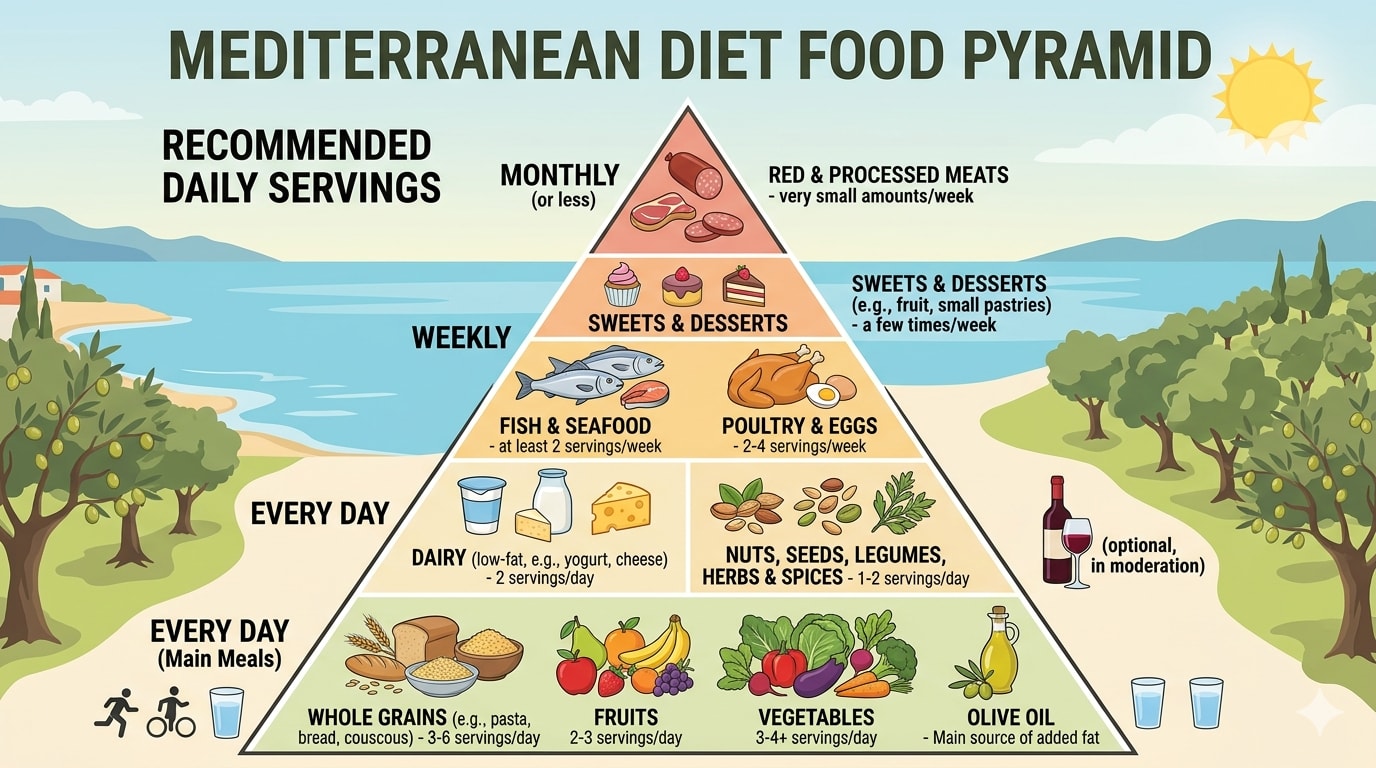
With countless diets competing for attention, why does the Mediterranean diet consistently rank #1 year after year? Because it's not really a "diet""it's a **time-tested eating pattern** backed by over 60 years of rigorous scientific research.
Originating from the traditional eating habits of countries bordering the Mediterranean Sea (especially Greece, Southern Italy, and Crete), this pattern emphasizes whole, minimally processed foods rich in antioxidants, healthy fats, and fiber. Unlike fad diets that eliminate entire food groups, the Mediterranean approach is **flexible, sustainable, and downright delicious**.
The Science: Proven Benefits for Inflammation & Weight Loss
A landmark 2024 meta-analysis published in The BMJ reviewed 87 clinical trials involving over 150,000 participants. The findings were clear:
- 30-40% reduction in inflammatory markers (CRP, IL-6, TNF-alpha) within 8-12 weeks
- 4.5 lbs more weight loss compared to low-fat diets over 6 months
- 25% greater waist circumference reduction (targeting dangerous belly fat)
- 35% lower risk of cardiovascular disease
- 40% improvement in insulin sensitivity
What Makes It So Effective?
1. Extra Virgin Olive Oil: Liquid Gold
The primary fat source contains **oleocanthal**, a potent anti-inflammatory compound that works similarly to ibuprofen. Just 2 tablespoons daily provides significant inflammation reduction. Olive oil also increases satiety and helps absorb fat-soluble antioxidants from vegetables.
2. Omega-3 Fatty Acids: Nature's Fire Extinguishers
Fatty fish (salmon, sardines, mackerel) provide EPA and DHA"omega-3s that directly block inflammatory pathways. Research shows that **adequate omega-3 intake reduces inflammation by 20-25% and enhances fat burning during exercise.
3. Polyphenols: Plant Powerhouses
Colorful fruits, vegetables, herbs, spices, red wine (in moderation), dark chocolate, and tea are loaded with polyphenols. These compounds activate genes that fight inflammation and protect blood vessels. The Mediterranean diet provides **3-4x more polyphenols than typical Western diets.
4. Fiber: Feeding Good Gut Bacteria
Whole grains, legumes, vegetables, and fruits provide diverse fibers that feed beneficial gut bacteria. These good bugs produce **short-chain fatty acids** (especially butyrate) that reduce gut inflammation and improve metabolism.
5. No Restriction Mentality: Sustainability Wins
Unlike restrictive diets that lead to binge-eating and yo-yo cycles, Mediterranean eating celebrates food enjoyment. Studies confirm that people **stick with it longer**, leading to sustained weight loss and health improvements.
Key Takeaway: The Mediterranean diet isn't about perfection"it's about patterns. Aim for 80% adherence and you'll still see remarkable results. Flexibility is its superpower.
Meal Prep for Beginners: Your Step-by-Step System
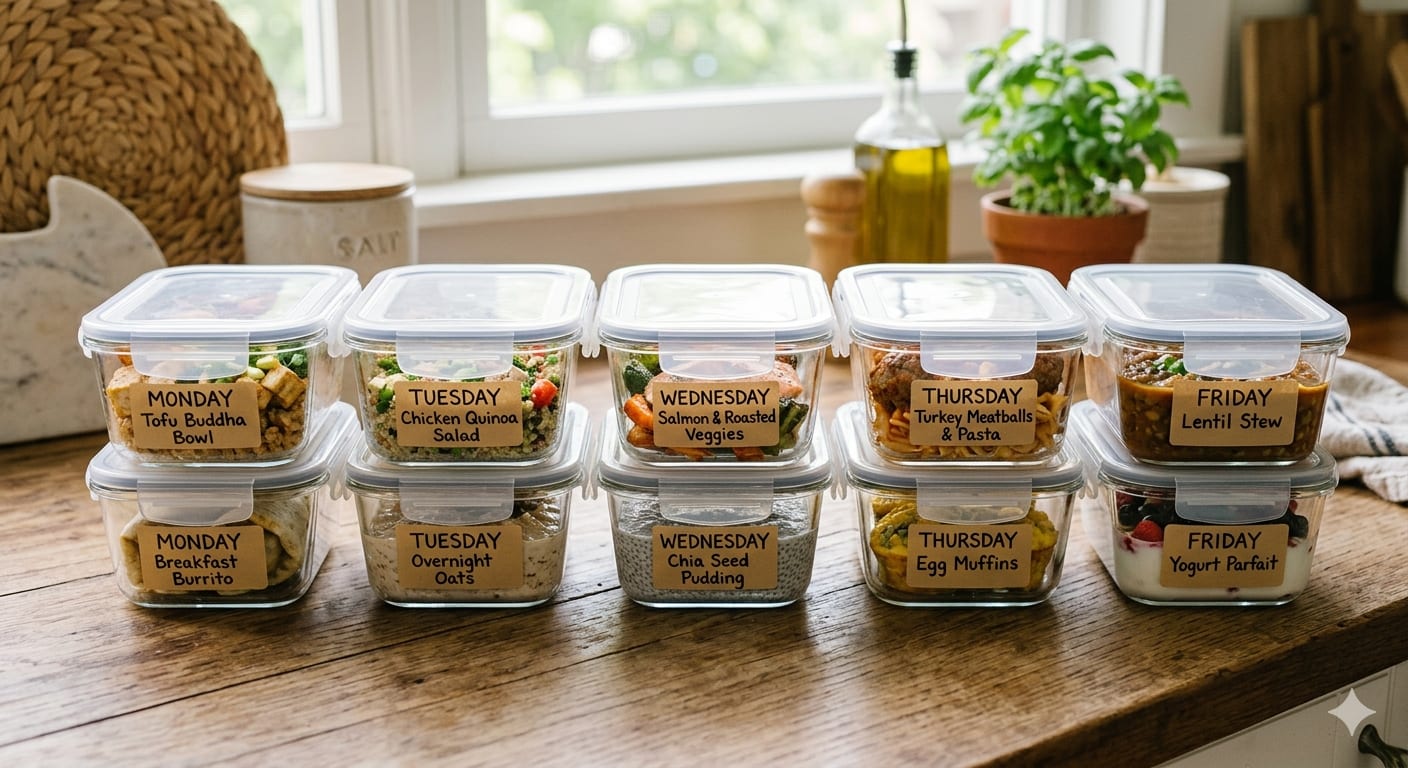
Understanding the "why" is important, but now let's get to the "how." Meal prep is the secret weapon that transforms your anti-inflammatory intentions into automatic habits. **Spend 2-3 hours on Sunday**, and you'll have healthy meals ready for the entire week.
If you're new to meal prep, don't overwhelm yourself. Start small"prep just lunches or dinners for 3-4 days. As you build confidence, expand to full-week prep. Here's your foolproof system:
Phase 1: Planning (Saturday Night - 20 Minutes)
- Choose Your Recipes: Pick 2-3 breakfasts, 3 lunches, 3-4 dinners from this guide. Write them down.
- Create Your Shopping List: Organize by category (produce, proteins, grains, pantry). Use the list at the end of this article.
- Gather Containers: You'll need 8-12 glass or BPA-free plastic containers with tight lids. Different sizes: 16 oz for snacks, 24-32 oz for meals.
- Prep Your Kitchen: Clear counter space, sharpen knives, charge phone/tablet for timers and music.
Phase 2: Shopping (Sunday Morning - 45 Minutes)
- Shop the perimeter first (produce, meat, dairy)"this is where whole foods live.
- Buy frozen backup veggies (just as nutritious, zero waste).
- Invest in quality olive oil"it makes a taste difference.
- Don't forget herbs! Fresh basil, parsley, cilantro elevate flavors.
Phase 3: Prep Day (Sunday Afternoon - 2-3 Hours)
Put on your favorite playlist or podcast. Make it enjoyable, not a chore.
Hour 1: Batch Cooking
- Start grains cooking (quinoa, brown rice"20-25 min)
- Roast vegetables in oven (400 °F / 200 °C, 25-30 min)
- Cook proteins simultaneously (chicken, fish, or plant-based)
- Hard-boil eggs for snacks (10 min)
Hour 2: Chopping & Assembly
- Wash and chop raw veggies for salads/snacks
- Portion cooked grains, proteins, roasted veggies into containers
- Prepare overnight oats or chia puddings for breakfasts
- Make dressings and store in small jars
Hour 3: Final Touches & Storage
- Label containers with dates
- Store properly: Meals for Mon-Wed in fridge, Thu-Sun in freezer
- Clean up kitchen (easier while warm food smells linger)
- Take photos of your prep"share your success!
� ° Time-Saving Hacks:
- Use pre-washed greens and pre-cut veggies (worth the extra cost for convenience)
- Cook double batches and freeze half for next week
- Keep frozen salmon fillets for quick dinners
- Invest in a rice cooker and slow cooker for hands-off cooking
- Prep ingredients, not full meals (assemble fresh when eating)
Food Safety Essentials
- Refrigerated meals stay fresh for 4-5 days max
- Freeze immediately if keeping longer (up to 3 months)
- Fish should be eaten within 3 days
- Reheat to internal temp of 165 °F (74 °C)
- When in doubt, throw it out
Top 15 Anti-Inflammatory Foods to Stock Your Pantry
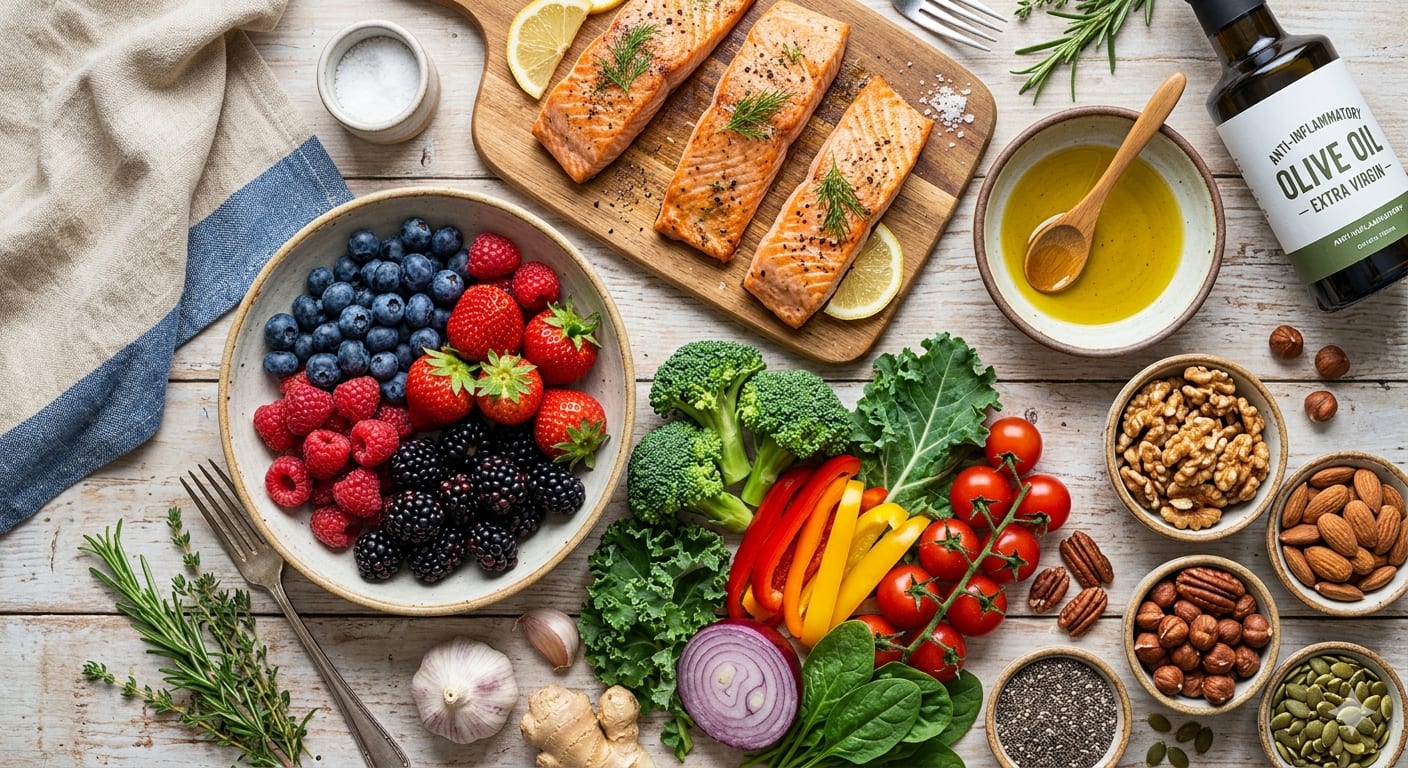
Not all foods are created equal. Some fan the flames of inflammation, while others douse them. Here are your **all-star anti-inflammatory champions** that should be staples in your Mediterranean meal prep:
Proteins & Healthy Fats
- Wild-Caught Salmon: King of omega-3s. Aim for 4-6 oz servings, 2-3x weekly. Sockeye and Coho have highest antioxidant content.
- Sardines: Tiny but mighty. Packed with omega-3s, vitamin D, calcium. Choose wild-caught in olive oil. Budget-friendly at $2-4/can.
- Extra Virgin Olive Oil: Use 2-3 tablespoons daily. Look for cold-pressed, dark bottles, harvest dates. Store away from light.
- Walnuts: Only tree nut with significant omega-3 ALA. Handful daily (about 14 halves) reduces inflammation markers by 15%.
- Chia Seeds: One ounce provides 5 grams of omega-3s. Great in smoothies, puddings, oatmeal. Also high in fiber and protein.
Vegetables & Fruits
- Leafy Greens (Spinach, Kale, Swiss Chard): Loaded with vitamins C, E, folate, carotenoids. Eat 2 cups daily minimum.
- Berries (Blueberries, Strawberries, Raspberries): Anthocyanins give powerful antioxidant punch. Frozen work just as well as fresh.
- Tomatoes: Lycopene content increases when cooked with olive oil. Protects against heart disease and cancer.
- Cruciferous Vegetables (Broccoli, Cauliflower, Brussels Sprouts): Sulforaphane blocks inflammatory enzymes. Roast for best flavor.
- Onions & Garlic: Quercetin and allicin reduce CRP levels. Use liberally in cooking. Raw garlic has strongest effect.
Whole Grains & Legumes
- Quinoa: Complete protein (all 9 essential amino acids). Gluten-free. Cooks in 15 minutes. Versatile for sweet or savory.
- Chickpeas (Garbanzo Beans): High fiber, plant protein. Linked to reduced belly fat. Make hummus or roast for crispy snack.
- Lentils: Cook faster than dried beans. Excellent fiber source. Red lentils dissolve into soups; green hold shape for salads.
- Oats (Steel-Cut or Old-Fashioned): Beta-glucan fiber improves cholesterol and gut health. Avoid instant packets with added sugar.
- Brown Rice: Selenium and lignans support metabolism. Rinse before cooking. Batch cook and freeze in portions.
Herbs, Spices & Beverages
- Turmeric: Curcumin is one of nature's most potent anti-inflammatories. Always pair with black pepper (increases absorption 2000%).
- Green Tea: EGCG catechin protects cells from oxidative damage. Drink 2-3 cups daily. Matcha powder is concentrated form.
Pro Tip: Buy spices in bulk from ethnic markets"same quality, fraction of the cost. Store in airtight containers away from heat.
Foods to Minimize (Pro-Inflammatory)
- Refined sugars and high-fructose corn syrup
- Processed meats (bacon, sausage, deli meats)
- Trans fats and partially hydrogenated oils
- Excessive alcohol (>1 drink/day for women, >2 for men)
- Refined carbohydrates (white bread, pastries)
- Fried foods and vegetable oils high in omega-6
Remember: **80/20 rule**. If 80% of your intake comes from anti-inflammatory choices, you can enjoy occasional treats without derailing progress.
Your Complete 7-Day Mediterranean Meal Plan
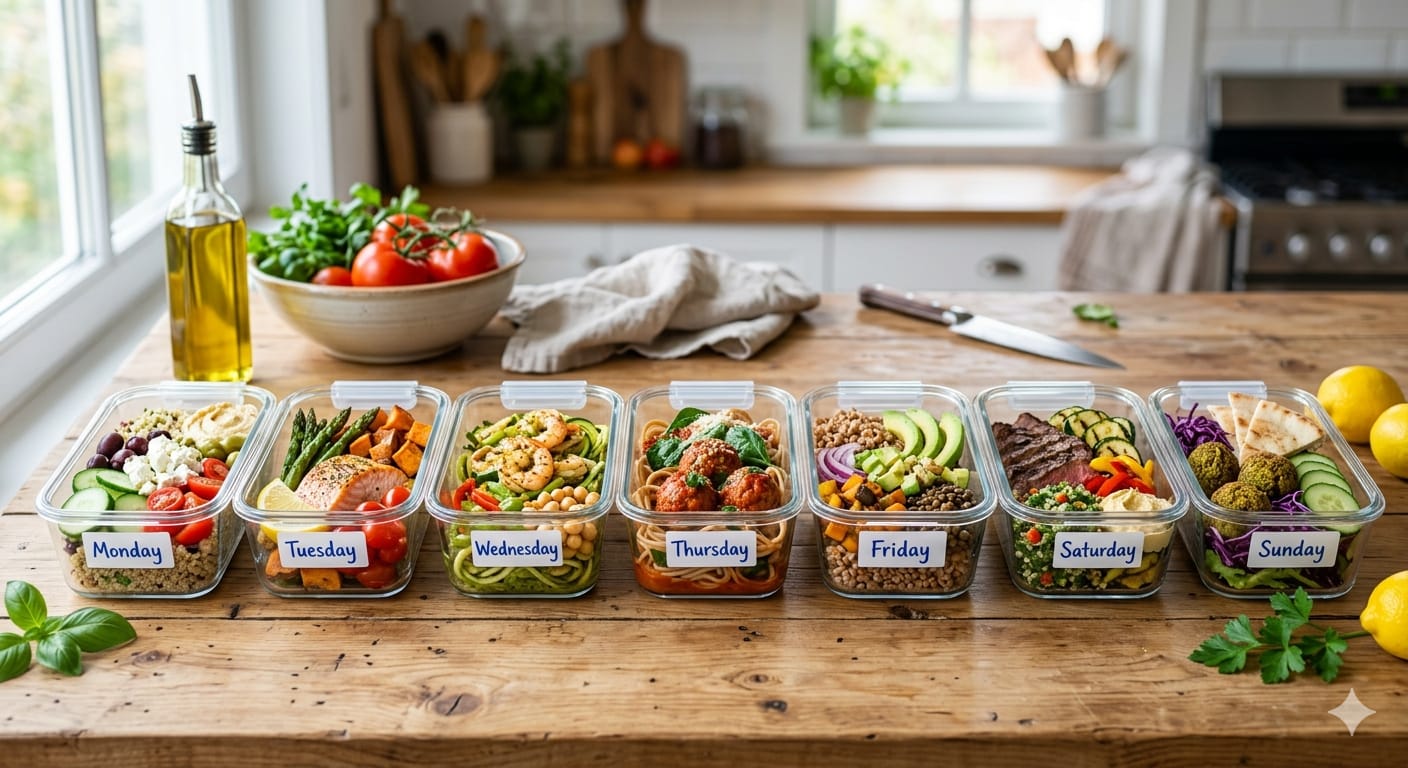
This isn't theoretical"it's your exact roadmap for the week. Each day provides approximately 1,800-2,000 calories with balanced macros (40% carbs, 35% fat, 25% protein). Adjust portions based on your individual needs.
Day 1: Monday
- Breakfast: Greek Yogurt Parfait with Berries, Walnuts & Honey (350 cal)
- Lunch: Mediterranean Quinoa Salad with Chickpeas, Cucumber, Feta (450 cal)
- Snack: Apple Slices with Almond Butter (200 cal)
- Dinner: Baked Salmon with Roasted Brussels Sprouts & Brown Rice (550 cal)
Day 2: Tuesday
- Breakfast: Overnight Oats with Chia Seeds, Banana & Cinnamon (380 cal)
- Lunch: Leftover Salmon & Veggies (400 cal)
- Snack: Handful of Mixed Nuts & Dark Chocolate Square (220 cal)
- Dinner: Greek Chicken Bowls with Tzatziki, Olives, Tomatoes (520 cal)
Day 3: Wednesday
- Breakfast: Veggie Egg Scramble with Spinach, Tomatoes, Olive Oil (340 cal)
- Lunch: Lentil Soup with Whole Grain Pita (420 cal)
- Snack: Carrot Sticks with Hummus (180 cal)
- Dinner: Shrimp Pasta Primavera with Garlic, Cherry Tomatoes, Basil (540 cal)
Day 4: Thursday
- Breakfast: Smoothie Bowl: Acai, Banana, Berries, Granola (370 cal)
- Lunch: Caprese Salad with Fresh Mozzarella, Basil, Balsamic (400 cal)
- Snack: Greek Yogurt with Honey (190 cal)
- Dinner: Baked Cod with Lemon-Herb Quinoa, Steamed Broccoli (510 cal)
Day 5: Friday
- Breakfast: Avocado Toast on Whole Grain with Poached Egg (390 cal)
- Lunch: Tuna Salad with White Beans, Arugula, Lemon (430 cal)
- Snack: Pear with String Cheese (200 cal)
- Dinner: Turkey Meatballs with Zucchini Noodles, Marinara (520 cal)
Day 6: Saturday
- Breakfast: Whole Grain Pancakes with Fresh Berries (410 cal)
- Lunch: Falafel Wrap with Tahini Sauce, Pickled Veggies (460 cal)
- Snack: Edamame with Sea Salt (170 cal)
- Dinner: Grilled Lamb Chops with Roasted Sweet Potatoes, Asparagus (580 cal)
Day 7: Sunday
- Breakfast: Shakshuka (Eggs Poached in Tomato Sauce) with Herbs (360 cal)
- Lunch: Greek Salad with Grilled Chicken, Kalamata Olives (440 cal)
- Snack: Trail Mix: Nuts, Seeds, Dried Fruit (210 cal)
- Dinner: Stuffed Bell Peppers with Ground Turkey, Quinoa, Feta (530 cal)
Meal Prep Strategy: Cook grains and proteins on Sunday. Assemble different combinations daily to prevent boredom. Keep dressings separate until eating.
5 Quick & Delicious Mediterranean Recipes (30 Minutes or Less)
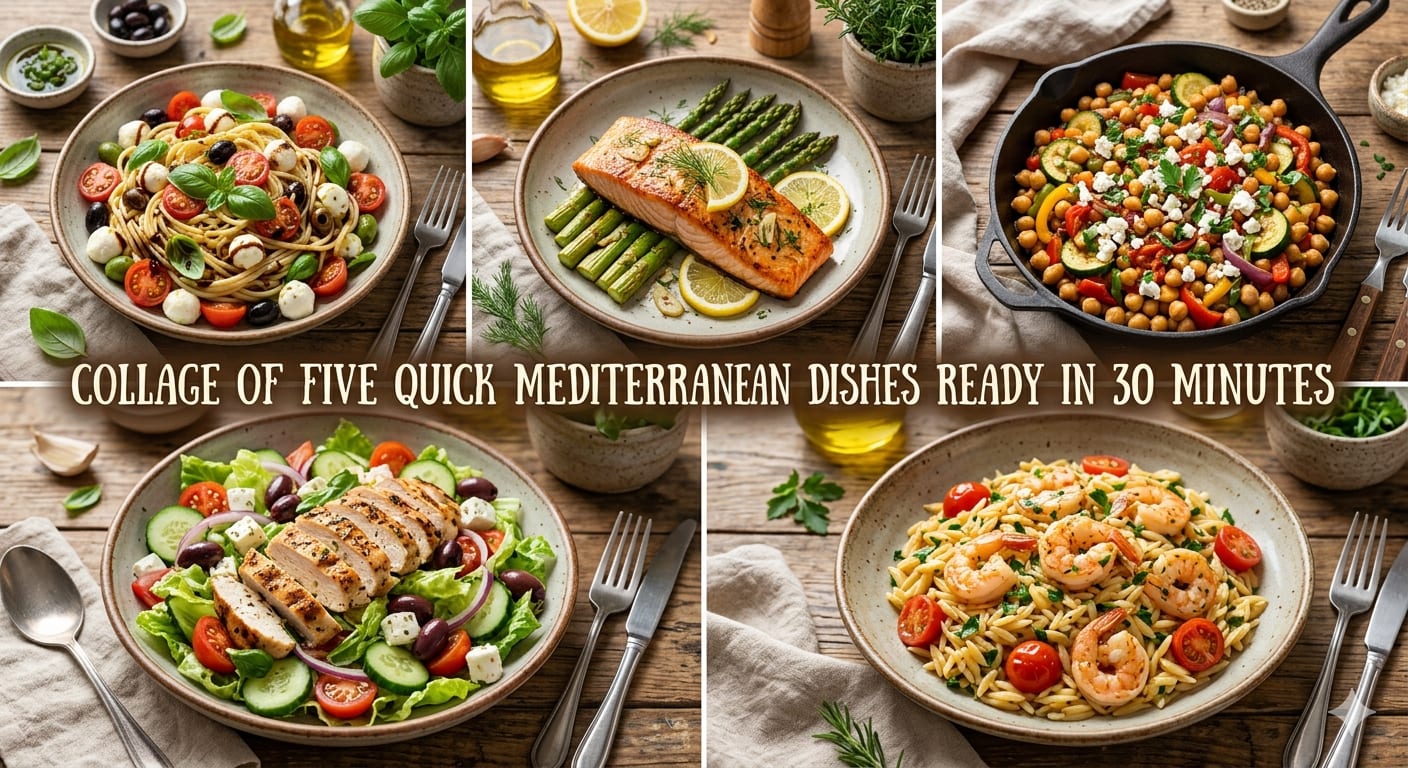
Recipe 1: One-Pan Lemon Garlic Salmon with Asparagus
Prep Time: 10 min | Cook Time: 15 min | Servings: 4
Ingredients:
- 4 salmon fillets (6 oz each)
- 1 lb asparagus, trimmed
- 4 cloves garlic, minced
- 3 tbsp olive oil
- 2 lemons (1 sliced, 1 juiced)
- Salt, pepper, dried oregano
- Fresh parsley for garnish
Instructions:
- Preheat oven to 400 °F (200 °C). Line baking sheet with parchment.
- Place salmon and asparagus on sheet. Drizzle with olive oil and lemon juice.
- Season with garlic, salt, pepper, oregano. Top with lemon slices.
- Bake 12-15 min until salmon flakes easily.
- Garnish with parsley. Serve with brown rice or quinoa.
Nutrition per serving: 420 cal | 35g protein | 28g fat | 8g carbs | 4g fiber
Recipe 2: Mediterranean Chickpea Power Bowl
Prep Time: 15 min | Cook Time: 10 min | Servings: 4
Ingredients:
- 2 cans chickpeas, drained and rinsed
- 1 cucumber, diced
- 1 cup cherry tomatoes, halved
- 1/2 red onion, finely diced
- 1/2 cup kalamata olives
- 1/2 cup feta cheese, crumbled
- 1/4 cup fresh parsley, chopped
- Dressing: 3 tbsp olive oil, 2 tbsp lemon juice, 1 tsp dried oregano, salt, pepper
Instructions:
- Pat chickpeas dry. Season with salt, pepper, cumin.
- Heat 1 tbsp olive oil in skillet over medium-high heat.
- Add chickpeas, cook 8-10 min until crispy.
- In bowls, layer cucumbers, tomatoes, onion, olives, crispy chickpeas.
- Whisk dressing ingredients. Drizzle over bowls.
- Top with feta and parsley. Serve immediately.
Nutrition per serving: 380 cal | 14g protein | 22g fat | 35g carbs | 9g fiber
Recipe 3: Greek Chicken Souvlaki with Tzatziki
Prep Time: 15 min (+30 min marinating) | Cook Time: 12 min | Servings: 4
Ingredients:
- 1.5 lbs chicken breast, cut into 1-inch cubes
- 1/4 cup olive oil
- 3 cloves garlic, minced
- 2 tbsp lemon juice
- 1 tsp dried oregano
- Bell peppers and red onion, chunked
- Wooden skewers, soaked
- Tzatziki: 1 cup Greek yogurt, 1/2 grated cucumber (squeezed dry), 1 clove garlic, 1 tbsp lemon juice, fresh dill
Instructions:
- Mix olive oil, garlic, lemon juice, oregano, salt, pepper.
- Toss chicken in marinade. Refrigerate 30 min minimum.
- Thread chicken onto skewers alternating with peppers and onion.
- Grill or broil 10-12 min, turning occasionally.
- For tzatziki: Mix all ingredients. Season with salt.
- Serve skewers with tzatziki, pita bread, and Greek salad.
Nutrition per serving: 390 cal | 42g protein | 18g fat | 12g carbs | 2g fiber
Recipe 4: Creamy Tuscan White Bean Soup
Prep Time: 10 min | Cook Time: 20 min | Servings: 6
Ingredients:
- 3 cans cannellini beans, drained
- 1 onion, diced
- 3 carrots, diced
- 3 celery stalks, diced
- 4 cups vegetable broth
- 2 cups fresh spinach, chopped
- 1 can diced tomatoes
- 3 cloves garlic, minced
- 2 tbsp olive oil
- 1 tsp dried thyme, rosemary
- Parmesan rind (optional for depth)
Instructions:
- Heat olive oil in large pot over medium heat.
- Sauté onion, carrots, celery 5-7 min until softened.
- Add garlic, herbs, cook 1 min until fragrant.
- Add beans, broth, tomatoes, Parmesan rind.
- Simmer 15 min. Remove rind.
- Blend half the soup for creaminess. Stir in spinach.
- Serve with crusty whole grain bread and drizzle of olive oil.
Nutrition per serving: 310 cal | 15g protein | 9g fat | 45g carbs | 12g fiber
Recipe 5: Shrimp & Vegetable Orzo Skillet
Prep Time: 12 min | Cook Time: 18 min | Servings: 4
Ingredients:
- 1 lb large shrimp, peeled and deveined
- 1 cup orzo pasta (whole wheat if available)
- 1 zucchini, spiralized or diced
- 1 cup cherry tomatoes, halved
- 1/2 cup sun-dried tomatoes, chopped
- 1/4 cup fresh basil, chiffonade
- 3 cloves garlic, minced
- 3 tbsp olive oil
- 1/4 cup white wine or broth
- Lemon wedges for serving
Instructions:
- Cook orzo according to package directions. Drain.
- Season shrimp with salt, pepper, Italian seasoning.
- Heat 2 tbsp olive oil in large skillet over medium-high.
- Add shrimp, cook 2-3 min per side until pink. Remove.
- Add remaining oil, garlic, zucchini, both tomatoes.
- Sauté 4-5 min. Add wine, scrape up browned bits.
- Return shrimp, add cooked orzo. Toss everything.
- Remove from heat. Stir in fresh basil. Serve with lemon.
Nutrition per serving: 410 cal | 28g protein | 16g fat | 38g carbs | 4g fiber
Chef's Tip: Double these recipes and freeze half for next week. Most Mediterranean dishes freeze beautifully and taste even better after flavors meld overnight.
Complete Shopping List: Everything You Need
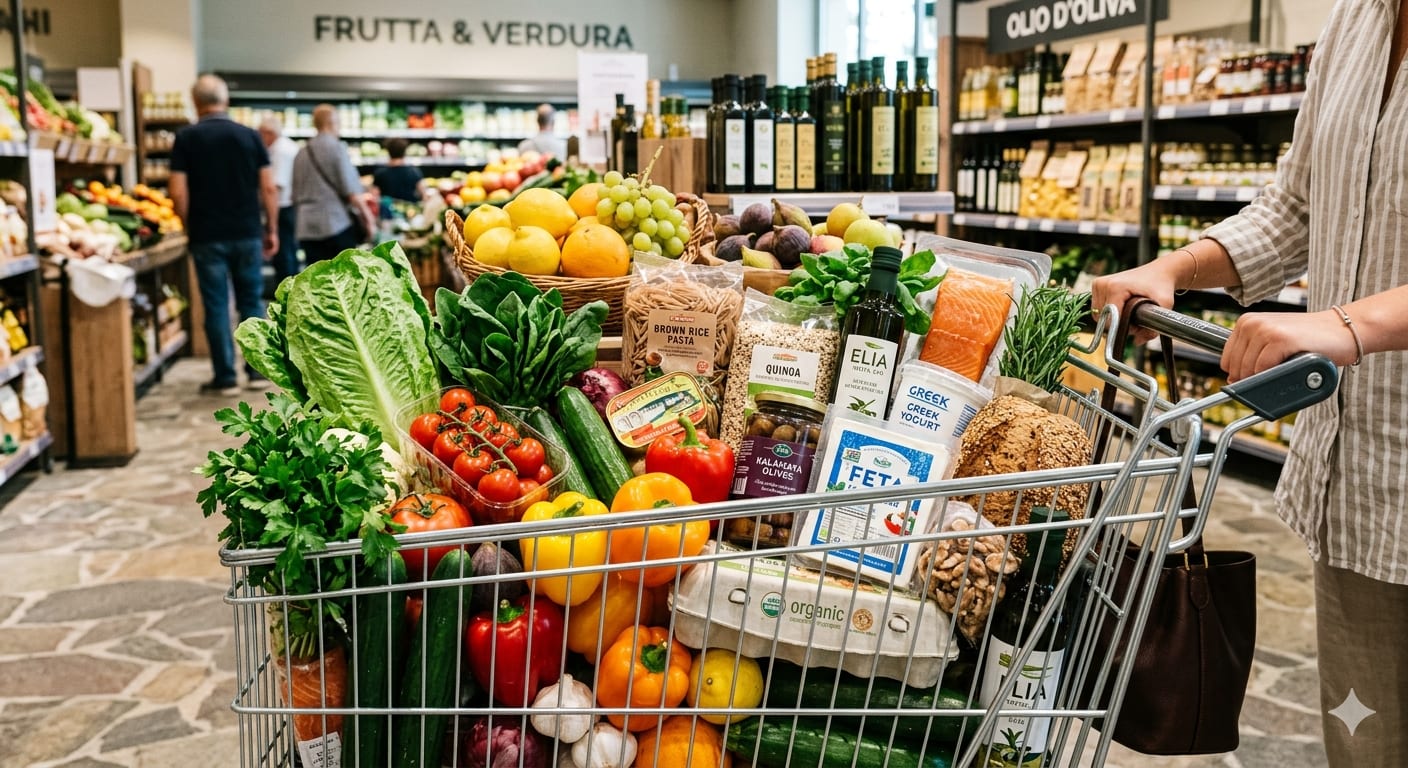
Organized by store sections for maximum efficiency. Estimated total cost: $120-150 for one person (varies by location). This covers all meals plus snacks for 7 days.
Produce Section
- Spinach or mixed greens (large container)
- Kale or Swiss chard (1 bunch)
- Broccoli (2 heads)
- Brussels sprouts (1 lb)
- Asparagus (1 bunch)
- Zucchini (3 medium)
- Bell peppers (4-5 assorted colors)
- Cucumbers (3-4)
- Cherry tomatoes (2 pints)
- Regular tomatoes (3-4)
- Red onions (2)
- Yellow onions (3)
- Garlic (2 bulbs)
- Carrots (1 bag)
- Celery (1 bunch)
- Sweet potatoes (2 lbs)
- Avocados (3-4)
- Lemons (4-5)
- Bananas (1 bunch)
- Apples (4-5)
- Berries (fresh or frozen: blueberries, strawberries)
- Fresh herbs: basil, parsley, cilantro, dill
Protein & Seafood
- Wild-caught salmon fillets (1.5 lbs)
- Chicken breast (1.5 lbs)
- Ground turkey (1 lb)
- Shrimp (1 lb, frozen is fine)
- Cod or white fish fillets (1 lb)
- Canned tuna in water (2-3 cans)
- Eggs (1 dozen, preferably omega-3 enriched)
Canned Goods & Pantry
- Chickpeas/garbanzo beans (3 cans)
- Cannellini beans (2 cans)
- Lentils (1 bag dried or 2 cans cooked)
- Quinoa (1 bag)
- Brown rice (1 bag)
- Orzo pasta (preferably whole wheat)
- Whole grain pasta (1 box)
- Rolled oats or steel-cut oats
- Diced tomatoes (2 cans)
- Sun-dried tomatoes (1 jar)
- Kalamata olives (1 jar)
- Vegetable broth (32 oz carton)
- Extra virgin olive oil (if you don't have)
- Nuts: walnuts, almonds, mixed nuts
- Seeds: chia seeds, flaxseeds
- Dark chocolate (70% cacao or higher)
Dairy & Refrigerated
- Greek yogurt (plain, full-fat or 2%, 32 oz)
- Feta cheese (1 block or crumbled)
- Fresh mozzarella balls (1 container)
- Parmesan cheese (wedge, not pre-grated)
- String cheese (for snacks)
Spices & Seasonings (Check Your Pantry)
- Sea salt
- Black peppercorns with grinder
- Dried oregano
- Dried thyme
- Dried rosemary
- Italian seasoning blend
- Turmeric powder
- Cumin
- Cinnamon
- Red pepper flakes
Budget-Saving Tips:
- Buy frozen seafood when fresh is out of season
- Purchase dried beans instead of canned (soak overnight)
- Get spices from ethnic markets or bulk bins
- Choose seasonal produce for best prices
- Store brands are often same quality as name brands
- Buy olive oil in larger quantities (better value)
Frequently Asked Questions
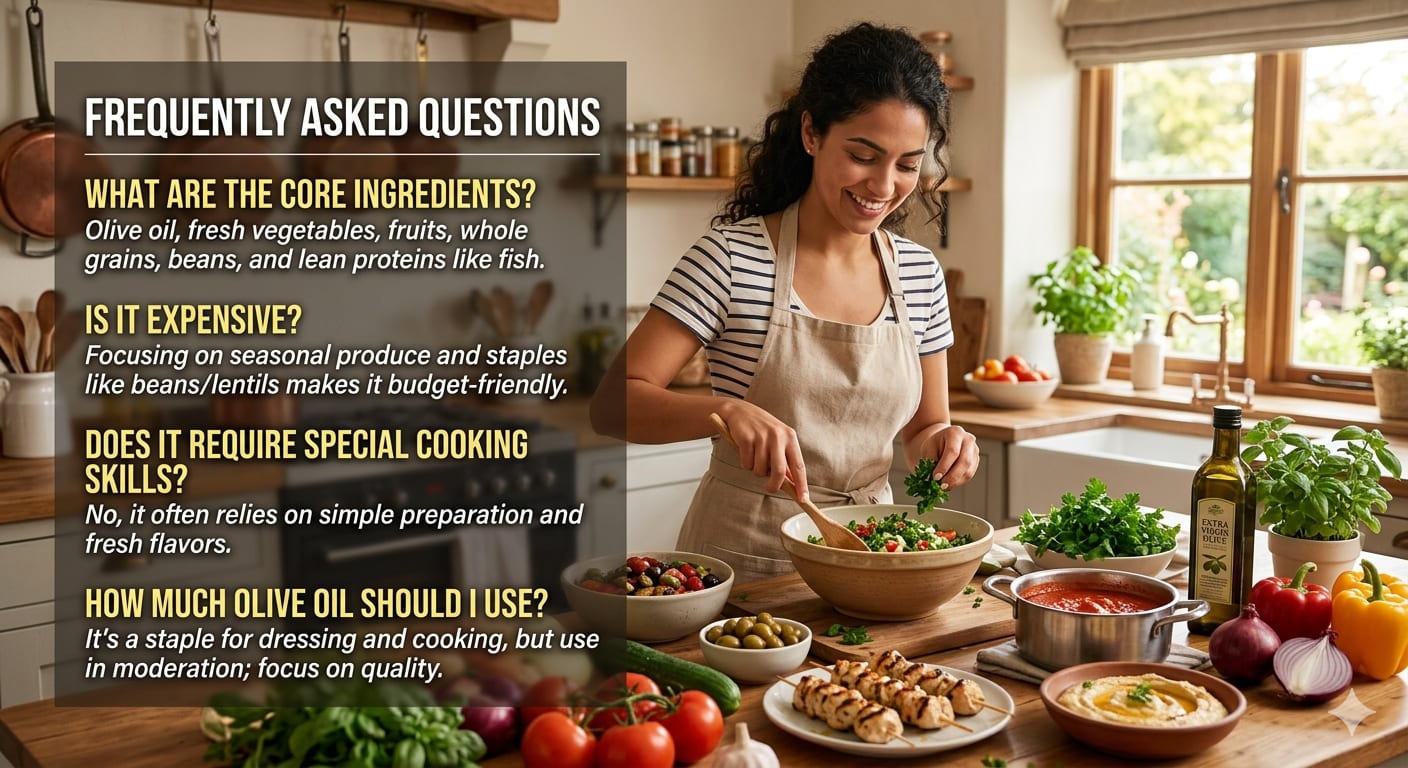
Q: How long do prepped meals stay fresh in the fridge?
A: Most prepped meals stay fresh for 4-5 days when stored in airtight containers. Fish is best consumed within 3 days. Cooked grains and roasted vegetables maintain quality for up to 5 days. Salads with dressing on the side last 3-4 days. If you won't eat within this timeframe, freeze immediately.
Q: Can vegetarians or vegans follow this meal plan?
A: Absolutely! The Mediterranean diet is naturally vegetarian-friendly. Replace animal proteins with lentils, chickpeas, beans, tofu, tempeh, edamame, quinoa, nuts, and seeds. Use the same anti-inflammatory principles: abundant vegetables, healthy fats (olive oil, avocados), whole grains, and plant-based proteins. Many traditional Mediterranean dishes are already vegetarian.
Q: Is this gluten-free compatible?
A: Yes! Simply substitute gluten-free grains: quinoa, brown rice, buckwheat, millet, certified GF oats. Avoid bulgur, farro, barley, and regular pasta. Many gluten-free pasta options exist (chickpea, lentil, brown rice). Naturally GF foods like vegetables, fruits, proteins, legumes form the diet foundation.
Q: How much weight will I lose and how fast?
A: Safe, sustainable weight loss is 1-2 pounds per week. However, because you're reducing inflammation, initial weeks may show 3-5 pounds loss as water retention decreases. After month one, expect steady progress. Remember: non-scale victories (energy, digestion, sleep, mood) are equally important markers of success.
Q: Do I need to count calories or track macros?
A: Not necessarily. The Mediterranean approach emphasizes food quality over restriction. Listening to hunger/fullness cues works well for many. However, if you have specific weight loss goals or metabolic conditions, gentle tracking for the first 1-2 weeks increases awareness. Focus on portion control rather than obsessive counting.
Q: What if I don't like fish? Where do I get omega-3s?
A: No problem! Plant-based omega-3 sources include: walnuts (handful daily), chia seeds (1-2 tbsp), ground flaxseeds (2 tbsp), hemp seeds (3 tbsp), and Brussels sprouts. Consider an algae-based omega-3 supplement (provides EPA/DHA directly). Aim for variety throughout the week.
Q: Is this family-friendly for kids?
A: Yes! Mediterranean eating suits all ages. Kids may need milder seasoning initially. Involve them in meal prep"increases acceptance. Offer deconstructed versions (taco bar style). Start with familiar foods and gradually introduce new flavors. Lead by example"children adopt habits they see.
Q: Should I take supplements alongside this diet?
A: Food first! A well-planned Mediterranean diet provides most nutrients. However, some may benefit from: Omega-3 (if not eating fish 2x weekly), Vitamin D (especially in winter months or limited sun), Magnesium glycinate (supports sleep and relaxation). Always consult your healthcare provider before starting supplements, especially if taking medications.
Q: Can I drink alcohol on this plan?
A: Moderate alcohol consumption fits the Mediterranean pattern"particularly red wine (1 glass/day for women, 2 for men) with meals. Red wine contains resveratrol, an antioxidant. However, if weight loss is your primary goal, consider limiting alcohol as it provides empty calories and can lower inhibitions around food choices.
Q: What if I slip up or miss a week of meal prep?
A: Progress, not perfection! One "off" meal doesn't derail progress. The Mediterranean lifestyle is about long-term patterns, not rigid rules. Simply resume at your next meal. Don't use setbacks as excuses to quit entirely. Consistency over weeks and months matters far more than individual days.
Have More Questions? Drop them in the comments below! Our community and nutrition team are here to support your journey.
Conclusion: Your Anti-Inflammatory Transformation Starts Now
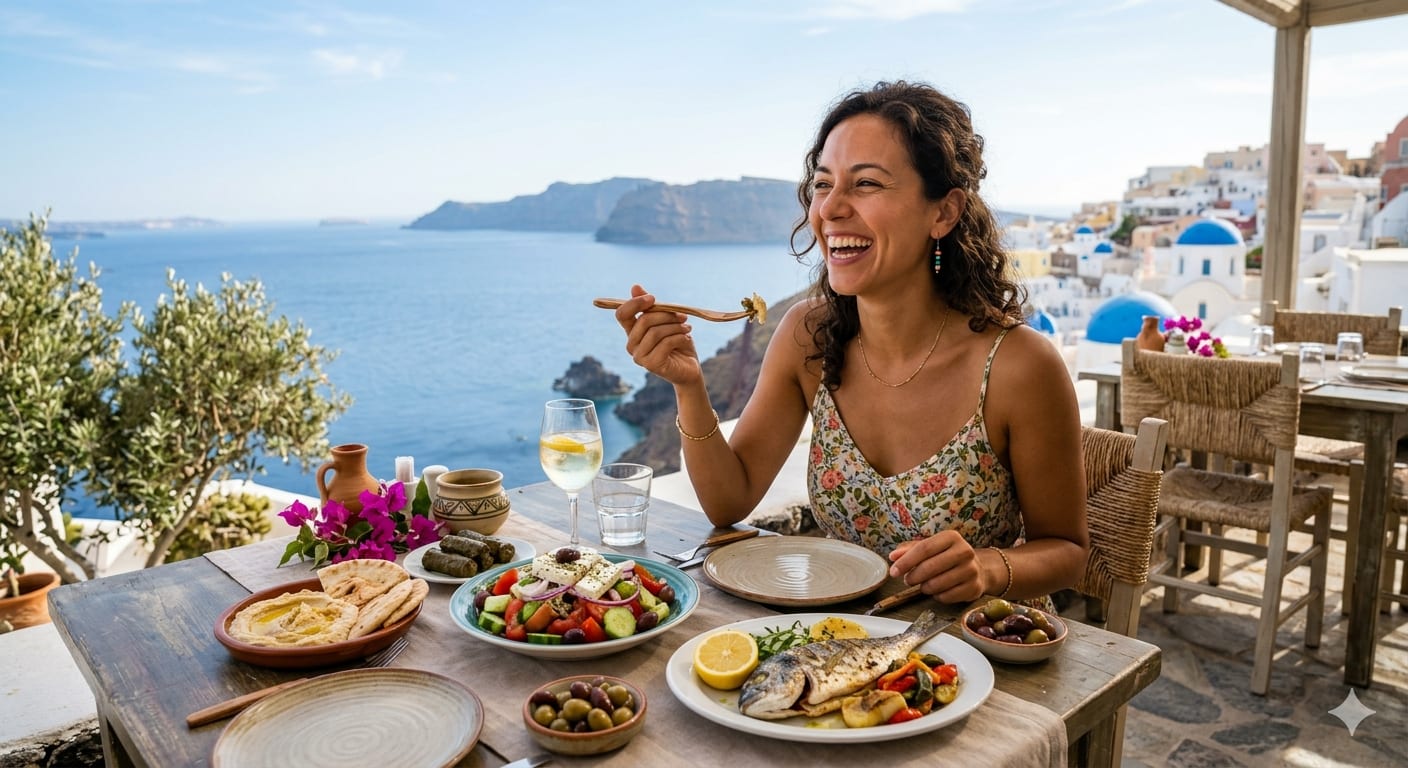
You now hold the complete blueprint for transforming your health through anti-inflammatory meal prep and Mediterranean diet principles. This isn't just another diet"it's a sustainable, science-backed lifestyle that has supported longevity and vitality for generations.
Let's recap what you've learned:
- Chronic inflammation is likely the hidden barrier blocking your weight loss efforts
- The Mediterranean diet reduces inflammation by 30-40% while promoting natural, sustainable fat loss
- Meal prep is your secret weapon"saving 5-7 hours weekly and eliminating decision fatigue
- You have a complete 7-day meal plan with delicious, varied recipes ready in 30 minutes or less
- Your shopping list is organized and budget-conscious (~$120-150/week)
- You understand which foods fight inflammation and which fan the flames
- Meal prep makes consistency automatic, not willpower-dependent
But knowledge without action is just entertainment. The real magic happens when you step into your kitchen this weekend and start prepping.
**Your Action Steps for This Week:**
- Choose 2-3 recipes from this guide that excite you
- Shop for ingredients using the provided list as your template
- Schedule 2-3 hours on Sunday for your first meal prep session
- Invest in quality containers if you don't have them
- Start small"even prepping just lunches is a win
- Track how you feel"energy, digestion, sleep, mood improvements
- Share your journey"comment below with your wins and challenges
Remember: **You don't need to be perfect.** You just need to be consistent. The Mediterranean lifestyle isn't about restriction"it's about abundance. Abundance of flavor, variety, satisfaction, and most importantly, health.
Every anti-inflammatory meal you prepare is an investment in your future self. Each week of meal prep builds momentum. Within 30 days, you'll notice changes. Within 90 days, those around you will notice. Within a year, you may barely recognize yourself"in the best possible way.
The science is clear. The tools are in your hands. The path is laid out before you. Now it's time to take that first step.
Your transformation begins this weekend. You've got this.
¬ We Want to Hear From You!
Which recipe are you most excited to try? What's your biggest meal prep challenge?
Drop a comment below and join our community of health-transformed individuals!
If this guide helped you, please share it with someone who needs this message. Together, we're building a healthier world"one meal at a time.
Disclaimer: This article is for informational purposes only and should not be considered medical advice. Always consult with a healthcare professional before making any changes to your health routine.
Frequently Asked Questions
4-5 days refrigerated. Fish best within 3 days. Freeze extras immediately.
Absolutely! Use lentils, chickpeas, beans, tofu, tempeh, quinoa, nuts, and seeds.
Yes! Focus on quinoa, brown rice, buckwheat. Avoid bulgur and farro.
Average 1-2 lbs per week. Initial weeks may show 3-5 lbs as inflammation drops.
Not necessary. Quality-focused eating naturally regulates portions.
Get omega-3s from walnuts, chia seeds, flaxseeds, hemp seeds. Consider algae-based supplement.
Yes! Mediterranean diet works for all ages. Adjust seasoning for kids.
Food first! Omega-3, vitamin D, magnesium glycinate may complement. Consult your healthcare provider.
Conclusion
Anti-inflammatory meal prep with Mediterranean diet principles offers scientifically-proven sustainable weight loss. Reduce chronic inflammation through vegetables, healthy fats, omega-3 fish, whole grains, and herbs. Meal prep makes it practical for beginners. Commit to preparation, focus on quality over restriction. Consistent anti-inflammatory eating transforms weight, energy, mental clarity, and disease risk. Start with 1-2 recipes this week. Every meal is an investment in your future health.
Marwari Luxe Team
Health & Wellness Experts
Our dedicated team of health and wellness professionals committed to providing accurate, research-based information.