AHAs vs BHAs: Complete Exfoliation Guide for Smoother, Clearer Skin

Introduction: Chemical Exfoliation Revolution
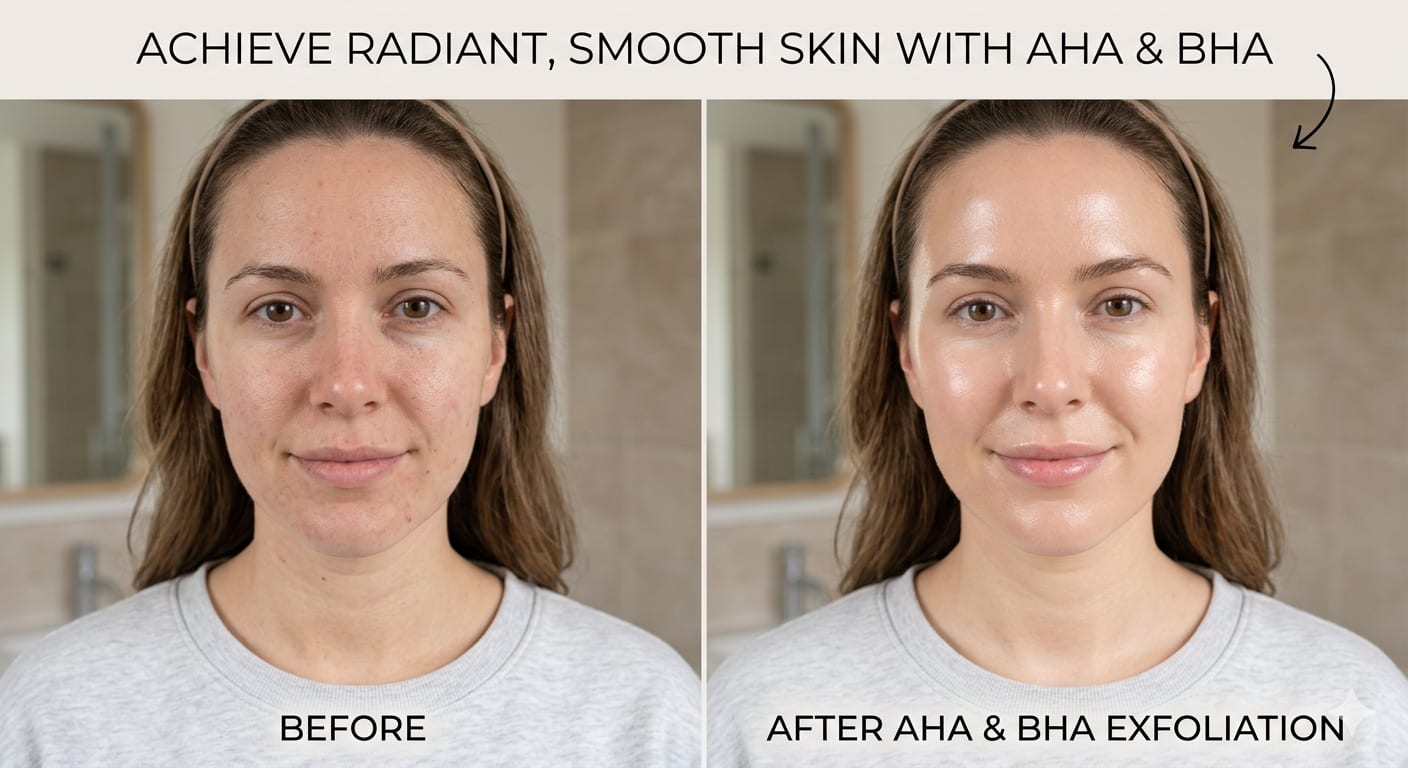
Remember when exfoliation meant harsh scrubs that left your face raw and irritated? Thank goodness those days are over. Enter **chemical exfoliants**"the game-changing duo of AHAs (alpha hydroxy acids) and BHAs (beta hydroxy acids) that dissolve dead skin cells without physical abrasion, revealing smoother, brighter, clearer complexions underneath.
Dermatologist Insight: Clinical studies show regular chemical exfoliation increases cell turnover by up to 40%, boosts collagen production by 25%, and reduces hyperpigmentation visibility by 60% in just 12 weeks. This is science-backed transformation.
But here's where confusion sets in: Which acid should YOU use? Can they be combined? What about sensitive skin? And why does everyone argue AHA vs BHA when the real answer is understanding what EACH one does? Let's decode the alphabet soup of skincare acids once and for all.
What Are AHAs? The Surface Renewers
AHAs (Alpha Hydroxy Acids) are water-soluble acids derived from fruits, milk, and sugar cane. They work primarily on the skin's surface, breaking down the "glue" that holds dead skin cells together. Think of them as gentle dissolving agents that slough off dull, rough layers to reveal fresh, radiant skin beneath.
Common Types of AHAs:
Glycolic Acid: Derived from sugar cane. Smallest molecular size = deepest penetration. Most potent but also most irritating. Gold standard for anti-aging, texture refinement, and pigmentation.
Lactic Acid: Derived from milk. Larger molecule = gentler penetration. Excellent for dry/dehydrated skin. Provides hydration while exfoliating. Perfect beginner AHA.
Mandelic Acid: Derived from bitter almonds. Largest AHA molecule = slowest penetration, least irritating. Antibacterial properties make it ideal for acne-prone sensitive skin.
Citric Acid: Derived from citrus fruits. Mild exfoliant plus antioxidant. Often used to adjust product pH rather than as primary active.
Tartaric Acid: Derived from grapes. Gentlest AHA. Primarily used in combination with stronger AHAs for enhanced results.
Primary Benefits of AHAs:
- Dissolve dead skin cell buildup on surface
- Improve skin texture and roughness
- Reduce appearance of fine lines and wrinkles
- Fade hyperpigmentation and dark spots
- Boost radiance and combat dullness
- Stimulate collagen and glycosaminoglycan production
- Enhance penetration of other skincare products
� Critical Warning: AHAs increase sun sensitivity by up to 50%. Daily broad-spectrum SPF 50+ is NON-NEGOTIABLE. Skipping sunscreen while using AHAs is like exfoliating then deliberately damaging your fresh new skin"counterproductive and dangerous.
What Are BHAs? The Deep Pore Cleaners

BHAs (Beta Hydroxy Acids) are oil-soluble acids, meaning they can penetrate through oil and dive deep into pore linings. Unlike AHAs that work on the surface, BHAs go where oil and bacteria accumulate"making them the ultimate weapon against blackheads, whiteheads, and inflammatory acne.
The Primary BHA: Salicylic Acid
Salicylic acid is THE BHA you need to know. Derived from willow bark, it's structurally related to aspirin (both are salicylates), which gives it built-in anti-inflammatory properties.
Unique Properties of Salicylic Acid:
- Oil-Soluble Penetration: Only acid that can dissolve sebum and enter pore lining
- Keratolytic Action: Breaks down keratin plugs causing clogged pores
- Anti-Inflammatory: Naturally calms redness and swelling from active breakouts
- Antibacterial: Inhibits P. acnes bacteria growth that triggers acne
- Comedolytic: Prevents formation of new comedones (blackheads/whiteheads)
- Gentle Exfoliation: Less irritating than AHAs despite deeper penetration
Primary Benefits of BHAs:
- Clear existing blackheads and whiteheads
- Prevent future pore clogging
- Reduce inflammatory acne lesions
- Minimize pore appearance through deep cleaning
- Control excess oil production
- Smooth rough texture inside pores
- Calm redness associated with breakouts
BHA Advantage: Unlike harsh acne treatments that dry out skin, salicylic acid exfoliates AND treats simultaneously without compromising the moisture barrier. It's the complete package for acne-prone skin.
Frequently Asked Questions
Can I use AHA and BHA together?
Yes, BUT cautiously. Start by using them on alternate nights (AHA Monday/Wednesday/Friday, BHA Tuesday/Thursday/Saturday). Once tolerated, some products combine both at lower concentrations. Never start both simultaneously"introduce one acid at a time over 2-3 weeks.
Which is better for anti-aging: AHA or BHA?
AHA wins for anti-aging. Glycolic and lactic acids stimulate collagen production more effectively, reduce fine lines, and improve overall texture. BHA focuses on pore clearing. However, combining both provides comprehensive benefits: surface renewal + deep cleaning.
How often should I exfoliate with AHAs/BHAs?
Beginners: Start once weekly for first 2 weeks. If no irritation, increase to twice weekly. Maximum frequency: 2-3 times per week for most skin types. Daily exfoliation damages moisture barrier. More is NOT better"consistency trumps frequency.
Can sensitive skin use chemical exfoliants?
Absolutely! Choose mandelic acid (gentlest AHA) or low-concentration salicylic acid (0.5-1%). Avoid glycolic acid initially. Patch test behind ear for 48 hours. Start with once every 10 days, gradually building tolerance. PHAs are even gentler alternatives.
Should I use AHA/BHA in morning or night?
Night is ideal"acids increase sun sensitivity and work optimally during skin's natural repair cycle. If using in AM, SPF 50+ is absolutely critical. Many dermatologists recommend: Vitamin C in morning, AHA/BHA at night for maximum safety and efficacy.
Can I use retinol with AHA/BHA?
Not in same routine"this is recipe for severe irritation. Alternate nights: retinol Monday/Wednesday/Friday, AHA/BHA Tuesday/Thursday/Saturday. Or use acids in evening, retinol on separate evenings. Never layer unless product specifically formulated to combine both.
What percentage should I start with?
AHAs: Begin with 5-7% glycolic or 10% lactic acid. BHAs: Start with 0.5-1% salicylic acid. Build tolerance over 6-8 weeks before considering higher strengths (AHA 10-15%, BHA 2%). Prescription glycolic peels (20-70%) require professional supervision only.
Conclusion: Your Path to Smoother, Clearer Skin Starts Now

The AHA vs BHA debate isn't about choosing sides"it's about understanding what YOUR skin needs and delivering it strategically. AHAs transform surface texture, brightness, and signs of aging. BHAs deep-clean pores, prevent breakouts, and control oil. Together, they're an unstoppable team addressing every skin concern imaginable.
Your Action Plan:
- Identify your primary concern: surface issues (AHA) or clogged pores (BHA)
- Start with low concentration, once-weekly application
- Apply to clean, dry skin in evening only
- Wait 20 minutes before applying next product
- NEVER skip morning SPF 50+"this is critical
- Listen to your skin"back off if experiencing stinging, redness, or peeling
Whether you're battling dullness and uneven texture, stubborn blackheads and breakouts, fine lines and sun damage, or simply wanting that lit-from-within glow"AHAs and/or BHAs are your science-backed solution.
Remember: chemical exfoliation is a marathon, not a sprint. Consistency over intensity. Patience over aggression. Your skin will reward you with clarity, smoothness, and radiance that no scrub could ever deliver.
Ready to Transform Your Texture?
Choose your acid wisely, start slowly, protect religiously with SPF, and watch your skin transform over 8-12 weeks. Here's to your smoothest, clearest, most radiant complexion ever!
Disclaimer: This article is for informational purposes only and should not be considered medical advice. Always consult with a healthcare professional before making any changes to your health routine.
Frequently Asked Questions
Yes, but cautiously. Start by using them on alternate nights. Once tolerated, some products combine both at lower concentrations. Never start both simultaneously.
AHA wins for anti-aging. Glycolic and lactic acids stimulate collagen production more effectively. BHA focuses on pore clearing. Combining both provides comprehensive benefits.
Beginners: Start once weekly. Maximum frequency: 2-3 times per week for most skin types. Daily exfoliation damages moisture barrier. More is NOT better.
Absolutely! Choose mandelic acid (gentlest AHA) or low-concentration salicylic acid (0.5-1%). Patch test behind ear for 48 hours. Start with once every 10 days.
Night is ideal”acids increase sun sensitivity and work optimally during skin's repair cycle. If using in AM, SPF 50+ is absolutely critical.
Not in same routine”recipe for severe irritation. Alternate nights: retinol one night, AHA/BHA another. Never layer unless product specifically formulated to combine both.
AHAs: Begin with 5-7% glycolic or 10% lactic. BHAs: Start with 0.5-1% salicylic. Build tolerance over 6-8 weeks before considering higher strengths.
Conclusion
The AHA vs BHA debate isn't about choosing sides"it's about understanding what YOUR skin needs and delivering it strategically. AHAs transform surface texture, brightness, and signs of aging. BHAs deep-clean pores, prevent breakouts, and control oil. Together, they're an unstoppable team addressing every skin concern imaginable. Your Action Plan: Identify your primary concern: surface issues (AHA) or clogged pores (BHA) Start with low concentration, once-weekly application Apply to clean, dry skin in evening only Wait 20 minutes before applying next product NEVER skip morning SPF 50+"this is critical Listen to your skin"back off if experiencing stinging, redness, or peeling Whether you're battling dullness and uneven texture, stubborn blackheads and breakouts, fine lines and sun damage, or simply wanting that lit-from-within glow"AHAs and/or BHAs are your science-backed solution. Remember: chemical exfoliation is a marathon, not a sprint. Consistency over intensity. Patience over aggression. Your skin will reward you with clarity, smoothness, and radiance that no scrub could ever deliver.
Marwari Luxe Team
Health & Wellness Experts
Our dedicated team of health and wellness professionals committed to providing accurate, research-based information.