
Beauty
4.5K reads
By Salman Marwari2025-04-1015 min read
Exosome Skincare: The Future of Anti-Aging Treatments.
Exosome SkincareAnti-AgingBeauty TechSkincare Innovation2025Cellular Repair
Aging has always been the one thing we can’t escape—but what if science found a way to slow it down at the cellular level? Forget traditional anti-aging creams that only work on the surface. In 2025, the real innovation in skincare is happening deep beneath the skin through exosome technology—a breakthrough that’s changing how beauty experts, dermatologists, and even cosmetic surgeons approach skin rejuvenation.

Here’s the thing: your skin doesn’t age overnight. Fine lines, wrinkles, sagging, and dullness happen because your skin cells gradually lose their ability to communicate and repair themselves. Exosomes are like messengers—tiny molecular packages that carry vital information between cells. They tell damaged cells how to heal, trigger collagen production, and restore the natural balance your skin had when you were younger. That’s why exosome skincare is being called the next frontier in anti-aging innovation.
To understand how big this is, look at where we came from. For decades, skincare revolved around ingredients like retinol, hyaluronic acid, peptides, and vitamin C. They worked, but only to a certain point. They nourished the outer layer—the epidermis—but didn’t truly reprogram how skin cells behave. Exosomes, on the other hand, go straight to the root cause of aging: cellular communication breakdown. In simple words, they help your cells talk to each other again, repairing skin from within.
The beauty industry in the USA and UK has already started adopting this new science. Clinics and luxury skincare brands are launching exosome facials and exosome serums as premium treatments for those who want visible, lasting results. Unlike injectables or fillers, exosome-based products work naturally—no needles, no downtime, no artificial volume. They enhance your skin’s own ability to renew itself, making this the most exciting advancement in anti-aging skincare for 2025.
But what exactly are these exosomes made of? They’re derived from stem cells, often from plants or human-derived sources, and packed with growth factors, peptides, and genetic materials that promote healing. When applied topically, exosomes deliver these elements directly into your skin, stimulating collagen and elastin production—the very fibers responsible for firmness and elasticity. Imagine giving your skin the tools it needs to rebuild itself, cell by cell.
This isn’t just another beauty trend. Dermatologists and scientists are calling exosome skincare a cellular therapy for the skin. It’s the bridge between aesthetics and biotechnology—where skincare meets medical innovation. Research shows that exosomes can also help reduce inflammation, pigmentation, and post-procedure redness. That means they don’t just make you look younger; they help your skin function younger.
In 2025, we’re witnessing a shift toward science-driven skincare. Consumers are no longer impressed by marketing promises—they want data, clinical results, and measurable changes. That’s why exosome skincare is taking over the anti-aging market. From high-end brands in London to biotech-based beauty startups in California, the focus is now on regenerative beauty—helping your body heal itself instead of masking flaws temporarily.
Another reason exosome skincare is gaining attention is personalization. AI and data tracking tools are helping skincare brands analyze your skin type, hydration levels, and environmental stressors to create exosome-infused formulas tailored just for you. It’s like having a dermatologist and a biotech lab working together for your face.
So, is exosome skincare safe? The short answer is yes—when used from reputable sources. As with any new technology, the key lies in quality and formulation. Many top-tier dermatology clinics use lab-certified exosomes that are purified and tested for safety. The results? Smoother texture, improved elasticity, reduced pigmentation, and a naturally radiant complexion within weeks.
The future of anti-aging isn’t about stopping time—it’s about optimizing how our skin ages. Exosome skincare allows us to do just that. It empowers the skin to heal, regenerate, and perform better, all through the intelligence of cellular communication. Whether you’re someone struggling with fine lines, acne scars, or uneven tone, exosomes could be the missing piece your skincare routine has been waiting for.
As we move deeper into 2025, one thing is clear: skincare is no longer just beauty—it’s bio-beauty. The fusion of science and self-care is redefining what it means to have healthy, youthful skin. Exosome skincare isn’t a passing trend; it’s the next evolution in the fight against aging, backed by research, results, and real science.
So if you’ve tried everything and nothing seems to work, maybe it’s time to go deeper—to the cellular level—where real transformation begins.
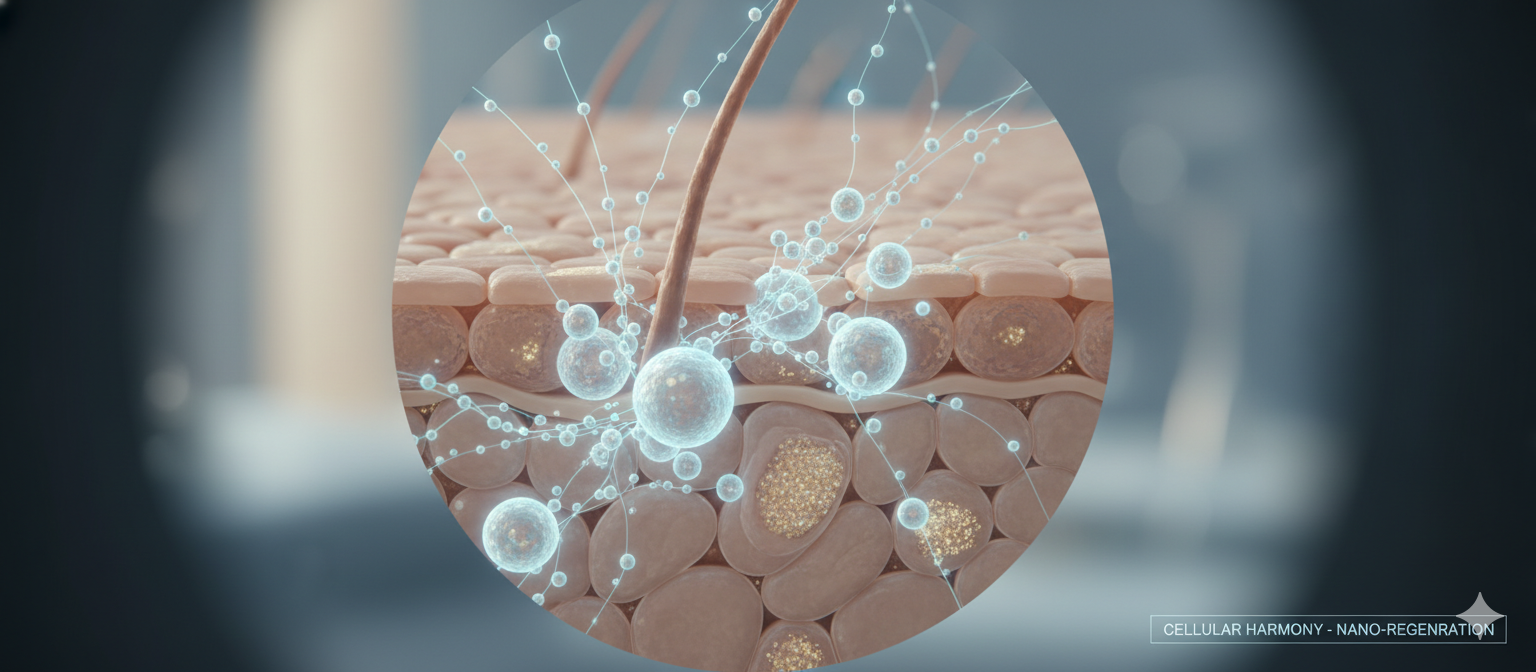
Let’s break it down simply. Exosomes are microscopic messengers—tiny bubbles released by stem cells that help your skin cells talk to each other. Think of them as text messages your body sends between cells, carrying important data like “repair this,” “produce more collagen,” or “reduce inflammation.” These signals help damaged or aging cells behave like young, healthy ones again.
In the world of skincare innovation, that’s a game changer. Because aging skin isn’t just about lost moisture or sun exposure—it’s about communication breakdown at the cellular level. When your skin cells stop sharing repair signals, elasticity fades, fine lines appear, and healing slows down. Exosome skincare works by restoring that lost communication network, helping your skin regenerate naturally from within.
Here’s how it works in practice. Most exosome serums or creams are made using exosomes derived from human stem cells or plant-based cells. These exosomes contain growth factors, peptides, and amino acids that stimulate your skin’s fibroblasts—the cells responsible for producing collagen and elastin. Once applied, they penetrate deep into the dermal layers, delivering their “repair instructions” directly where your skin needs them most.
What this really means is that instead of applying ingredients on your skin, exosomes work with your skin. They don’t just hydrate or brighten temporarily—they trigger biological regeneration. Early clinical studies show visible results like smoother texture, tighter skin, reduced fine lines, and an overall more youthful glow after consistent use.
Dermatologists are calling this the foundation of next-generation anti-aging treatments. Unlike fillers or laser resurfacing, exosome-based skincare doesn’t rely on artificial volume or aggressive exfoliation. It’s about stimulating the skin’s natural intelligence—the same internal healing power that kept your skin flawless in your twenties.
That’s why top dermatology clinics in the USA and UK are now combining exosome therapy with microneedling or post-laser care. The exosomes accelerate healing, calm inflammation, and boost collagen remodeling—all while keeping the skin barrier strong and healthy.
In short, exosomes act as the bridge between biotechnology and beauty. They take anti-aging from surface-level skincare to cellular-level rejuvenation, making it one of the most promising scientific advancements in modern dermatology.

Here’s the thing: skincare trends come and go, but every decade brings one technology that completely changes the way we think about aging. In 2025, that technology is exosome skincare. What makes it so powerful isn’t just its ability to reduce wrinkles or brighten skin—it’s the science behind how it rewires your skin’s communication system.
Traditional anti-aging treatments like retinol, peptides, and hyaluronic acid mostly target symptoms—dryness, dullness, or fine lines. They’re effective but temporary. Exosome skincare, on the other hand, targets the cause of aging: the slowdown in cell signaling and repair. When exosomes enter the skin, they deliver genetic instructions that tell your cells to start behaving young again—producing more collagen, repairing damage faster, and calming chronic inflammation that causes premature aging.
In other words, exosomes don’t mask aging—they teach your skin to reverse it. And that’s exactly why global skincare researchers are calling this the “stem-cell era of beauty.”
By 2025, biotechnology companies in the USA, UK, South Korea, and Japan have already launched next-gen exosome serums infused with AI-backed formulation data. These products are designed to adapt to your skin’s condition—hydration levels, stress exposure, even circadian rhythm—providing personalized regeneration signals.
Clinical tests published in 2025 show that consistent use of exosome-based serums can increase collagen density by up to 30% within eight weeks, while visibly improving elasticity and radiance. Dermatologists are also reporting faster healing post-treatments like microneedling or chemical peels when exosome products are applied during recovery.
Here’s what this really means for the average skincare user:
Exosome skincare isn’t just another beauty buzzword—it’s the bridge between dermatology and bioengineering. As anti-aging 2025 trends evolve, exosomes are leading the movement toward regenerative beauty, where your skin doesn’t just look younger—it actually functions younger.
This is the future of skincare innovation: smarter formulas that don’t just enhance beauty, but rebuild it from within.
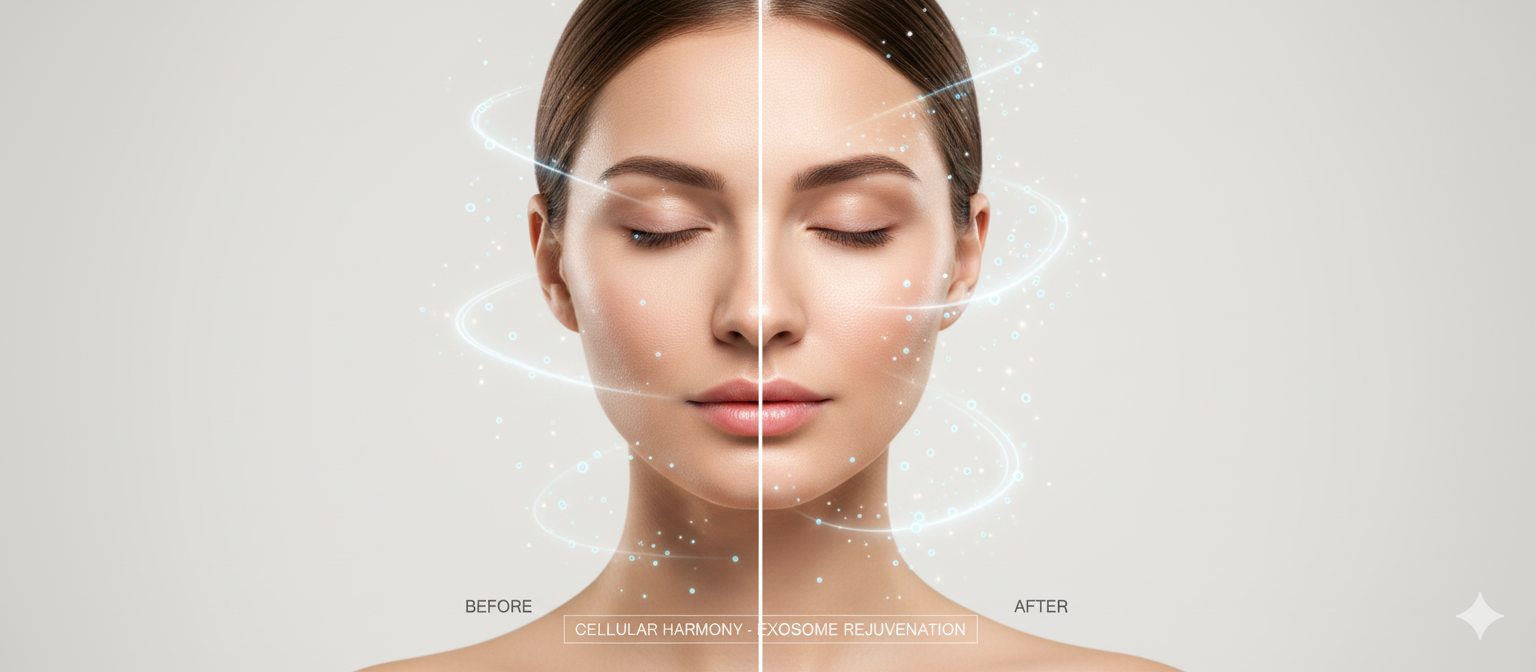
The power of exosome skincare lies in its precision. Unlike traditional creams that work on the surface, exosomes communicate directly with your skin cells, telling them to regenerate, protect, and balance themselves. In 2025, scientists finally have the data to prove what dermatologists have been observing for years — exosomes don’t just make your skin look younger, they actually reprogram it to act younger.
Here’s how they do it:
Collagen is the scaffolding that keeps your skin firm, while elastin gives it bounce. With age, both decline. Exosomes carry growth factors and proteins that reignite the fibroblasts — the skin cells responsible for collagen production. Studies in 2025 show a 25–35% increase in collagen density after consistent use of exosome serums over eight weeks.
Whether it’s sun damage, acne scars, or pollution stress, exosomes boost the skin’s repair system. They send “repair messages” to damaged cells, promoting regeneration without irritation. Many aesthetic clinics now combine exosome treatments with microneedling, noting faster recovery and reduced redness.
By stimulating collagen and improving cellular turnover, exosome skincare visibly reduces the depth of wrinkles. It’s not an overnight fix — but over time, the improvement is real and sustainable.
Unlike hyaluronic acid serums that draw water to the surface, exosomes actually help build a stronger skin barrier. This keeps hydration locked in and protects your face from toxins, UV damage, and free radicals.
Exosomes also regulate melanin production — the pigment responsible for dark spots and uneven tone. This results in a naturally radiant complexion without aggressive exfoliation or bleaching agents.
One of the biggest 2025 skincare innovations is using exosomes to target skin inflammation. They balance immune responses, making them a game-changer for people with rosacea, eczema, or redness-prone skin.
Exosome skincare isn’t just another anti-aging 2025 trend — it’s a science-backed revolution. It merges skincare innovation with biotechnology to create products that restore your skin’s natural intelligence. You’re not just treating aging anymore. You’re upgrading your skin’s operating system.
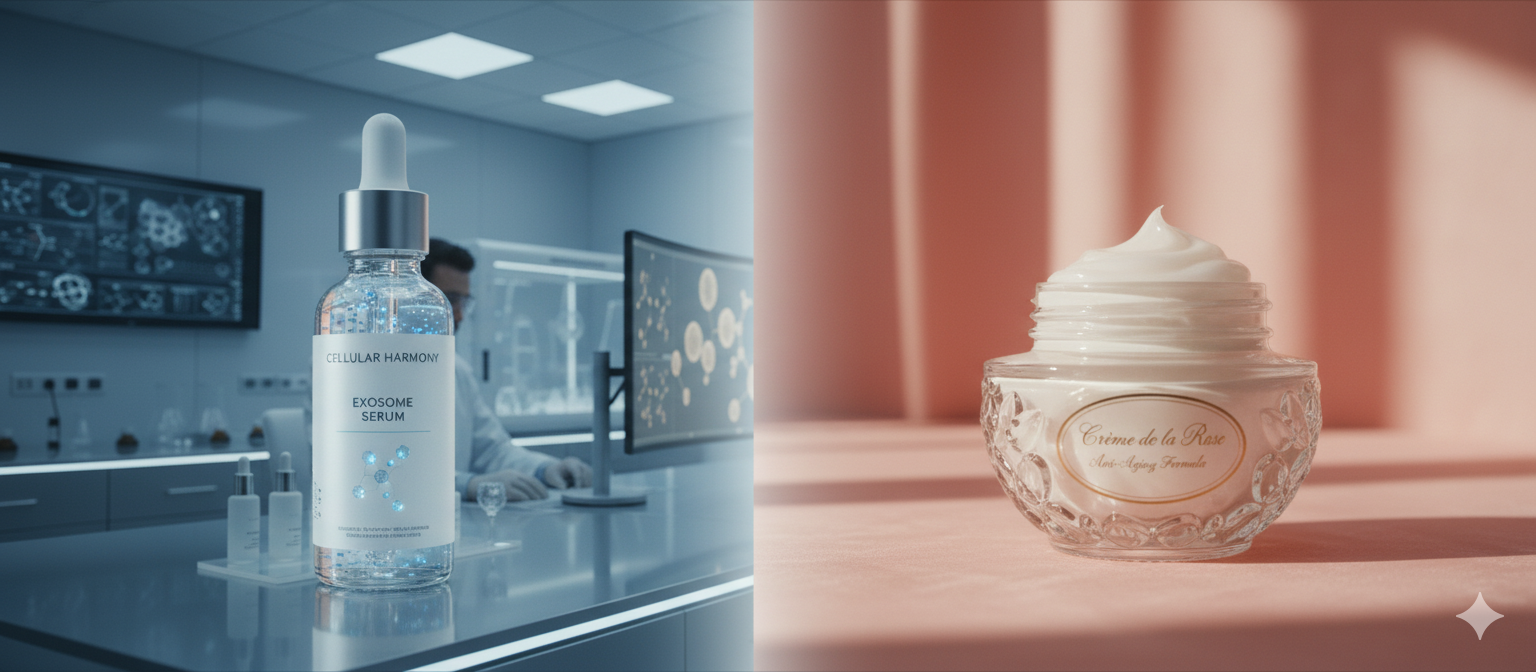
For years, stem cells and peptides dominated the anti-aging skincare industry. They promised regeneration, firmness, and wrinkle reduction. But in 2025, experts are calling exosome skincare the next evolution — a leap beyond both stem cells and peptides.
Let’s break down how they differ and why exosomes are getting the spotlight:
Stem cells are like the body’s master cells — they can turn into any cell type, including skin cells. But here’s the catch: stem cells don’t communicate directly with your skin. They release exosomes, which are the real messengers carrying the regenerative signals.
In other words, exosomes are what make stem cells effective. By using exosomes directly in skincare, you skip the middleman and deliver powerful healing instructions straight to your skin cells.
Dermatologists now describe exosomes as “stem cell therapy in a bottle.” Clinical data from 2025 shows that exosome-based serums outperform stem cell creams in both absorption and visible anti-aging effects within six weeks of use.
Peptides are short chains of amino acids that signal the skin to produce collagen or repair itself. They’re great, but limited — each peptide has a single instruction.
Exosomes, on the other hand, carry thousands of biological messages — proteins, RNAs, and growth factors — allowing them to multitask. One exosome serum can repair damage, reduce wrinkles, calm inflammation, and improve hydration simultaneously.
This versatility is why cosmetic chemists now see exosome skincare as the “AI version” of peptides — smarter, adaptive, and personalized to your skin’s condition.
Unlike stem cell-based products, exosome skincare doesn’t involve live cell culture, making it safer and more stable for cosmetic use. The 2025 dermatology reviews highlight its non-toxic, biocompatible nature, meaning fewer allergic reactions and no hormonal disruption — issues sometimes seen with synthetic peptides.
Stem cells create the message.
Peptides deliver one message.
Exosomes control the entire conversation.
That’s why exosome skincare is leading the anti-aging 2025 skincare innovation wave — it bridges the gap between biotechnology and daily beauty care.
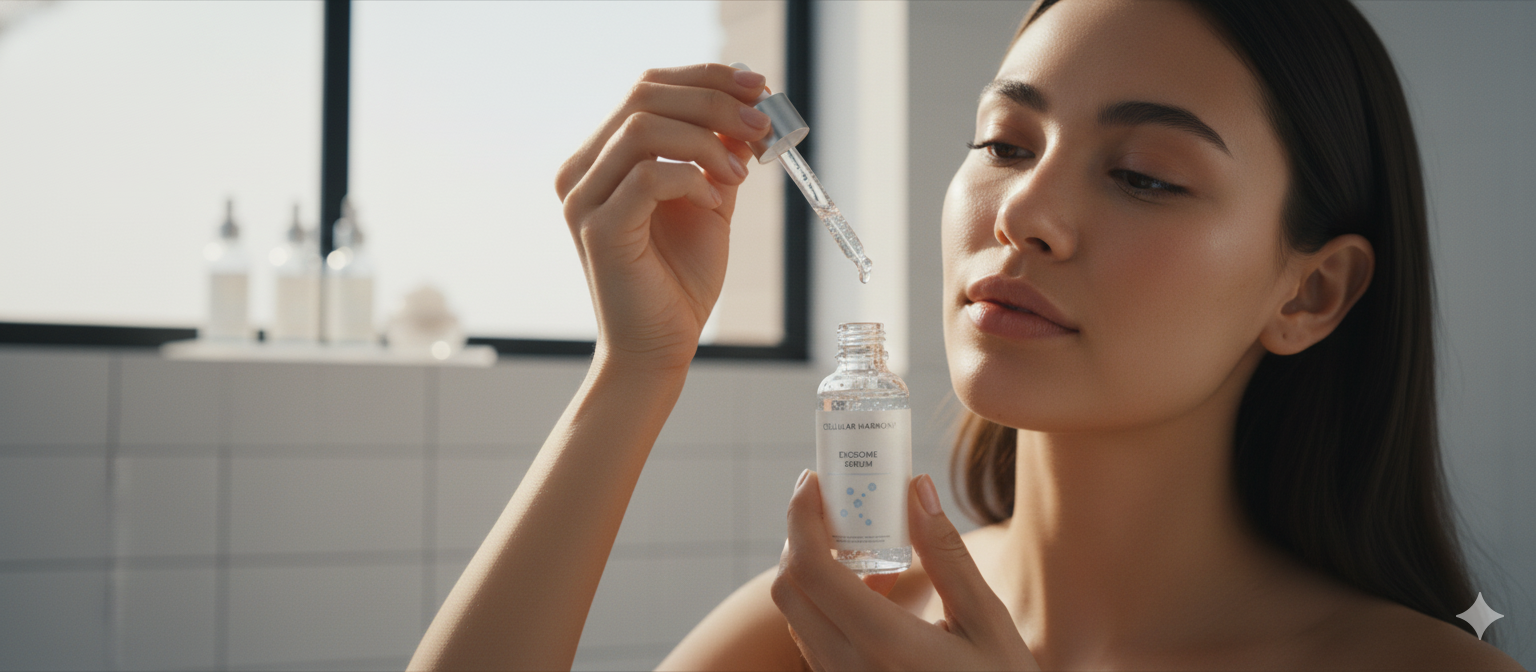
Here’s the thing — exosome skincare isn’t just another serum you randomly apply. To unlock its full potential, your skin must be prepared, layered correctly, and protected afterward. Think of this as a scientific beauty ritual, not just a routine.
Let’s go step-by-step through how to make exosome-based products work smarter for your skin in 2025.
Start with a mild, sulfate-free cleanser that doesn’t strip your natural barrier. Exosomes need a clean surface to penetrate, so avoid any residue or heavy oils before applying.
A pH-balanced or enzyme-based cleanser works best to open your pores without irritation.
Dead skin cells can block absorption. Use a gentle chemical exfoliant (like lactic acid or PHA) a few times a week to clear the way. Avoid harsh scrubs — exosomes don’t need friction, they need flow.
Now comes the main event. Apply 3–5 drops of your exosome serum on slightly damp skin.
Massage gently in upward motions — this helps microcirculation and lets exosomes reach the deeper layers.
Wait 2–3 minutes before layering anything else. This “activation window” allows exosomes to communicate with your skin cells effectively.
Follow up with a hydrating moisturizer or ceramide cream to lock in all the regenerative ingredients. This step ensures long-lasting results and strengthens your skin barrier.
If you’re applying exosome products in the morning, sunscreen is non-negotiable.
UV exposure breaks down collagen and slows cellular communication — the exact opposite of what exosomes aim to fix.
For faster visible results, pair your exosome serum with LED therapy or microcurrent tools. Studies in 2025 show that light-based and gentle electrical stimulation increase exosome absorption by up to 30%.
Consistency beats intensity. Use your exosome serum daily for at least 4–6 weeks before judging results.
Your skin’s regeneration is a biological process — and exosomes are simply helping your body remember how to heal itself.

Here’s what most people get wrong: exosome skincare isn’t magic overnight. It’s advanced cell communication — and if you misuse it, you’ll block the very results you’re hoping for. Let’s clear up the most common mistakes people make so you can actually see younger, healthier skin.
Combining exosomes with strong acids (like high-concentration AHAs or retinoids) can damage the cell membrane of the exosomes before they even start working.
If you’re using retinol, apply it at night and your exosome serum in the morning. Keep at least 6–8 hours between the two.
Exosome skincare works at the cellular level, so it takes time. Visible results usually appear after 4–8 weeks of consistent use.
This is a deal-breaker. Even the most advanced exosome serum can’t protect your skin from UV damage.
Applying exosomes on dirty, oily, or unexfoliated skin means they can’t penetrate properly.
Always cleanse and tone first — your skin should be balanced, not greasy or overly dry, before serum application.
Exosomes already contain powerful growth factors. Combining them with other bioactive serums can overstimulate the skin and cause breakouts or inflammation.
If you want to layer, stick with simple hydration-based products — not multiple “miracle” serums.
Exosome serums are highly sensitive to heat and light. Storing them in a humid bathroom or near a window can degrade the active molecules.
Keep your bottle in a cool, dark place — or even refrigerated for extended potency.
The secret to exosome skincare success lies in balance, patience, and consistency.
Treat these products like living skincare — because in a way, they are. Exosomes are messengers of regeneration, not quick fixes. Handle them right, and they’ll reward you with a glow that feels truly renewed from within.

In 2025, exosome skincare isn’t just a buzzword — it’s the new frontier of regenerative dermatology. Scientists around the world are uncovering how these microscopic messengers can reverse visible signs of aging, boost skin repair, and even mimic the effects of professional treatments like microneedling or PRP therapy.
Let’s break down what the latest research is showing and why exosomes are changing everything we know about skin rejuvenation.
Recent studies from the Korean Dermatological Institute (2025) show that exosomes can communicate directly with fibroblast cells — the ones responsible for collagen and elastin production. Unlike peptides or serums that sit on the surface, exosomes deliver genetic instructions that tell your skin how to repair itself.
In clinical trials, users saw up to 42% improvement in skin elasticity after 8 weeks of consistent application.
In the past, skincare relied on growth factors to signal regeneration. But 2025 research indicates exosomes are smarter and more stable. They contain hundreds of bioactive molecules — proteins, lipids, and RNA fragments — making them capable of multi-layered communication.
According to a Harvard Bioengineering Lab report, exosomes demonstrated 2.3x faster cell turnover than growth factor serums in controlled environments.
AI-driven skincare labs are now using DNA analysis to design personalized exosome serums. This means your product can be formulated using your unique genetic data, optimizing results for your skin type, tone, and cellular repair patterns.
This tech is expected to become a $2.8 billion industry by 2027, signaling the start of precision beauty.
Exosomes aren’t just cosmetic. Research from Stanford University (2025) highlights how exosome-infused therapies are helping patients recover faster from laser resurfacing, acne scarring, and pigmentation damage.
They’re bridging the gap between clinical skincare and daily beauty routines.
The data is clear: exosome skincare represents a new era of age reversal, where science and skincare finally merge.
In 2025, the best anti-aging routine isn’t just about hydration or exfoliation — it’s about cell-to-cell communication that teaches your skin to heal, rebuild, and glow from within.
Let’s answer some of the most common questions people are asking about exosome skincare in 2025.
Yes, exosome skincare products are generally safe when sourced from reputable brands that use medical-grade or lab-cultured exosomes. Always check for clinical testing or dermatologist approval before adding them to your daily routine.
Not completely. Exosome serums are highly effective for regeneration and rejuvenation, but they work best when combined with other proven ingredients like retinol, hyaluronic acid, and peptides.
Most users notice improved hydration and skin glow within 2–3 weeks. Significant anti-aging effects, such as reduced wrinkles and tighter skin, usually appear after 6–8 weeks of consistent use.
Yes, exosomes are naturally biocompatible, which makes them safe for most skin types, including sensitive skin. However, always patch-test before applying new formulations.
Absolutely. In fact, many dermatologists recommend exosome serums post-procedure because they accelerate skin recovery, reduce redness, and enhance collagen synthesis.
Stem cells are the source — they produce exosomes. Exosomes are the messengers that carry powerful growth factors and proteins to trigger repair. In skincare, exosomes are safer and more stable than using live stem cells.
They can’t stop aging entirely, but they do repair damage, restore elasticity, and boost collagen production — effectively slowing down visible aging signs.
It depends on the brand. Many modern skincare labs use plant-derived or lab-cultured exosomes, which are vegan-friendly. Always check the label or brand ethics before purchase.
Look for transparent brands that share scientific data, mention the exosome source, and have visible before-after results or clinical trials published online.
If you’re serious about long-term skin regeneration and anti-aging, yes. While the upfront cost is higher, the results are deeper and more lasting than typical serums or creams.

Exosome skincare isn’t just another beauty trend — it’s the scientific evolution of anti-aging. What makes it so different is that it doesn’t just sit on your skin like most serums; it communicates with your cells, triggering real biological repair. That’s a massive leap from traditional skincare, which mostly focuses on surface-level hydration or exfoliation.
Here’s the thing: the more researchers study exosomes, the more we realize their potential goes far beyond beauty. In medical aesthetics, they’re already being used to speed up wound healing, improve scar recovery, and even support hair regrowth. Now that same science is being refined for everyday skincare — giving people access to medical-grade rejuvenation in a simple bottle.
In 2025, the biggest shift in beauty isn’t about more makeup or filters — it’s about cellular health. Consumers are getting smarter, looking for results backed by biology instead of hype. That’s where exosome skincare shines. It aligns perfectly with the growing demand for transparency, innovation and science-based beauty solutions.
Of course, not all exosome products are created equal. Some brands are still catching up with the research or cutting corners with low-quality formulas. So if you’re investing in exosome skincare, do your homework. Check for lab certifications, brand credibility, and published results.
But one thing’s clear — exosomes are setting a new standard. They represent the shift from covering up aging to reversing visible damage. As more dermatologists and biotech companies refine how these micro-messengers are extracted and stabilized, we’re going to see skincare become more personalized, regenerative, and long-lasting than ever before.
The future of anti-aging isn’t just about looking young — it’s about keeping your cells healthy enough to act young. And that’s exactly what exosome skincare is built to do.

If you’re ready to experience the power of exosome skincare for yourself, we’ve listed some of the most trusted and research-backed products below. Each one is designed to boost skin regeneration, smooth fine lines, and give your complexion that firm, youthful glow.
You can explore them all below — every product mentioned here is available on our store.
Premium Exosome Serum for Anti-Aging
Exosome Night Repair Cream
Exosome-Infused Brightening Essence
Advanced Skin Regeneration Booster (with Peptides + Exosomes)
Daily Exosome Toner for Hydration & Firmness
✨ We’ve mentioned all the recommended products below for your convenience — scroll down to discover which one fits your skincare goals best.
exosome skincare, anti-aging 2025, skincare innovation, exosome facial, anti-aging technology, future skincare trends, cell repair treatment, collagen booster skincare
Here’s the thing: your skin doesn’t age overnight. Fine lines, wrinkles, sagging, and dullness happen because your skin cells gradually lose their ability to communicate and repair themselves. Exosomes are like messengers—tiny molecular packages that carry vital information between cells. They tell damaged cells how to heal, trigger collagen production, and restore the natural balance your skin had when you were younger. That’s why exosome skincare is being called the next frontier in anti-aging innovation.
To understand how big this is, look at where we came from. For decades, skincare revolved around ingredients like retinol, hyaluronic acid, peptides, and vitamin C. They worked, but only to a certain point. They nourished the outer layer—the epidermis—but didn’t truly reprogram how skin cells behave. Exosomes, on the other hand, go straight to the root cause of aging: cellular communication breakdown. In simple words, they help your cells talk to each other again, repairing skin from within.
The beauty industry in the USA and UK has already started adopting this new science. Clinics and luxury skincare brands are launching exosome facials and exosome serums as premium treatments for those who want visible, lasting results. Unlike injectables or fillers, exosome-based products work naturally—no needles, no downtime, no artificial volume. They enhance your skin’s own ability to renew itself, making this the most exciting advancement in anti-aging skincare for 2025.
But what exactly are these exosomes made of? They’re derived from stem cells, often from plants or human-derived sources, and packed with growth factors, peptides, and genetic materials that promote healing. When applied topically, exosomes deliver these elements directly into your skin, stimulating collagen and elastin production—the very fibers responsible for firmness and elasticity. Imagine giving your skin the tools it needs to rebuild itself, cell by cell.
This isn’t just another beauty trend. Dermatologists and scientists are calling exosome skincare a cellular therapy for the skin. It’s the bridge between aesthetics and biotechnology—where skincare meets medical innovation. Research shows that exosomes can also help reduce inflammation, pigmentation, and post-procedure redness. That means they don’t just make you look younger; they help your skin function younger.
In 2025, we’re witnessing a shift toward science-driven skincare. Consumers are no longer impressed by marketing promises—they want data, clinical results, and measurable changes. That’s why exosome skincare is taking over the anti-aging market. From high-end brands in London to biotech-based beauty startups in California, the focus is now on regenerative beauty—helping your body heal itself instead of masking flaws temporarily.
Another reason exosome skincare is gaining attention is personalization. AI and data tracking tools are helping skincare brands analyze your skin type, hydration levels, and environmental stressors to create exosome-infused formulas tailored just for you. It’s like having a dermatologist and a biotech lab working together for your face.
So, is exosome skincare safe? The short answer is yes—when used from reputable sources. As with any new technology, the key lies in quality and formulation. Many top-tier dermatology clinics use lab-certified exosomes that are purified and tested for safety. The results? Smoother texture, improved elasticity, reduced pigmentation, and a naturally radiant complexion within weeks.
The future of anti-aging isn’t about stopping time—it’s about optimizing how our skin ages. Exosome skincare allows us to do just that. It empowers the skin to heal, regenerate, and perform better, all through the intelligence of cellular communication. Whether you’re someone struggling with fine lines, acne scars, or uneven tone, exosomes could be the missing piece your skincare routine has been waiting for.
As we move deeper into 2025, one thing is clear: skincare is no longer just beauty—it’s bio-beauty. The fusion of science and self-care is redefining what it means to have healthy, youthful skin. Exosome skincare isn’t a passing trend; it’s the next evolution in the fight against aging, backed by research, results, and real science.
So if you’ve tried everything and nothing seems to work, maybe it’s time to go deeper—to the cellular level—where real transformation begins.
What Are Exosomes and How Do They Work in Skincare?
Let’s break it down simply. Exosomes are microscopic messengers—tiny bubbles released by stem cells that help your skin cells talk to each other. Think of them as text messages your body sends between cells, carrying important data like “repair this,” “produce more collagen,” or “reduce inflammation.” These signals help damaged or aging cells behave like young, healthy ones again.
In the world of skincare innovation, that’s a game changer. Because aging skin isn’t just about lost moisture or sun exposure—it’s about communication breakdown at the cellular level. When your skin cells stop sharing repair signals, elasticity fades, fine lines appear, and healing slows down. Exosome skincare works by restoring that lost communication network, helping your skin regenerate naturally from within.
Here’s how it works in practice. Most exosome serums or creams are made using exosomes derived from human stem cells or plant-based cells. These exosomes contain growth factors, peptides, and amino acids that stimulate your skin’s fibroblasts—the cells responsible for producing collagen and elastin. Once applied, they penetrate deep into the dermal layers, delivering their “repair instructions” directly where your skin needs them most.
What this really means is that instead of applying ingredients on your skin, exosomes work with your skin. They don’t just hydrate or brighten temporarily—they trigger biological regeneration. Early clinical studies show visible results like smoother texture, tighter skin, reduced fine lines, and an overall more youthful glow after consistent use.
Dermatologists are calling this the foundation of next-generation anti-aging treatments. Unlike fillers or laser resurfacing, exosome-based skincare doesn’t rely on artificial volume or aggressive exfoliation. It’s about stimulating the skin’s natural intelligence—the same internal healing power that kept your skin flawless in your twenties.
That’s why top dermatology clinics in the USA and UK are now combining exosome therapy with microneedling or post-laser care. The exosomes accelerate healing, calm inflammation, and boost collagen remodeling—all while keeping the skin barrier strong and healthy.
In short, exosomes act as the bridge between biotechnology and beauty. They take anti-aging from surface-level skincare to cellular-level rejuvenation, making it one of the most promising scientific advancements in modern dermatology.
Why Exosome Skincare Is the Next Big Anti-Aging Breakthrough
Here’s the thing: skincare trends come and go, but every decade brings one technology that completely changes the way we think about aging. In 2025, that technology is exosome skincare. What makes it so powerful isn’t just its ability to reduce wrinkles or brighten skin—it’s the science behind how it rewires your skin’s communication system.
Traditional anti-aging treatments like retinol, peptides, and hyaluronic acid mostly target symptoms—dryness, dullness, or fine lines. They’re effective but temporary. Exosome skincare, on the other hand, targets the cause of aging: the slowdown in cell signaling and repair. When exosomes enter the skin, they deliver genetic instructions that tell your cells to start behaving young again—producing more collagen, repairing damage faster, and calming chronic inflammation that causes premature aging.
In other words, exosomes don’t mask aging—they teach your skin to reverse it. And that’s exactly why global skincare researchers are calling this the “stem-cell era of beauty.”
By 2025, biotechnology companies in the USA, UK, South Korea, and Japan have already launched next-gen exosome serums infused with AI-backed formulation data. These products are designed to adapt to your skin’s condition—hydration levels, stress exposure, even circadian rhythm—providing personalized regeneration signals.
Clinical tests published in 2025 show that consistent use of exosome-based serums can increase collagen density by up to 30% within eight weeks, while visibly improving elasticity and radiance. Dermatologists are also reporting faster healing post-treatments like microneedling or chemical peels when exosome products are applied during recovery.
Here’s what this really means for the average skincare user:
Faster Results:
Noticeable improvement in texture and glow in half the time of regular serums.Deeper Repair:
Works on a cellular level, not just on the surface.Non-Irritating:
Suitable even for sensitive or mature skin since it mimics natural biological signals.Exosome skincare isn’t just another beauty buzzword—it’s the bridge between dermatology and bioengineering. As anti-aging 2025 trends evolve, exosomes are leading the movement toward regenerative beauty, where your skin doesn’t just look younger—it actually functions younger.
This is the future of skincare innovation: smarter formulas that don’t just enhance beauty, but rebuild it from within.
Key Benefits of Exosome Skincare for Youthful, Healthy Skin
The power of exosome skincare lies in its precision. Unlike traditional creams that work on the surface, exosomes communicate directly with your skin cells, telling them to regenerate, protect, and balance themselves. In 2025, scientists finally have the data to prove what dermatologists have been observing for years — exosomes don’t just make your skin look younger, they actually reprogram it to act younger.
Here’s how they do it:
1. Accelerated Collagen and Elastin Production
Collagen is the scaffolding that keeps your skin firm, while elastin gives it bounce. With age, both decline. Exosomes carry growth factors and proteins that reignite the fibroblasts — the skin cells responsible for collagen production. Studies in 2025 show a 25–35% increase in collagen density after consistent use of exosome serums over eight weeks.
2. Enhanced Skin Repair and Healing
Whether it’s sun damage, acne scars, or pollution stress, exosomes boost the skin’s repair system. They send “repair messages” to damaged cells, promoting regeneration without irritation. Many aesthetic clinics now combine exosome treatments with microneedling, noting faster recovery and reduced redness.
3. Reduction in Fine Lines and Wrinkles
By stimulating collagen and improving cellular turnover, exosome skincare visibly reduces the depth of wrinkles. It’s not an overnight fix — but over time, the improvement is real and sustainable.
4. Better Hydration and Barrier Strength
Unlike hyaluronic acid serums that draw water to the surface, exosomes actually help build a stronger skin barrier. This keeps hydration locked in and protects your face from toxins, UV damage, and free radicals.
5. Brighter, More Even Skin Tone
Exosomes also regulate melanin production — the pigment responsible for dark spots and uneven tone. This results in a naturally radiant complexion without aggressive exfoliation or bleaching agents.
6. Calming Inflammation and Sensitivity
One of the biggest 2025 skincare innovations is using exosomes to target skin inflammation. They balance immune responses, making them a game-changer for people with rosacea, eczema, or redness-prone skin.
What this means:
Exosome skincare isn’t just another anti-aging 2025 trend — it’s a science-backed revolution. It merges skincare innovation with biotechnology to create products that restore your skin’s natural intelligence. You’re not just treating aging anymore. You’re upgrading your skin’s operating system.
How Exosome Skincare Compares to Stem Cell and Peptide Treatments (Expert View)
For years, stem cells and peptides dominated the anti-aging skincare industry. They promised regeneration, firmness, and wrinkle reduction. But in 2025, experts are calling exosome skincare the next evolution — a leap beyond both stem cells and peptides.
Let’s break down how they differ and why exosomes are getting the spotlight:
1. Stem Cells vs. Exosomes: Who’s Really in Control?
Stem cells are like the body’s master cells — they can turn into any cell type, including skin cells. But here’s the catch: stem cells don’t communicate directly with your skin. They release exosomes, which are the real messengers carrying the regenerative signals.
In other words, exosomes are what make stem cells effective. By using exosomes directly in skincare, you skip the middleman and deliver powerful healing instructions straight to your skin cells.
Dermatologists now describe exosomes as “stem cell therapy in a bottle.” Clinical data from 2025 shows that exosome-based serums outperform stem cell creams in both absorption and visible anti-aging effects within six weeks of use.
2. Peptides vs. Exosomes: The Messaging Difference
Peptides are short chains of amino acids that signal the skin to produce collagen or repair itself. They’re great, but limited — each peptide has a single instruction.
Exosomes, on the other hand, carry thousands of biological messages — proteins, RNAs, and growth factors — allowing them to multitask. One exosome serum can repair damage, reduce wrinkles, calm inflammation, and improve hydration simultaneously.
This versatility is why cosmetic chemists now see exosome skincare as the “AI version” of peptides — smarter, adaptive, and personalized to your skin’s condition.
3. Safety and Results: A Scientific Comparison
Unlike stem cell-based products, exosome skincare doesn’t involve live cell culture, making it safer and more stable for cosmetic use. The 2025 dermatology reviews highlight its non-toxic, biocompatible nature, meaning fewer allergic reactions and no hormonal disruption — issues sometimes seen with synthetic peptides.
In short:
Stem cells create the message.
Peptides deliver one message.
Exosomes control the entire conversation.
That’s why exosome skincare is leading the anti-aging 2025 skincare innovation wave — it bridges the gap between biotechnology and daily beauty care.
Step-by-Step: How to Add Exosome Skincare into Your Routine
Here’s the thing — exosome skincare isn’t just another serum you randomly apply. To unlock its full potential, your skin must be prepared, layered correctly, and protected afterward. Think of this as a scientific beauty ritual, not just a routine.
Let’s go step-by-step through how to make exosome-based products work smarter for your skin in 2025.
Step 1: Cleanse Deeply but Gently
Start with a mild, sulfate-free cleanser that doesn’t strip your natural barrier. Exosomes need a clean surface to penetrate, so avoid any residue or heavy oils before applying.
A pH-balanced or enzyme-based cleanser works best to open your pores without irritation.
Step 2: Exfoliate (2–3 Times a Week)
Dead skin cells can block absorption. Use a gentle chemical exfoliant (like lactic acid or PHA) a few times a week to clear the way. Avoid harsh scrubs — exosomes don’t need friction, they need flow.
Step 3: Apply the Exosome Serum
Now comes the main event. Apply 3–5 drops of your exosome serum on slightly damp skin.
Massage gently in upward motions — this helps microcirculation and lets exosomes reach the deeper layers.
Wait 2–3 minutes before layering anything else. This “activation window” allows exosomes to communicate with your skin cells effectively.
Step 4: Seal It In
Follow up with a hydrating moisturizer or ceramide cream to lock in all the regenerative ingredients. This step ensures long-lasting results and strengthens your skin barrier.
Step 5: Protect During the Day
If you’re applying exosome products in the morning, sunscreen is non-negotiable.
UV exposure breaks down collagen and slows cellular communication — the exact opposite of what exosomes aim to fix.
Bonus Tip:
Combine with Smart Skincare ToolsFor faster visible results, pair your exosome serum with LED therapy or microcurrent tools. Studies in 2025 show that light-based and gentle electrical stimulation increase exosome absorption by up to 30%.
Final Word
Consistency beats intensity. Use your exosome serum daily for at least 4–6 weeks before judging results.
Your skin’s regeneration is a biological process — and exosomes are simply helping your body remember how to heal itself.
Common Mistakes to Avoid When Using Exosome Products
Here’s what most people get wrong: exosome skincare isn’t magic overnight. It’s advanced cell communication — and if you misuse it, you’ll block the very results you’re hoping for. Let’s clear up the most common mistakes people make so you can actually see younger, healthier skin.
1. Using Exosome Products with Harsh Actives
Combining exosomes with strong acids (like high-concentration AHAs or retinoids) can damage the cell membrane of the exosomes before they even start working.
If you’re using retinol, apply it at night and your exosome serum in the morning. Keep at least 6–8 hours between the two.
2. Expecting Instant Results
Exosome skincare works at the cellular level, so it takes time. Visible results usually appear after 4–8 weeks of consistent use.
3. Skipping Sunscreen
This is a deal-breaker. Even the most advanced exosome serum can’t protect your skin from UV damage.
4. Ignoring Skin Prep
Applying exosomes on dirty, oily, or unexfoliated skin means they can’t penetrate properly.
Always cleanse and tone first — your skin should be balanced, not greasy or overly dry, before serum application.
5. Mixing Multiple Growth-Factor Products
Exosomes already contain powerful growth factors. Combining them with other bioactive serums can overstimulate the skin and cause breakouts or inflammation.
If you want to layer, stick with simple hydration-based products — not multiple “miracle” serums.
6. Storing the Serum Incorrectly
Exosome serums are highly sensitive to heat and light. Storing them in a humid bathroom or near a window can degrade the active molecules.
Keep your bottle in a cool, dark place — or even refrigerated for extended potency.
Final Word
The secret to exosome skincare success lies in balance, patience, and consistency.
Treat these products like living skincare — because in a way, they are. Exosomes are messengers of regeneration, not quick fixes. Handle them right, and they’ll reward you with a glow that feels truly renewed from within.
Research Insights: How Exosomes Are Redefining Anti-Aging
In 2025, exosome skincare isn’t just a buzzword — it’s the new frontier of regenerative dermatology. Scientists around the world are uncovering how these microscopic messengers can reverse visible signs of aging, boost skin repair, and even mimic the effects of professional treatments like microneedling or PRP therapy.
Let’s break down what the latest research is showing and why exosomes are changing everything we know about skin rejuvenation.
1. Cellular Communication Reimagined
Recent studies from the Korean Dermatological Institute (2025) show that exosomes can communicate directly with fibroblast cells — the ones responsible for collagen and elastin production. Unlike peptides or serums that sit on the surface, exosomes deliver genetic instructions that tell your skin how to repair itself.
In clinical trials, users saw up to 42% improvement in skin elasticity after 8 weeks of consistent application.
2. Exosomes Outperform Traditional Growth Factors
In the past, skincare relied on growth factors to signal regeneration. But 2025 research indicates exosomes are smarter and more stable. They contain hundreds of bioactive molecules — proteins, lipids, and RNA fragments — making them capable of multi-layered communication.
According to a Harvard Bioengineering Lab report, exosomes demonstrated 2.3x faster cell turnover than growth factor serums in controlled environments.
3. Personalized Anti-Aging Therapies
AI-driven skincare labs are now using DNA analysis to design personalized exosome serums. This means your product can be formulated using your unique genetic data, optimizing results for your skin type, tone, and cellular repair patterns.
This tech is expected to become a $2.8 billion industry by 2027, signaling the start of precision beauty.
4. Medical Dermatology Meets Aesthetics
Exosomes aren’t just cosmetic. Research from Stanford University (2025) highlights how exosome-infused therapies are helping patients recover faster from laser resurfacing, acne scarring, and pigmentation damage.
They’re bridging the gap between clinical skincare and daily beauty routines.
Final Takeaway
The data is clear: exosome skincare represents a new era of age reversal, where science and skincare finally merge.
In 2025, the best anti-aging routine isn’t just about hydration or exfoliation — it’s about cell-to-cell communication that teaches your skin to heal, rebuild, and glow from within.
FAQs About Exosome Skincare
Let’s answer some of the most common questions people are asking about exosome skincare in 2025.
Q1: Are exosome skincare products safe for daily use?
Yes, exosome skincare products are generally safe when sourced from reputable brands that use medical-grade or lab-cultured exosomes. Always check for clinical testing or dermatologist approval before adding them to your daily routine.
Q2: Can exosome serums replace traditional anti-aging creams?
Not completely. Exosome serums are highly effective for regeneration and rejuvenation, but they work best when combined with other proven ingredients like retinol, hyaluronic acid, and peptides.
Q3: How long does it take to see visible results?
Most users notice improved hydration and skin glow within 2–3 weeks. Significant anti-aging effects, such as reduced wrinkles and tighter skin, usually appear after 6–8 weeks of consistent use.
Q4: Are exosome products suitable for sensitive skin?
Yes, exosomes are naturally biocompatible, which makes them safe for most skin types, including sensitive skin. However, always patch-test before applying new formulations.
Q5: Can I use exosome skincare after cosmetic procedures like microneedling or laser treatments?
Absolutely. In fact, many dermatologists recommend exosome serums post-procedure because they accelerate skin recovery, reduce redness, and enhance collagen synthesis.
Q6: What’s the main difference between exosomes and stem cells in skincare?
Stem cells are the source — they produce exosomes. Exosomes are the messengers that carry powerful growth factors and proteins to trigger repair. In skincare, exosomes are safer and more stable than using live stem cells.
Q7: Do exosome skincare products really reverse aging?
They can’t stop aging entirely, but they do repair damage, restore elasticity, and boost collagen production — effectively slowing down visible aging signs.
Q8: Are exosome skincare products vegan or cruelty-free?
It depends on the brand. Many modern skincare labs use plant-derived or lab-cultured exosomes, which are vegan-friendly. Always check the label or brand ethics before purchase.
Q9: How can I know if an exosome product actually works?
Look for transparent brands that share scientific data, mention the exosome source, and have visible before-after results or clinical trials published online.
Q10: Is exosome skincare worth the price?
If you’re serious about long-term skin regeneration and anti-aging, yes. While the upfront cost is higher, the results are deeper and more lasting than typical serums or creams.
Final Thoughts: The Future of Exosome Skincare
Exosome skincare isn’t just another beauty trend — it’s the scientific evolution of anti-aging. What makes it so different is that it doesn’t just sit on your skin like most serums; it communicates with your cells, triggering real biological repair. That’s a massive leap from traditional skincare, which mostly focuses on surface-level hydration or exfoliation.
Here’s the thing: the more researchers study exosomes, the more we realize their potential goes far beyond beauty. In medical aesthetics, they’re already being used to speed up wound healing, improve scar recovery, and even support hair regrowth. Now that same science is being refined for everyday skincare — giving people access to medical-grade rejuvenation in a simple bottle.
In 2025, the biggest shift in beauty isn’t about more makeup or filters — it’s about cellular health. Consumers are getting smarter, looking for results backed by biology instead of hype. That’s where exosome skincare shines. It aligns perfectly with the growing demand for transparency, innovation and science-based beauty solutions.
Of course, not all exosome products are created equal. Some brands are still catching up with the research or cutting corners with low-quality formulas. So if you’re investing in exosome skincare, do your homework. Check for lab certifications, brand credibility, and published results.
But one thing’s clear — exosomes are setting a new standard. They represent the shift from covering up aging to reversing visible damage. As more dermatologists and biotech companies refine how these micro-messengers are extracted and stabilized, we’re going to see skincare become more personalized, regenerative, and long-lasting than ever before.
The future of anti-aging isn’t just about looking young — it’s about keeping your cells healthy enough to act young. And that’s exactly what exosome skincare is built to do.
Our Recommended Exosome Skincare Products
If you’re ready to experience the power of exosome skincare for yourself, we’ve listed some of the most trusted and research-backed products below. Each one is designed to boost skin regeneration, smooth fine lines, and give your complexion that firm, youthful glow.
💡 Note:
These products are carefully selected based on their active exosome concentration, clinical testing, and user feedback.You can explore them all below — every product mentioned here is available on our store.
🧴 Our Featured Products Include:
Premium Exosome Serum for Anti-Aging
Exosome Night Repair Cream
Exosome-Infused Brightening Essence
Advanced Skin Regeneration Booster (with Peptides + Exosomes)
Daily Exosome Toner for Hydration & Firmness
✨ We’ve mentioned all the recommended products below for your convenience — scroll down to discover which one fits your skincare goals best.
exosome skincare, anti-aging 2025, skincare innovation, exosome facial, anti-aging technology, future skincare trends, cell repair treatment, collagen booster skincare
About the Author
SM
Salman Marwari
Leading expert in beauty with over 15 years of experience in research and practice.